SAP Security Incident: Stolen Employee Tokens Open SAP’s GitHub to Attackers
- Who should care: SAP customers, developers who use SAP open source packages, and any team that ships code through GitHub.
- What could go wrong: Altered code or stolen secrets could reach your build pipeline before anyone notices.
- Do this: This week, rotate the tokens tied to your SAP integrations and verify every SAP package signature.
- Worth remembering: A stolen token looks like a real employee. Nothing trips the alarm.
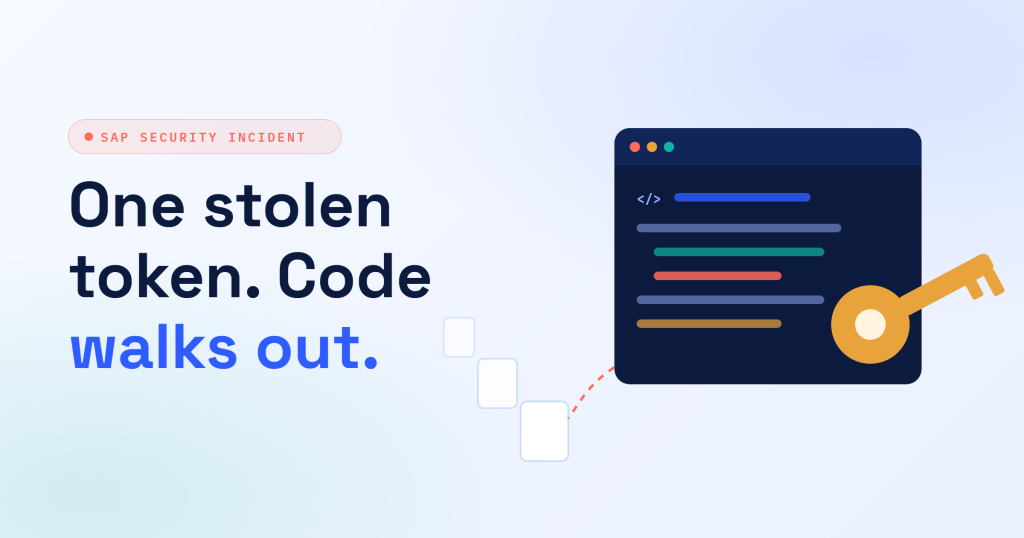
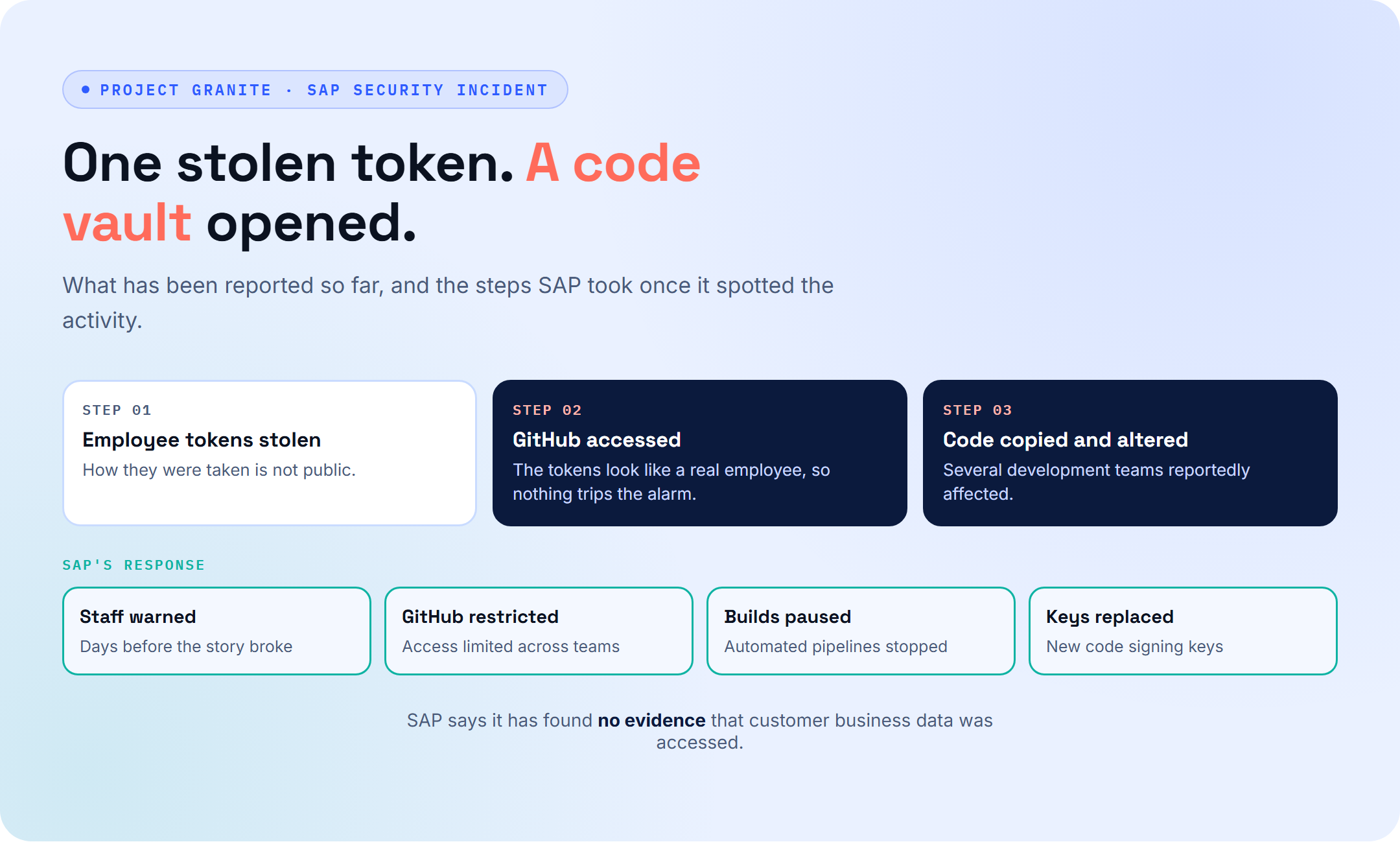
SAP has confirmed an IT security incident after spotting suspicious activity in its environment. Attackers reportedly used stolen employee tokens to get into the company’s GitHub development platform. Once inside, they copied and altered source code.
What Happened?
A German news magazine broke the story on November 26, citing insiders and an internal memo. The memo called it an active incident, tracked under the code name “Project Granite.” Several development teams were reportedly affected. SAP restricted GitHub access, paused automated build processes and replaced its code signing keys. Staff had been warned days earlier to review their credentials. Insiders say AI agents may have helped the attackers. Nobody has confirmed that, and no group has claimed the attack.
The Impact
SAP says it has found no evidence so far that anyone accessed customer business data. The worry is the code itself. Stolen source code shows attackers where to look for new flaws, and new signing keys mean customers should check what they install. In April, four poisoned SAP npm packages also stole GitHub tokens. No one has confirmed a link between the two.
How to Avoid This
- Replace long lived personal access tokens with short lived, tightly scoped ones.
- Watch GitHub audit logs for odd clones, new tokens and pushes at strange hours.
- Pin SAP dependencies to known good versions and verify signatures before updating.
- Rotate the API keys and secrets used in SAP integrations.
- Require reviews and branch protection on every production branch.
SAP Security Incident: Indicators of Compromise
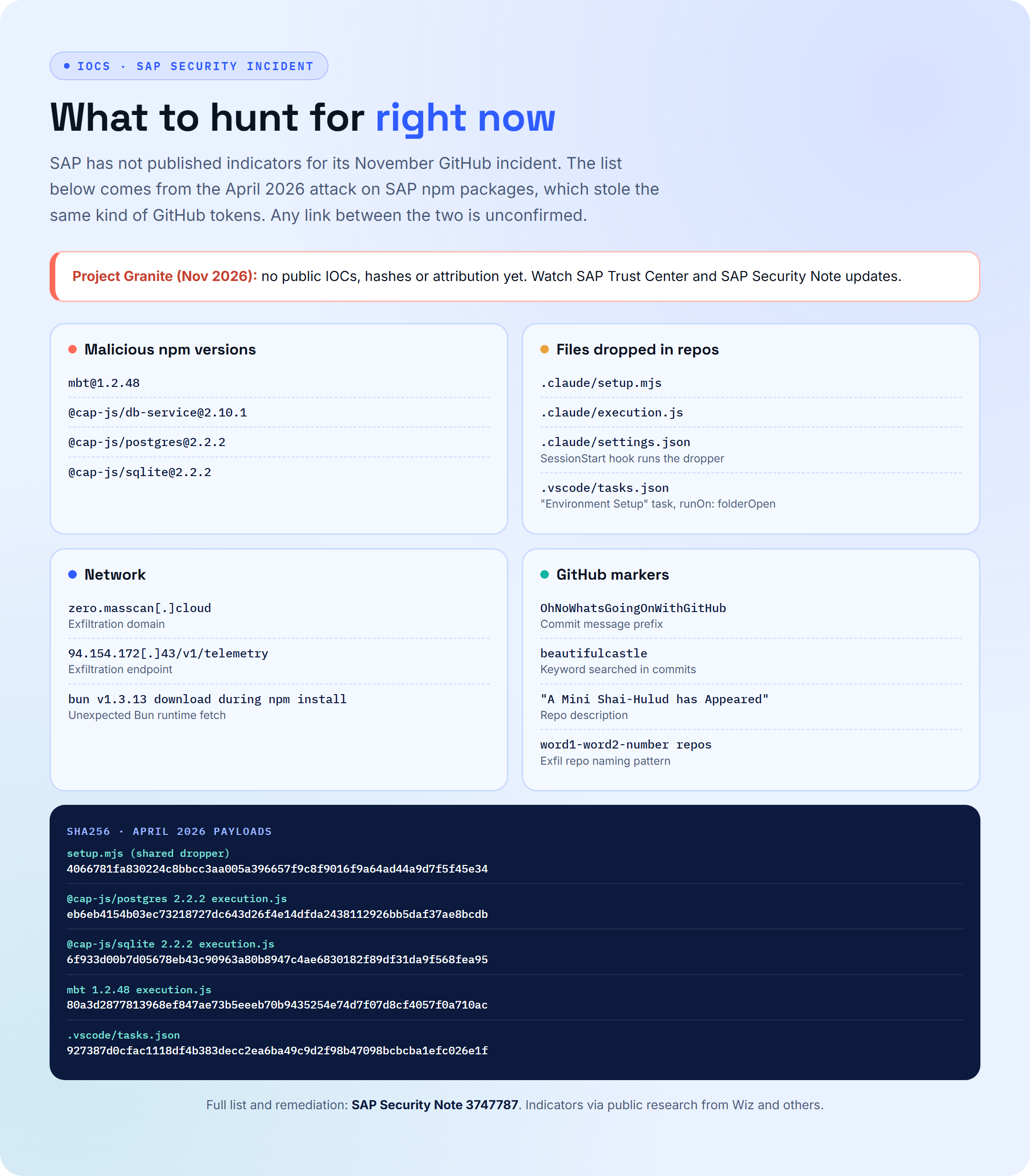
SAP hasn’t published indicators for this November incident. The indicators below come from the April attack on SAP npm packages, documented by Wiz and in SAP Security Note 3747787. Any link between the two attacks is unconfirmed.
Your Code Is Only as Safe as Your Weakest Token
Token theft doesn’t announce itself. It looks like a normal workday until the code is gone. Secure.com delivers Governed Defense, Powered by Offense as one service on one bill: we attack your setup the way these intruders would, harden what we find and prove it worked.
- Managed Exposure Management finds forgotten tokens, overprivileged repos and risky dependencies, then fixes and verifies them.
- Managed SecOps watches GitHub and identity activity 24/7, with experts ready to cut off a stolen session fast.
- vCISO sets your supply chain and access policy and reports risk to the board in plain terms.
- No More Grunt Work. No More Burnout.
Related Reading
- Megalodon Malware Compromised 5,500+ GitHub Repos Within 6 Hours
- OpenAI Confirms Breach After TanStack npm Supply Chain Attack Hit Two Employee Devices
Sources: BleepingComputer, The Record, SAP Security Note 3747787 FAQ.