
Dateline: May 22, 2026
Six-Hour GitHub Breach Affects Thousands of Code Projects
A massive automated attack called Megalodon tore through GitHub on May 18, 2026, compromising more than 5,500 repositories in just six hours. The breach represents the largest supply chain attack in the platform’s history, injecting malicious CI/CD backdoors into projects used by millions of developers worldwide.
What Happened?
The Megalodon attack began at 3:47 AM UTC when automated bots started systematically targeting repositories with weak authentication controls. Within the first hour, attackers had gained access to 800 repositories across multiple programming languages. The malware specifically targeted CI/CD pipelines, injecting backdoors that would activate during the build process.
GitHub’s security team detected unusual activity patterns at 6:23 AM but the attack had already spread to thousands of projects. The malicious code was designed to blend seamlessly into existing workflows, making detection difficult even for experienced developers. Security researcher Maria Santos from ThreatWatch first publicly identified the attack pattern at 8:15 AM through social media alerts.
The attackers used a combination of credential stuffing and dependency confusion techniques to gain repository access. Once inside, they modified package.json files and GitHub Actions workflows to include malicious scripts that would execute during automated builds. The backdoors were programmed to steal environment variables, API keys, and deployment credentials.
GitHub implemented emergency security measures at 9:52 AM, temporarily disabling Actions workflows for affected repositories and forcing password resets for compromised accounts. The platform’s incident response team worked with law enforcement agencies to trace the attack’s origin, though officials have not yet identified the perpetrators.
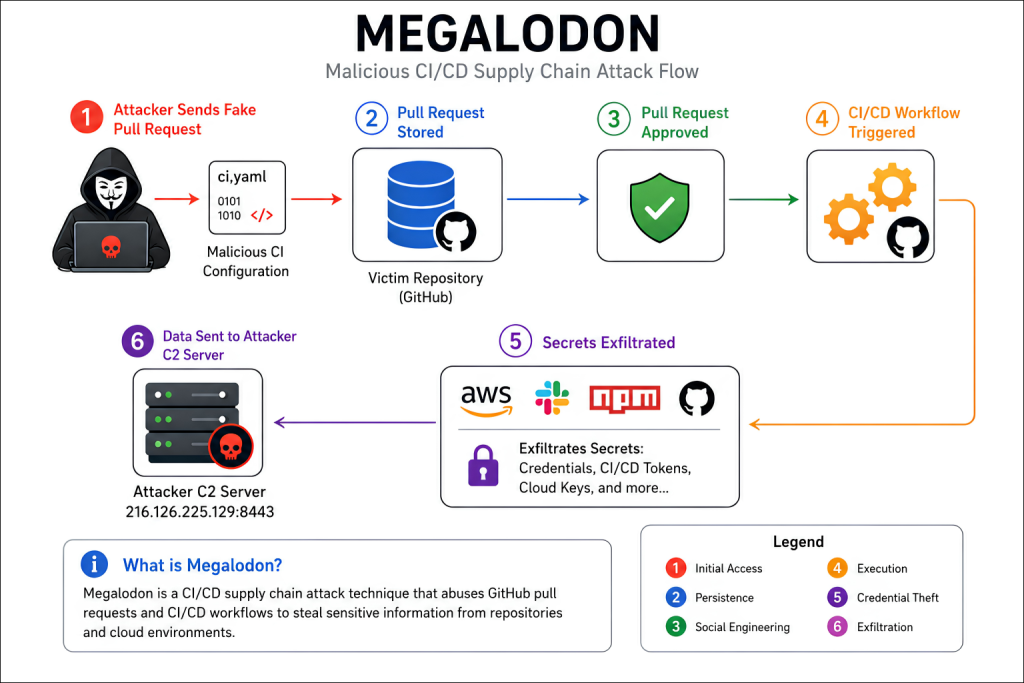
The Impact
The Megalodon attack exposed critical vulnerabilities in modern software development practices. Thousands of applications that depend on the compromised repositories now face potential security risks, as the malicious code could have been incorporated into production systems during the six-hour window.
Software supply chain expert Dr. James Chen estimates that the attack could affect up to 2.3 million downstream applications. Companies using affected packages in their production environments may unknowingly be running compromised code. The incident has prompted major tech firms including Microsoft, Google, and Amazon to audit their internal repositories and review their dependency management practices.
The attack highlights the fragility of the open-source ecosystem that powers much of modern software development. With developers often using dozens of third-party packages in a single project, a compromise at any point in the chain can cascade through entire technology stacks.
How to Avoid This
Organizations should immediately audit their repositories for any packages or dependencies updated between 3:47 AM and 9:52 AM UTC on May 18, 2026. Security teams need to review build logs from that timeframe and check for any suspicious network activity or unauthorized data access during deployment processes.
Developers can protect their projects by implementing stricter authentication controls, including mandatory two-factor authentication for all contributors and regular rotation of API keys and deployment tokens. Code signing and dependency pinning can help verify the integrity of packages before they enter production systems.
The incident underscores the importance of treating CI/CD pipelines as critical infrastructure requiring the same security attention as production servers. Regular security audits of build processes and automated monitoring for unusual repository activity can help catch similar attacks before they spread widely.
IOCs to Watch For
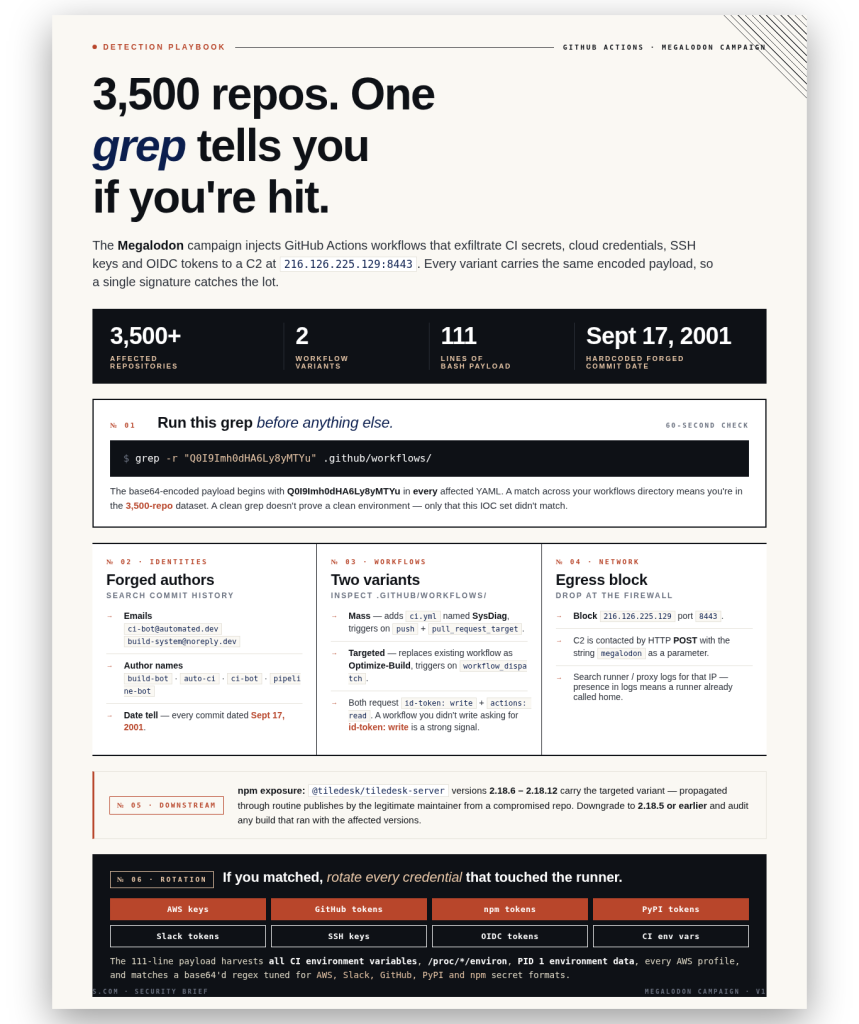
Building the Muscle to Handle the Next One
Megalodon is the second major supply chain wave in the same week, coming right behind the Mini Shai-Hulud campaign hitting npm. Manually searching every repository for forged bot commits, base64 signatures, and rogue workflow files is realistic for one incident. It’s not realistic when attacks like this keep landing on a weekly cadence.
This is where an AppSec teammate plugged into the development pipeline starts paying for itself. A few specific capabilities map directly to what Megalodon exploited:
- Workflow file integrity monitoring
- Pre-build dependency scanning
- Secret scanning across source code and CI runners
- Credential rotation as policy
- Blast radius mapping.