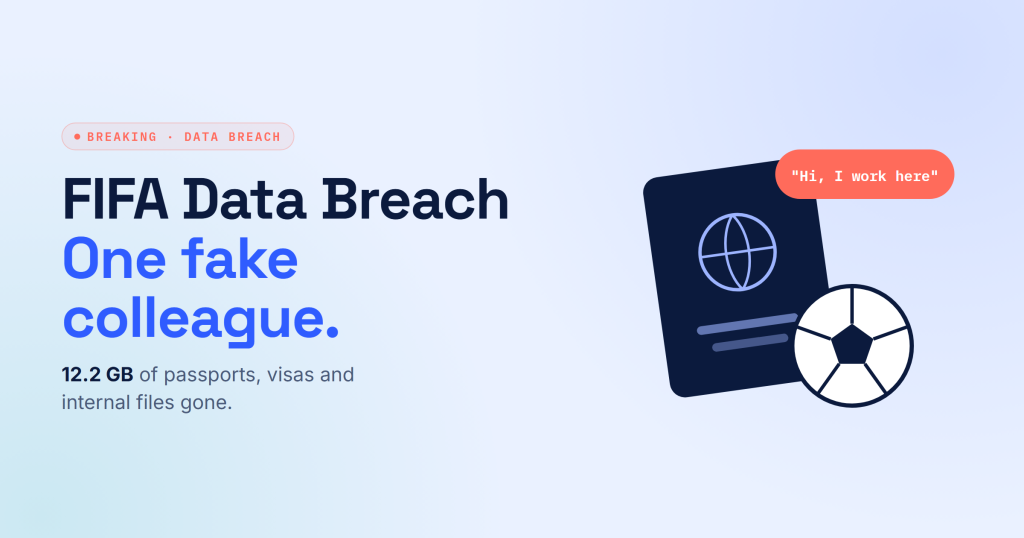
FIFA Data Breach: Hackers Posed as Staff and Walked Off With 12GB
ZURICH, NOV. 26, 2026
- Who should care: Any organization on Microsoft 365 that acts on requests from “a colleague.”
- What could go wrong: One believable impersonation hands over a working account, and passport scans in shared folders leave with it.
- Do this: Add a callback rule to every access request and check audit logs for bulk downloads this week.
- Worth remembering: Insiders put the leak at 0.1% of FIFA’s data. For anyone whose passport was in it, that figure is no comfort.
FIFA confirmed Thursday that attackers reached “a limited set of personal and business information.” The crew behind the FIFA data breach surfaced only this month, and insiders say it got in by pretending to be staff.
What Happened?
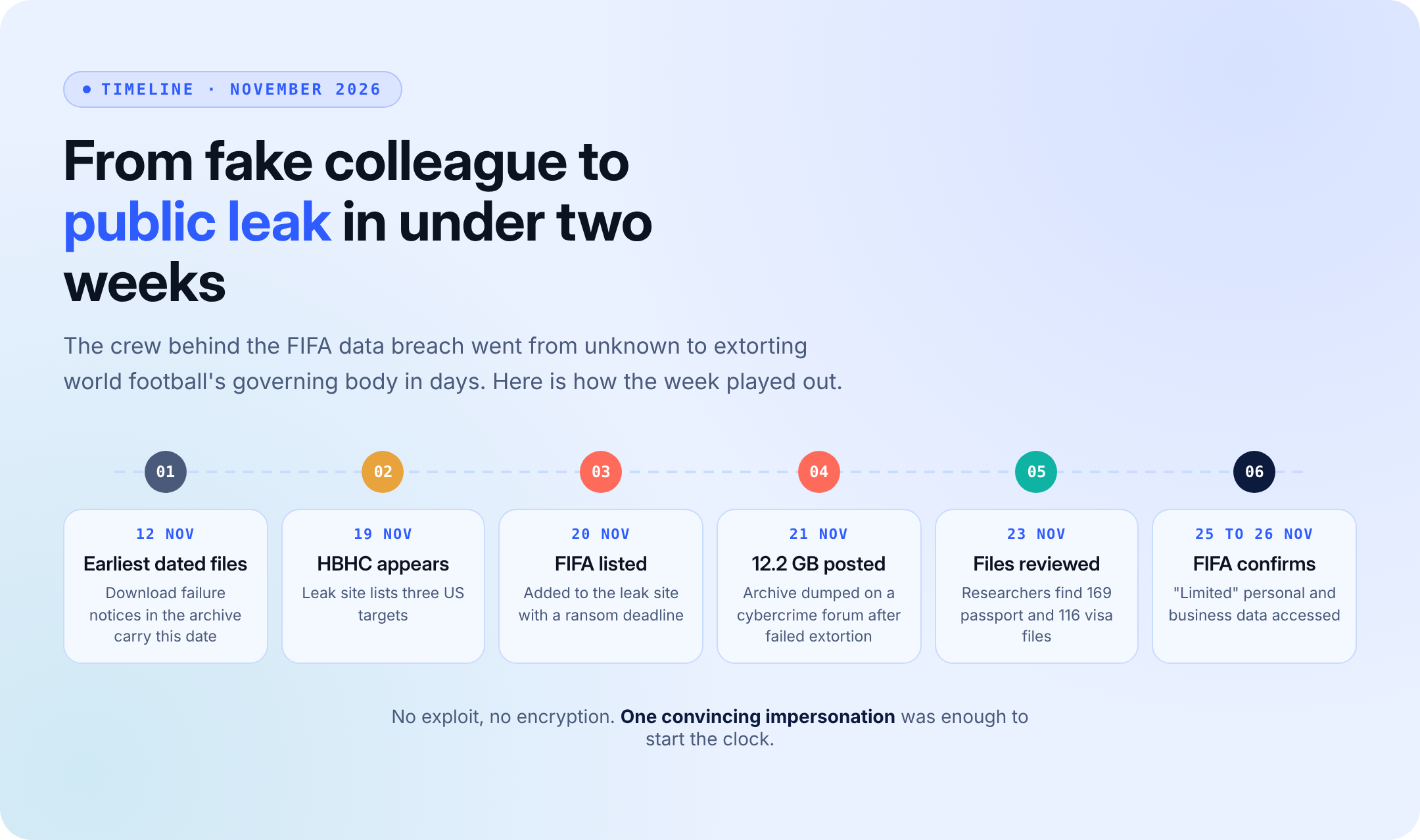
A group calling itself the Handsome Boy Hacking Club (HBHC) added FIFA to its leak site on November 20. A day later, after what it called failed extortion talks, it posted a 12.2 GB archive on a cybercrime forum and said the files came from FIFA’s Microsoft environment. FIFA insiders told The Athletic the attackers impersonated staff, a form of social engineering. FIFA has not named the affected systems and says it is working with law enforcement.
Who Is HBHC?
Trackers first logged the group on November 19. It also claims Frontier Communications, UCHealth and Smith & Wesson, though researchers call its listings unverified. Its latest post promises “more leaks soon.”
What’s the Impact?
DarknetSearch reviewed a copy and counted 2,460 files, including 169 labeled as passports and 116 as visas, some for senior officials and people traveling with them. It found no ransom note and no encrypted systems. This was pure data theft, and identity scans feed fraud for years.
How to Avoid This
- Verify every password reset or access request with a callback to a number already on file.
- Give staff who handle executive or travel files phishing-resistant MFA, such as passkeys.
- Alert on bulk downloads and new device sign-ins across SharePoint, OneDrive, and Outlook.
- Move passport and visa scans out of shared folders and delete them when the trip ends.
- Write your extortion response plan before the ransom note arrives.
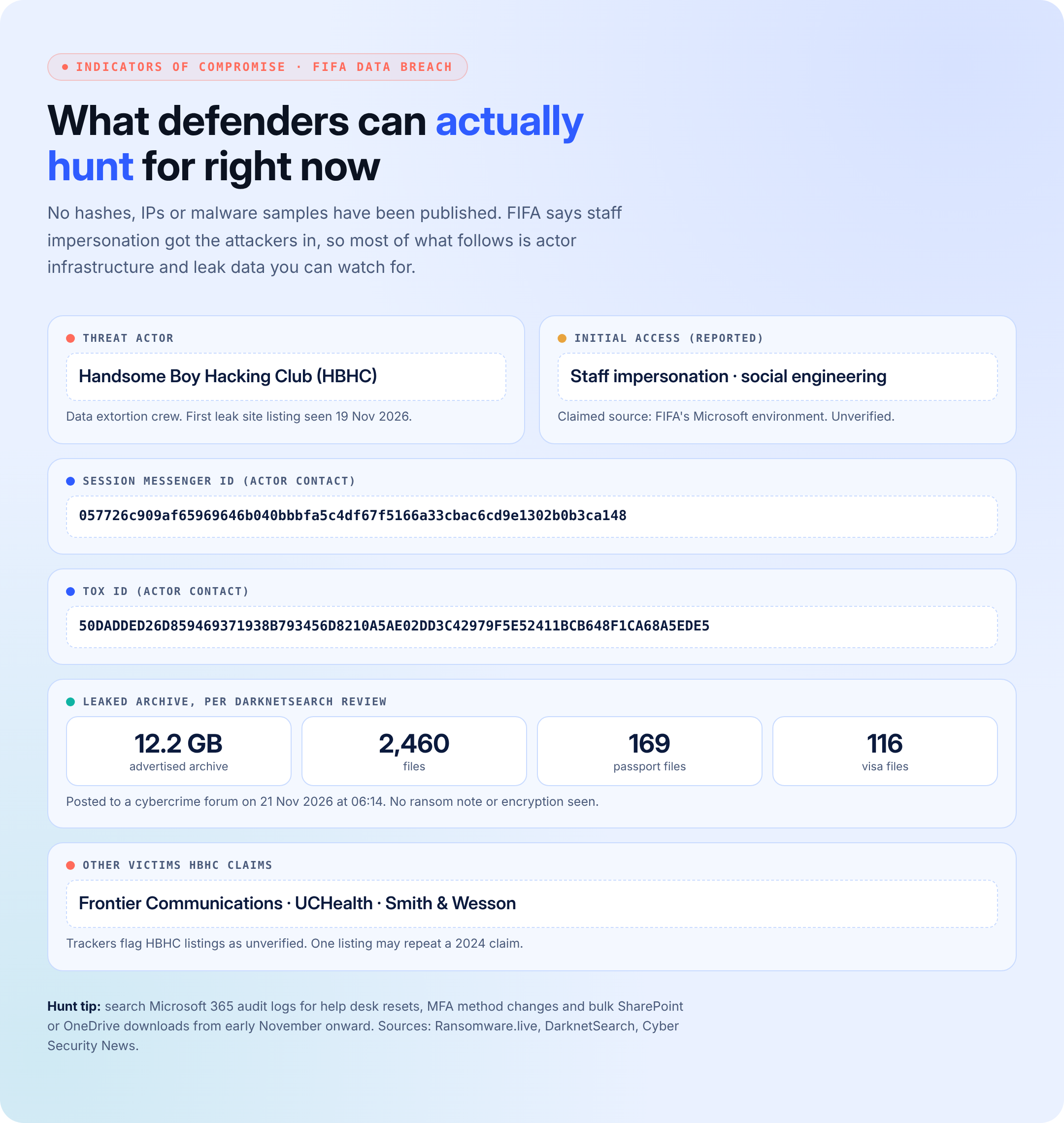
FIFA Data Breach: Indicators of Compromise
No hashes, IPs or domains have been published for this breach. The indicators below are the actor’s contact IDs and leak details from Cyber Security News, Ransomware.live, and DarknetSearch.
Nobody Should Be Able to Talk Their Way Into Your Tenant
FIFA’s attackers needed one convincing story and a folder full of passports. Secure.com works as Service as a Software: you get the outcome, with attacks tested, gaps closed and proof on file, without building a security operation.
- Managed SecOps: experts watch Microsoft 365 around the clock and stop odd sign-ins and mass downloads.
- Managed Exposure Management: we find overshared folders and weak identity paths, fix them, then attack again to prove the fix held.
- vCISO: a senior security leader sets your identity verification and extortion response policies and briefs your board.
- One service, one bill. Your team sets the rules. No more grunt work. No more burnout.