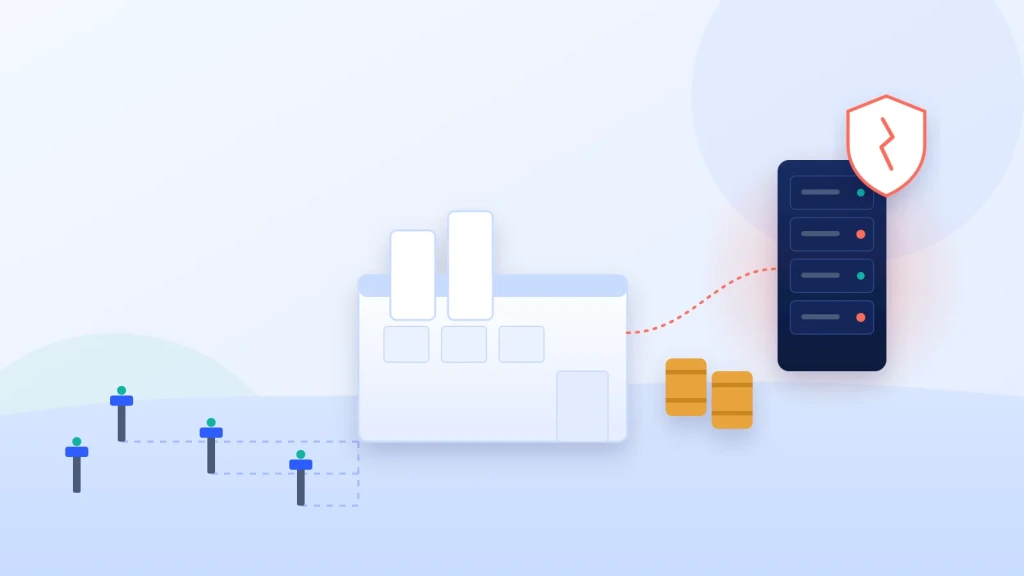
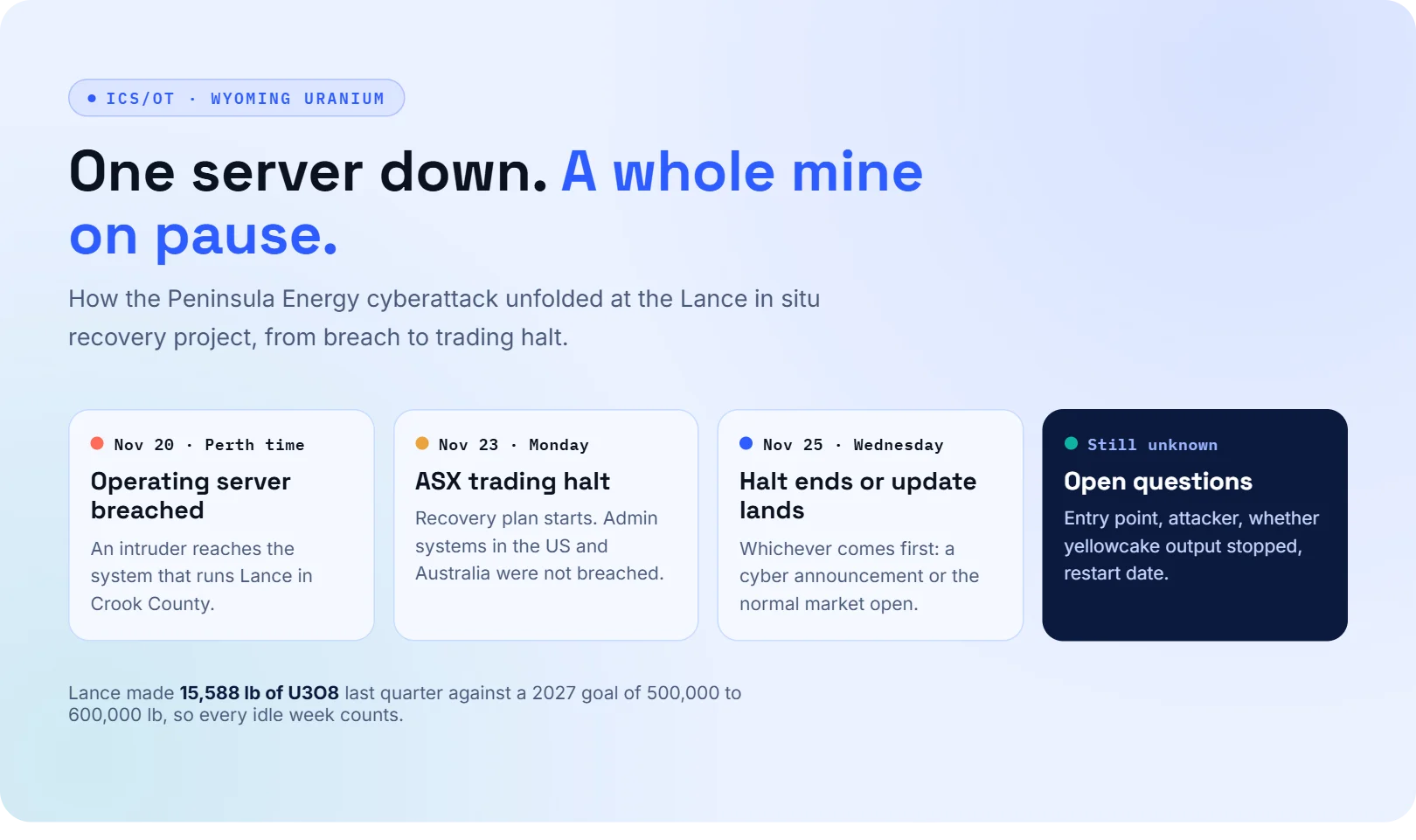
Late on Friday, November 20 (Perth time), an intruder got into the system running Peninsula Energy’s Lance uranium mine in Wyoming. By Monday, the Australian miner had asked the ASX to halt its shares. Nobody outside knows the damage yet.
Who should care: Mining, energy and utility teams whose plant systems are reachable from outside.
What could go wrong: One breached operations server can stop production while email, payroll and finance keep running.
Do this: Map every remote path into your plant network, then test running or stopping safely without it.
Worth remembering: Peninsula has named no attacker and published no IOCs yet.
What Happened?
Peninsula told the exchange on November 23 that the breach hit the operating server and system at Lance, its in situ recovery project in Crook County. Administrative systems in the US and Australia were not breached. The company put its recovery plan into effect and opened a preliminary investigation. It hasn’t said how the intruder got in, whether yellowcake production stopped, or when Lance returns to normal. Shares stay halted until its next announcement or the open on November 25.
What’s the Impact?
Lance was already fragile. Peninsula pulled its 2026 guidance in July and produced 15,588 lb of U3O8 in the September quarter, against a 2027 target of 500,000 to 600,000 lb. Every lost week now pushes on that target.
Why a Small Mine?
Uranium joined the US critical minerals list in 2025. Dragos counted 19 ransomware attacks on mining firms between July and September 2026, part of 1,266 against industrial companies. Dragos saw none reach control systems directly; the damage came through the servers plants depend on.
How to Avoid This
- Keep plant networks apart from corporate IT, and log every remote session into them.
- Put MFA on all vendor and remote access, and shut off accounts nobody uses.
- Keep offline, tested backups of HMI, historian and controller configurations.
- Rehearse running or safely stopping the site with the operations server gone.
- Write the disclosure plan now: who calls the exchange, the state and your buyers.
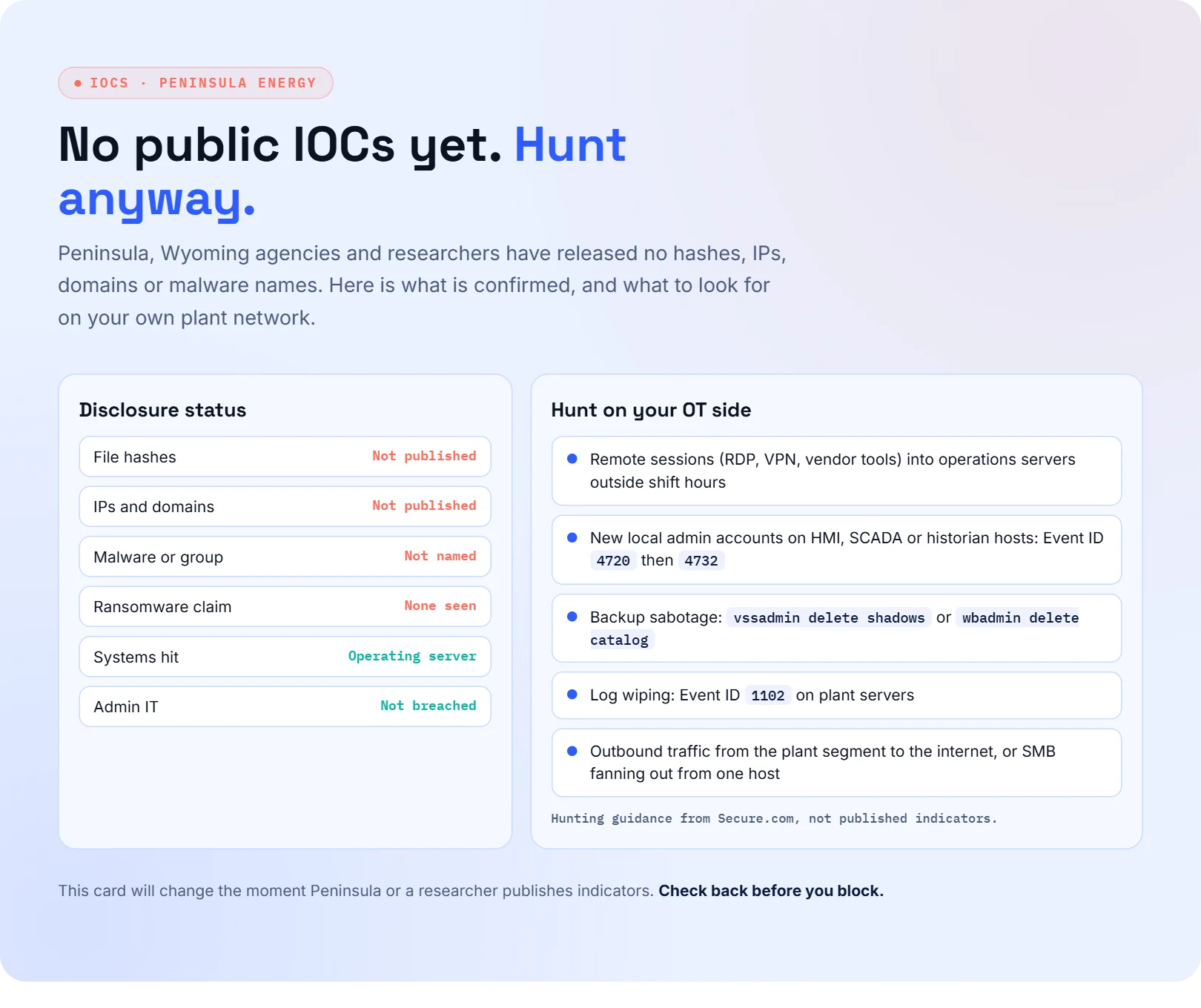
Peninsula and the agencies involved have published no indicators for this incident. The card below shows what is confirmed, plus hunting guidance for your own plant network.
Friday Night Is When Nobody’s Watching
This breach landed late on a Friday, when most small security teams are off the clock. Secure.com delivers the outcome instead of another tool: your team sets the rules, and we attack, harden, prove, repeat.
- Managed SecOps: Experts watch 24/7 for odd logins to the servers that run operations and contain them before a weekend becomes a shutdown.
- Managed Exposure Management: We find the remote access paths, flat IT to plant routes and stale accounts an intruder would use, fix them, then verify each fix.
- vCISO: A senior security leader owns your incident and disclosure plan, so the exchange filing isn’t drafted for the first time on a Monday.
- One service, one bill: No extra consoles for a lean team to babysit. No more grunt work. No more burnout.
Related articles
- Skagerak Energi Cyberattack Makes It Two Norwegian Energy Breaches in Two Days
- Infrastructure Attacks: The Real-World Cost of Cyber Threats