Who should care: Security leads at utilities, oil and gas operators, and any company that runs corporate IT next to plant systems. The Skagerak Energi cyberattack hit exactly that layer.
What could go wrong: An intruder inside business IT can stall email, scheduling and maintenance without ever touching a turbine.
Do this: Hunt for unusual logins and new admin accounts across corporate IT this week.
Worth remembering: Norway’s national cyber risk level has been at HIGH since October 27.
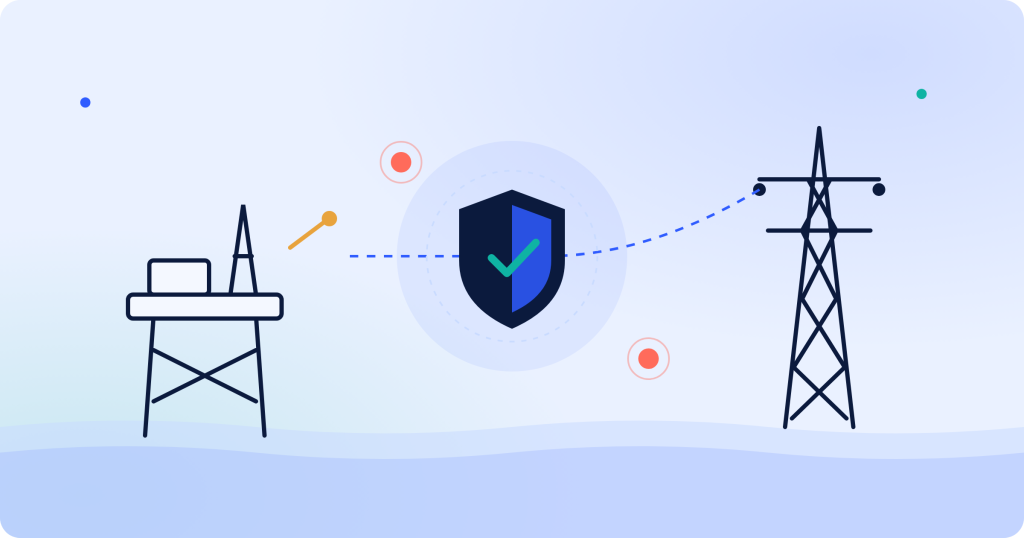
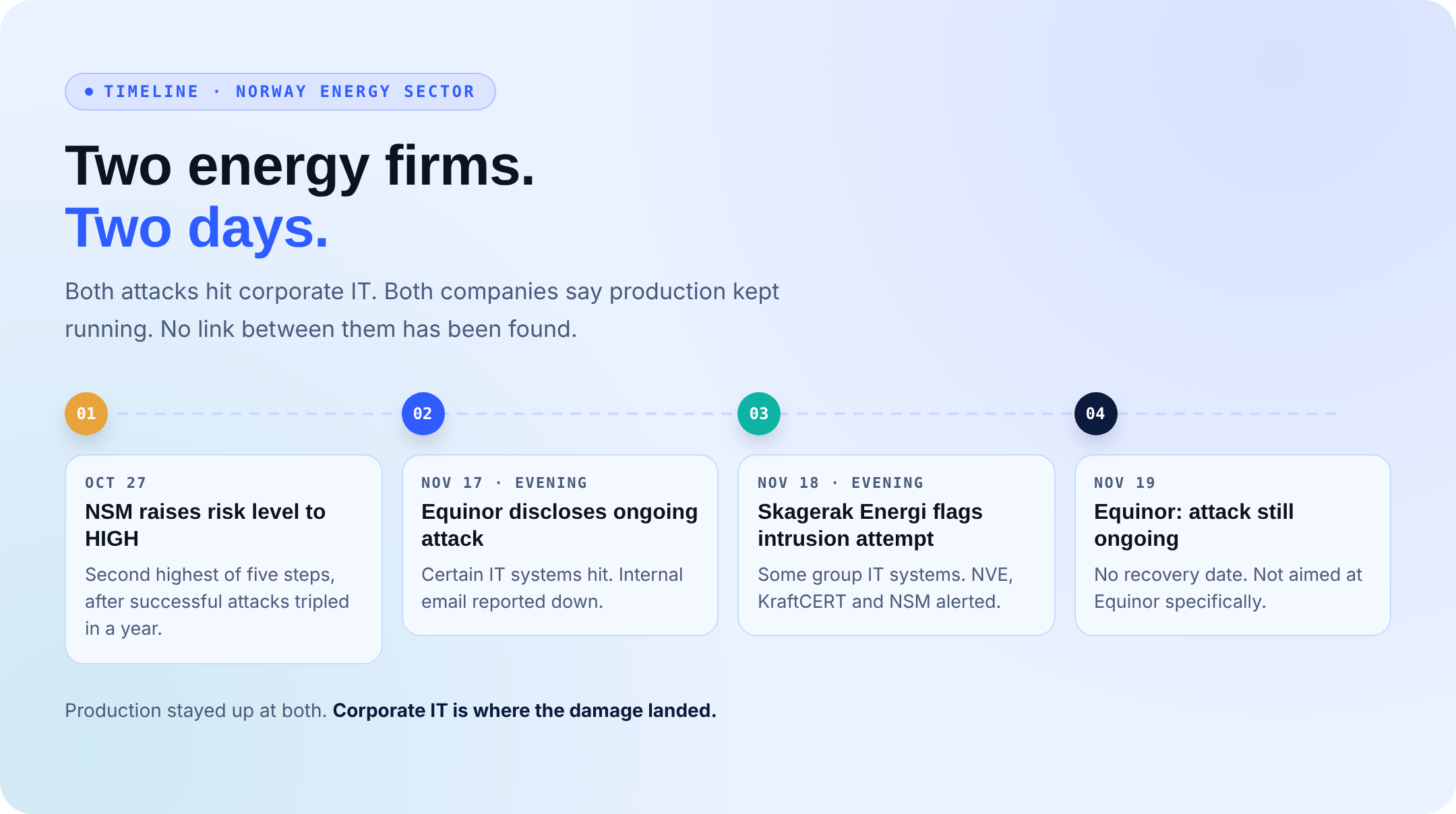
Norway’s energy sector took two hits in about 24 hours. The Skagerak Energi cyberattack went public on Wednesday evening, a day after Equinor said intruders were inside its IT systems. Neither company has named an attacker.
What Happened in the Skagerak Energi Cyberattack?
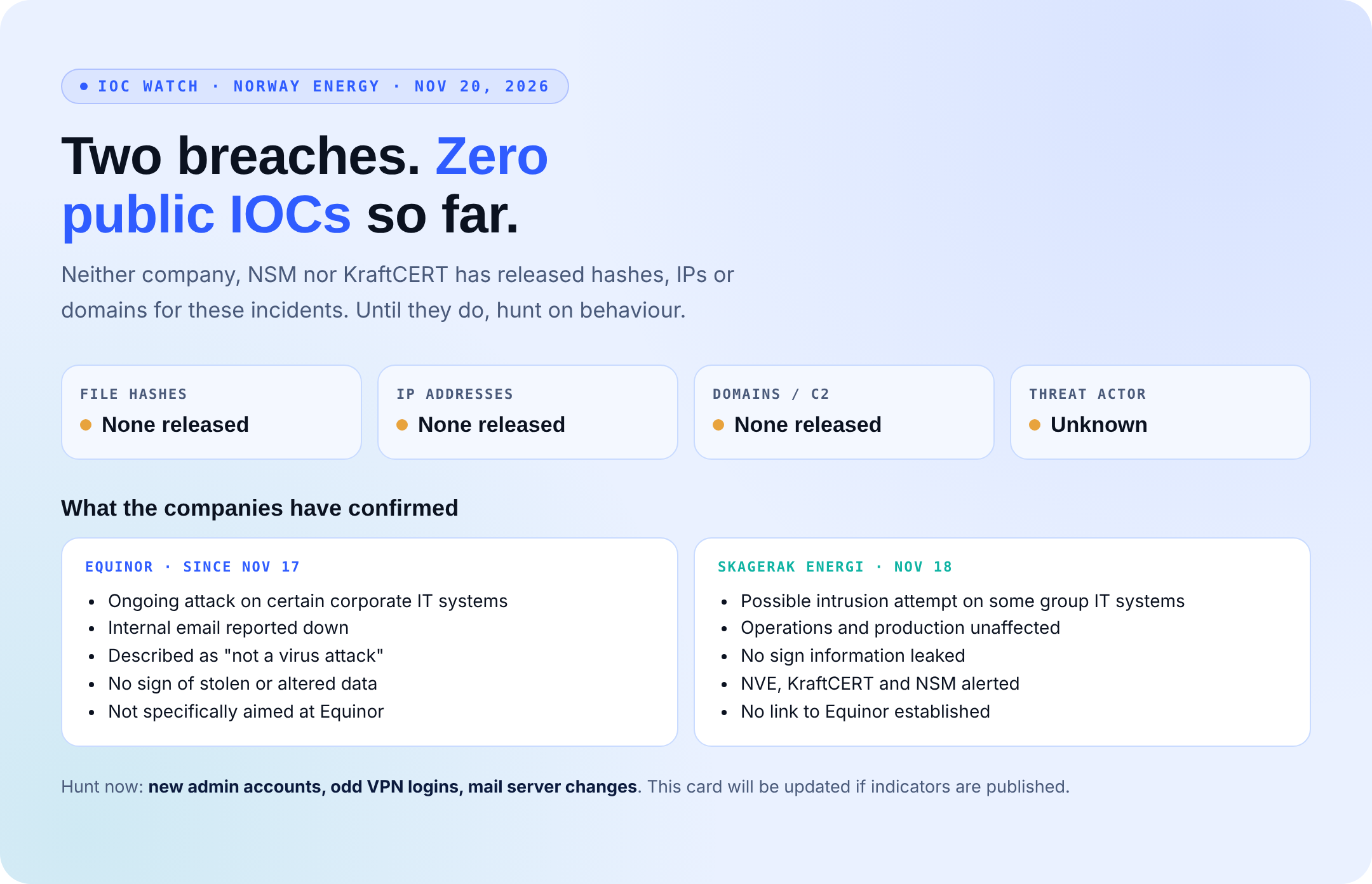
Equinor disclosed an ongoing attack on certain IT systems on November 17. Reuters, citing a company source, reported that the internal email system was down. On November 19, Equinor said the attack was still running and did not appear to be aimed at the company specifically.
The Skagerak Energi cyberattack came to light on the evening of November 18, when the company said it had spotted activity that may have been an attempt to break into some of the group’s IT systems. Skagerak Energi is a power producer based in Porsgrunn, and its subsidiary Lede runs the local power grid. The company alerted NVE, KraftCERT and NSM. A spokesperson said outsiders knock on its digital door every day, but this time someone got further.
What’s the Impact of the Skagerak Energi Cyberattack?
Both firms say production never stopped, and neither has found signs of stolen data. Equinor still has no recovery date, and Skagerak said on November 19 that it was still handling the incident. So far, nobody has publicly linked the two incidents.
The wider pattern is the bigger concern. On October 27, NSM raised the national cyber risk level to HIGH, citing a threefold rise in successful cyber operations against Norwegian organizations.
How to Avoid This
This attack hit business IT, not the grid. These steps cut that kind of risk:
- Review every privileged and remote login from the last 30 days, and remove accounts nobody can explain.
- Keep email, ERP and maintenance systems on separate network segments from plant and grid control.
- Require phishing-resistant MFA on admin accounts, VPNs and cloud consoles.
- Rehearse a day with corporate IT down, so operations can keep running on paper.
- Report odd activity to your sector CERT early, the way Skagerak called KraftCERT.
Indicators of Compromise
Nobody has released hashes, IP addresses or domains yet for the Skagerak Energi cyberattack or the Equinor breach. Equinor’s only technical detail so far is that it was “not a virus attack” and can’t spread by itself. Hunt for new admin accounts, odd VPN sessions and changes on mail servers. We’ll update this post if authorities publish indicators.
Somebody Always Gets a Little Further
The Skagerak Energi cyberattack hit a team that was watching and called the right people within hours. Secure.com delivers that kind of watch as Service as a Software: governed defense, powered by offense, on one service and one bill, with your team setting the rules.
- Managed SecOps: 24/7 monitoring of corporate IT. Experts contain a suspicious login before it turns into a week without email.
- Managed Exposure Management: We find the exposed VPNs, stale accounts and flat network paths an intruder would use, fix them, then verify each fix holds.
- Attack, harden, prove, repeat: We test your defenses the way an attacker would, so gaps turn up in our findings before they turn up in an incident.
- vCISO: A senior security leader keeps your incident plans, regulator notifications and board updates ready while the risk level stays at HIGH.