- Who should care: CISOs and IT leads running internet-facing HR, payroll, or employee portals.
- What could go wrong: An AI agent finds the small flaw your team parked, chains it to two others, and takes staff data out before anyone reads the alert.
- Do this: Hunt for ARTEX artifacts this week and clear low-severity findings on public apps.
- Worth remembering: ARTEX was a GitHub project in July. By November, attackers were using it against governments.
Introduction
The European Commission cyberattack kept staff HR systems offline for more than 10 days. CERT-EU says the attackers used ARTEX, a free AI penetration testing framework, and large amounts of personal data may be exposed.
What Happened?
CERT-EU detected ARTEX activity in Commission systems earlier in November. As a precaution, the Commission pulled several applications offline. One was Sysper, where staff view payslips, log hours, and request leave. Another was MyPMO, which handles medical reimbursements. Both came back this week.
Sysper went down again on November 18, a day after translation services failed. The Commission’s top crisis group met in an urgent session, and its digital services department ordered extra security checks. Officials believe they have contained most of the attack. Nobody can yet say how much data was taken.
What’s the Impact?
For over a week, the European Commission cyberattack left staff unable to file timesheets, request leave or enter salary details, though most pay arrived on time. The bigger worry is exposed HR and medical data.
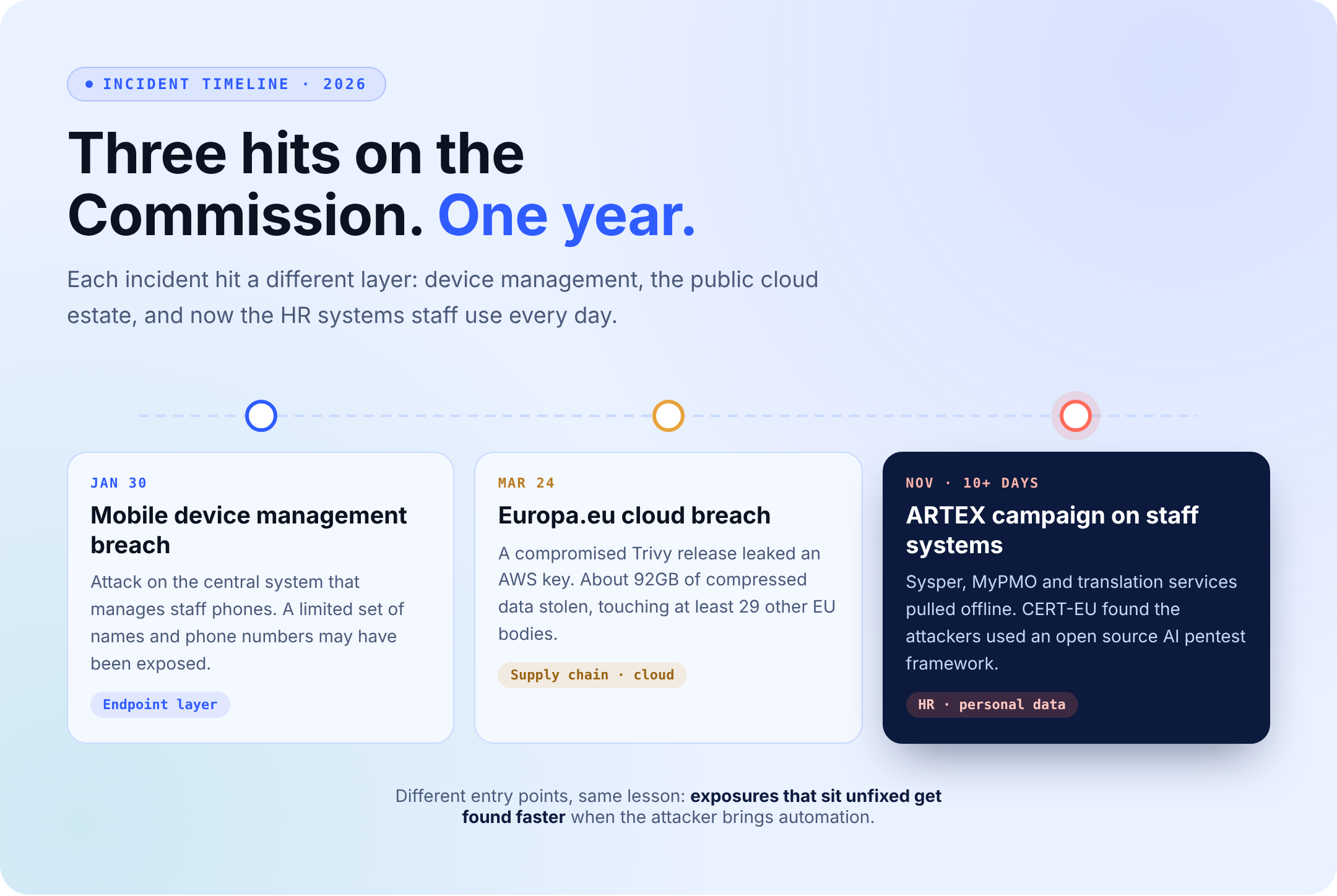
This is the Commission’s third incident of 2026, following a January mobile device breach and March’s 92GB Europa.eu cloud theft.
Why ARTEX Changes the Math
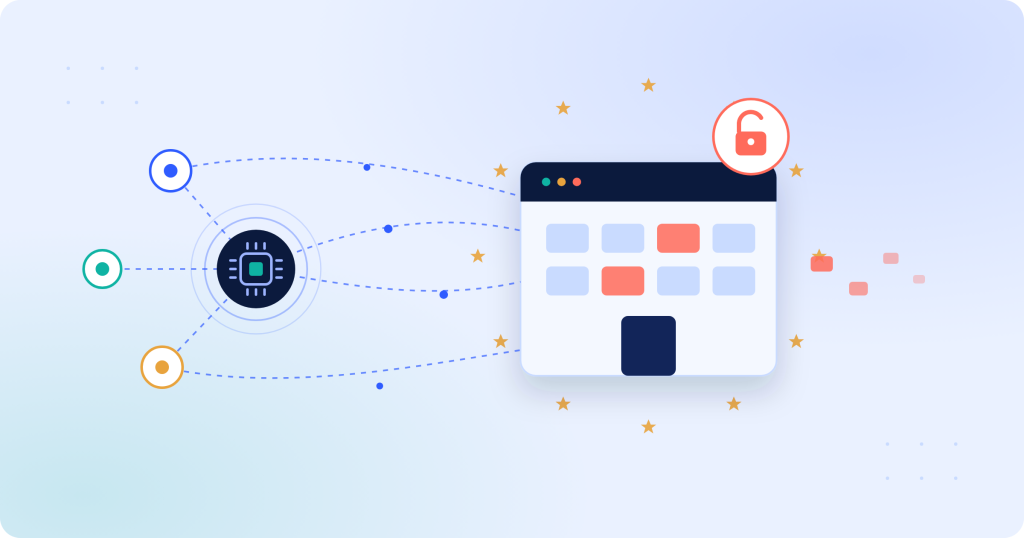
What sets the European Commission cyberattack apart is the tool behind it. ARTEX takes a plain language goal and hands it to LLM agents, which run real offensive tools while an operator steers from a web console.
On November 5, CERT-EU warned that it chains isolated misconfigurations into serious attack paths. Censys counted 1,465 exposed ARTEX consoles by November 9. One China nexus crew used it against more than 200 organizations in 14 countries in 11 days. The FBI followed with a FLASH alert on November 13.
ARTEX Indicators of Compromise
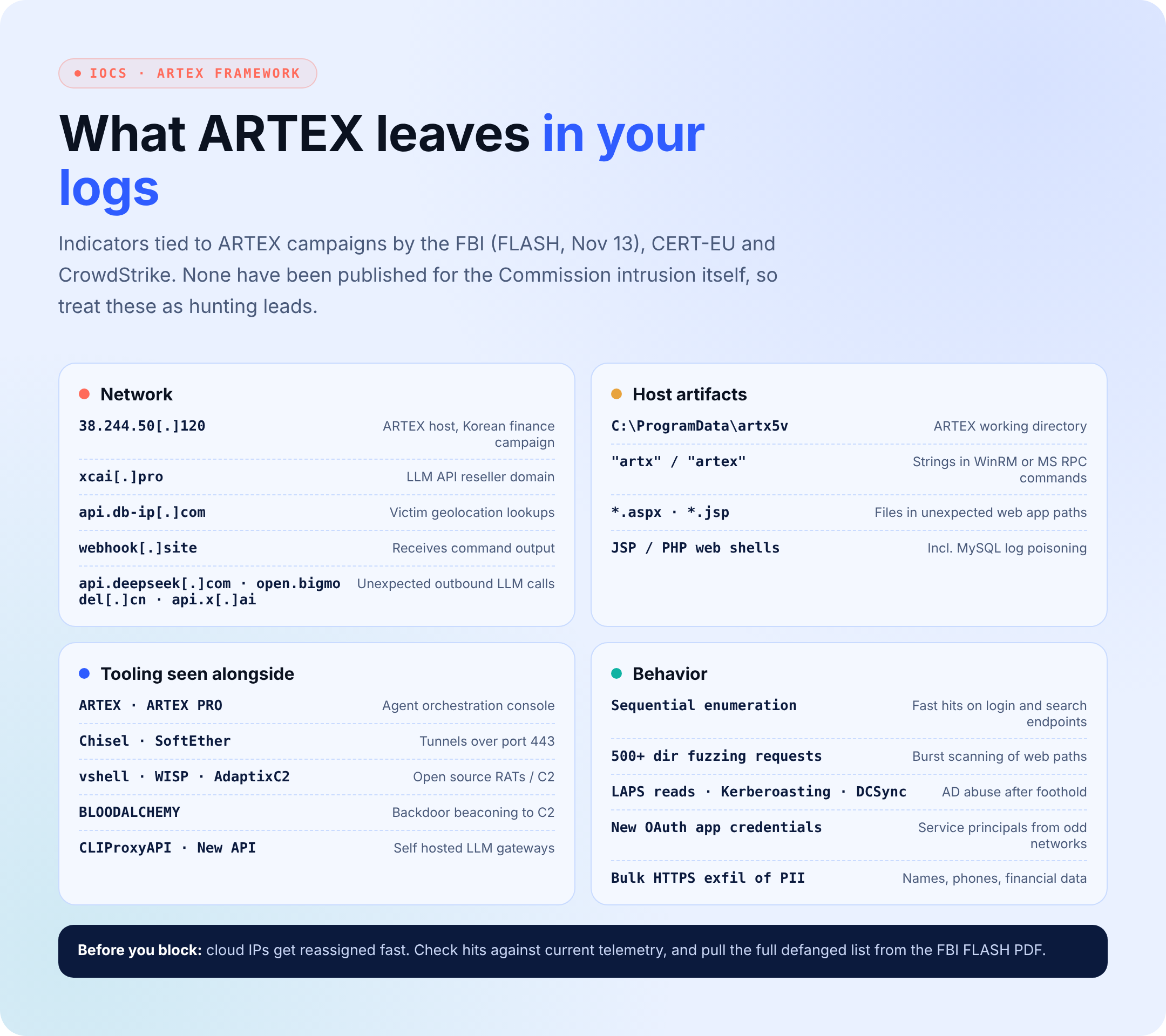
No IPs, domains or file hashes have been published for the Commission intrusion itself. The indicators below come from wider ARTEX campaigns tracked by the FBI, CERT-EU and CrowdStrike, so treat them as hunting leads, not as blocklist entries.
How to Avoid This
The European Commission cyberattack shows how quickly small gaps turn into a breach once an AI agent is probing. For EU organizations, this is also the kind of risk the NIS2 Directive expects you to manage.
- Inventory every internet-facing app, including HR, legacy, and partner portals
- Fix low-severity findings too, since ARTEX chains them together
- Rate limit employee portals and alert on sequential lookups
- Flag outbound calls to LLM APIs your business doesn’t use
- Rotate exposed keys and enforce MFA on privileged and cloud identities
Attackers Run Offense Around the Clock. So Should You.
The European Commission cyberattack shows that anyone can now probe your defenses nonstop for the price of an API key. Secure.com’s Service as a Software model runs that offense on your estate first. It hardens what it finds and proves each fix, under rules your team sets. Attack. Harden. Prove. Repeat.
- Managed Exposure Management: finds the exposed portals and parked flaws an AI agent would chain, ranks them by real risk, then fixes and verifies them
- Managed SecOps: 24/7 watch where AI clears the alert noise and human analysts act on signals like burst enumeration or odd LLM traffic
- vCISO: a fractional security leader who owns strategy, compliance, and board reporting, without a full-time hire
- One service, one bill: you buy security outcomes, not another tool stack for a stretched team. No more grunt work. No more burnout.