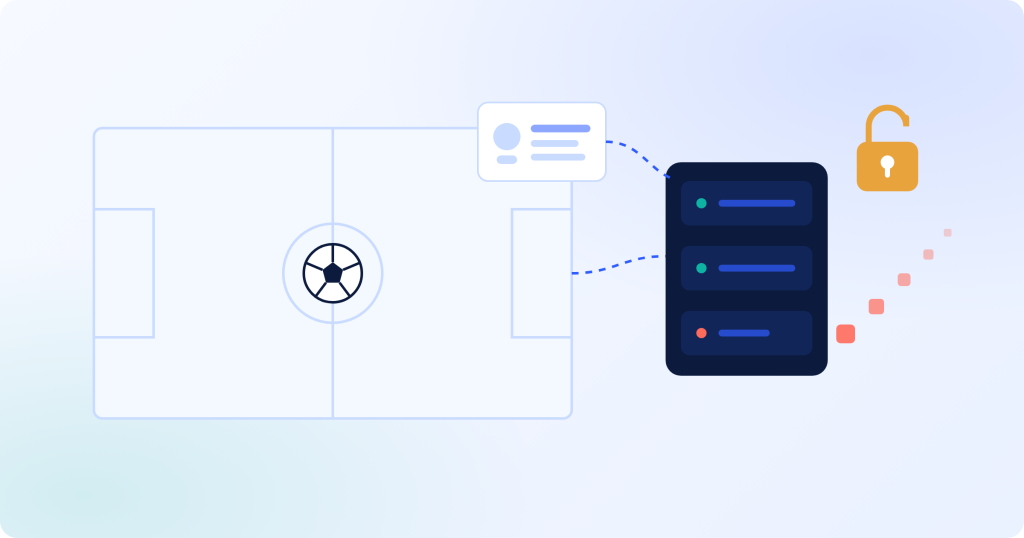
November 24, 2026: Spain’s top football league says a hacker spent three days inside one of its fan services platforms and left with personal data. The LaLiga data breach hit supporters of at least eight clubs, and the phishing that follows a breach is already on its way.
Who should care: Season ticket holders, registered fans, and any business that hands customer data to a shared third-party platform.
What could go wrong: Convincing scam emails, texts, and WhatsApp messages that already know your name and your club.
Do this: Treat every “LaLiga security notice” as fake until you check it in the official app or on the official site.
Worth remembering: The league says its competition systems were untouched. Fan data was not.
What Happened in the LaLiga Data Breach?
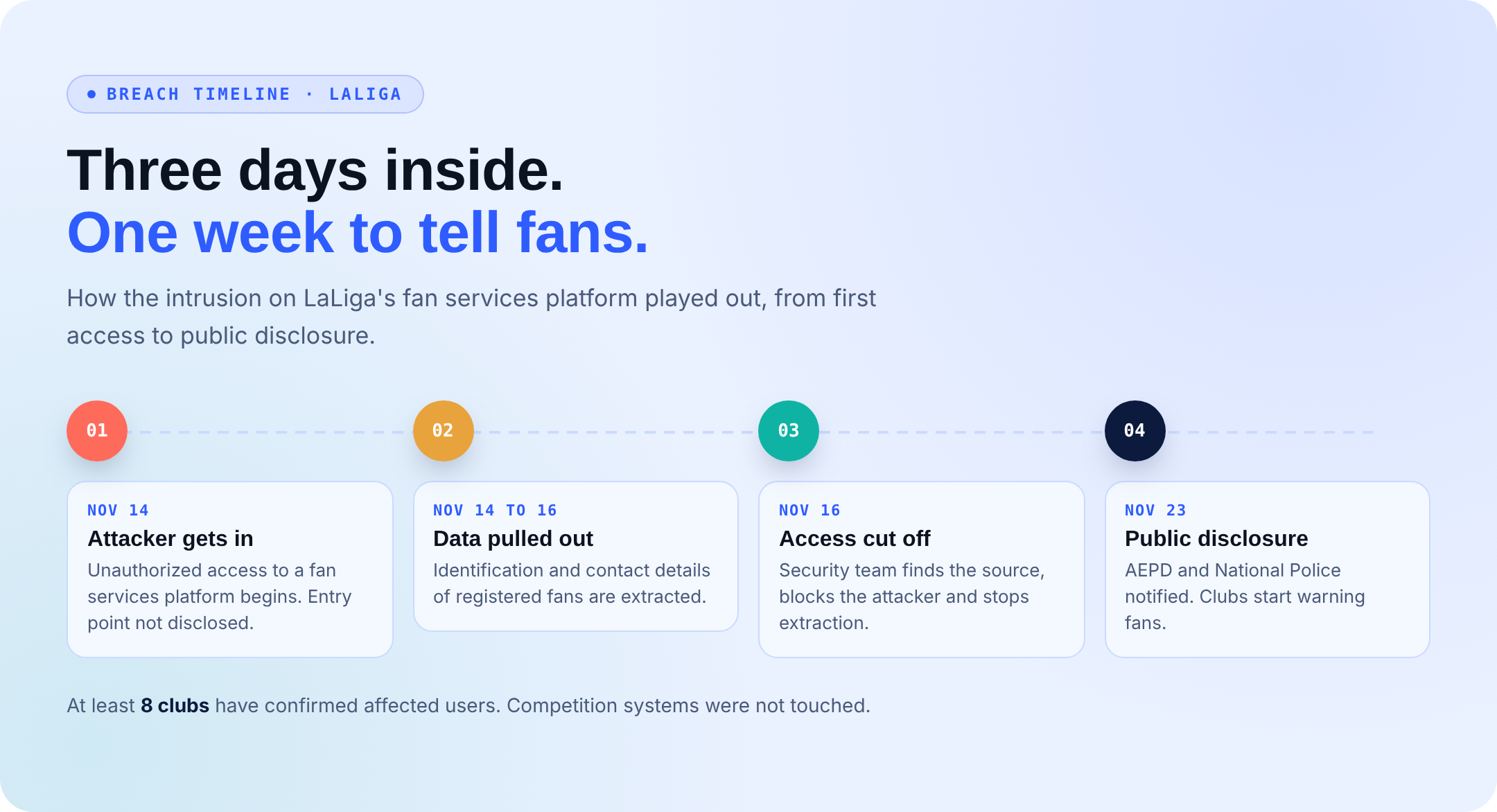
Between November 14 and 16, an attacker got into a technology platform that LaLiga runs to deliver digital services to fans and to several clubs. Then, on November 16, the security team found the source of the access, blocked the attacker, and stopped the data extraction.
LaLiga disclosed the incident on November 23. It reported the attack to Spain’s data protection agency (AEPD) and filed a complaint with the National Police’s Central Cybercrime Unit. However, it has not said how the attacker got in or how many fans it affected.
What’s the Impact of the LaLiga Data Breach?
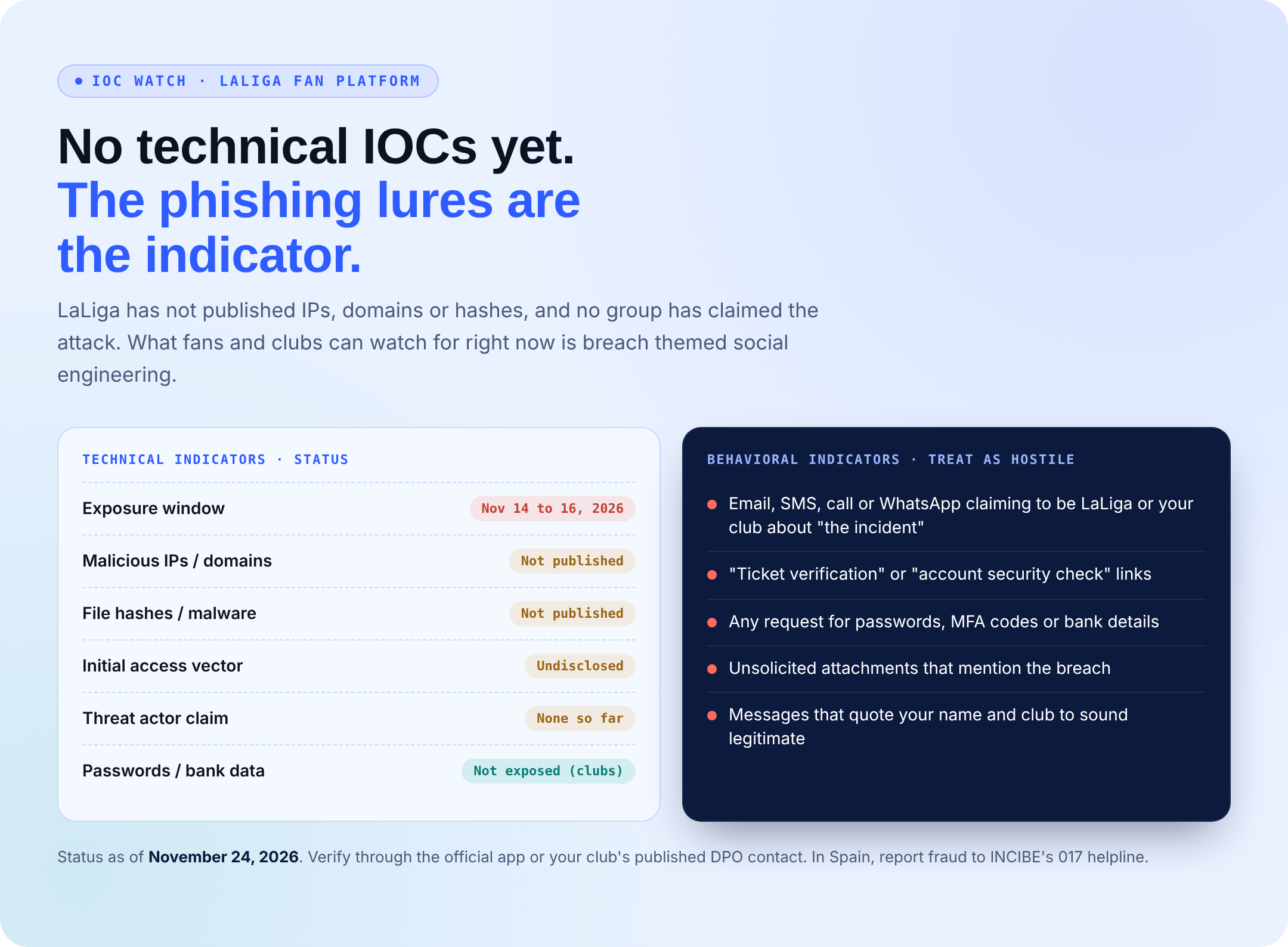
CD Eldense, Real Oviedo, Real Zaragoza, Córdoba CF, and CD Leganés have confirmed affected users. In addition, CD Tenerife, Cultural Leonesa, and Burgos CF have also confirmed affected fans. So far, the stolen fields are identification and contact details that fans gave when they registered. However, clubs say the attacker did not get passwords, bank details, or payment data.
No group has claimed the attack, and nobody has published technical indicators of compromise (IOCs). As a result, the real risk right now is follow-up phishing. For example, an attacker who knows your name and your club can write a very believable message.
How to Avoid This
For businesses that share customer data with a platform partner, the LaLiga data breach offers clear lessons:
- Map every third-party platform that stores your customer data.
- Watch for bulk exports and unusual query volume around the clock.
- Collect only the customer data you actually need.
- Warn customers early about breach-themed phishing.
- Rehearse your vendor breach response before you need it.
For fans: ignore links in any message about “the incident,” and never share passwords, MFA codes, or bank details. Also, in Spain, you can report fraud to INCIBE’s 017 helpline.
Your Vendor’s Breach Is Still Your Headline
None of these clubs ran the hacked platform. Still, each one is now writing apology emails to its fans. In short, the LaLiga data breach shows how one shared platform spreads the risk across everyone plugged into it. Similar to the JPMorgan data breach, it started in someone else’s system, which raises a hard question: who owns a vendor breach?
Secure.com works as Service as a Software, so you get security outcomes instead of another stack of tools to run:
- Managed SecOps watches your environment 24/7 and responds when data starts leaving at 2 a.m. on a Saturday.
- Managed Exposure Management finds weak spots across your cloud and connected platforms, ranks them, then fixes and verifies them.
- vCISO gives you a senior security lead who sets vendor risk rules and handles regulator and board reporting.
- One service, one bill, and your team keeps its weekends.