The Kneron SafePay ransomware claim landed early Tuesday, when the SafePay gang added Kneron to its leak site. Kneron is a San Diego company that designs AI chips for smart cameras, cars and AI PCs.
No stolen files are public yet, and the company has not commented.
Who should care: Chip designers, hardware startups and anyone running a VPN or Veeam server that faces the internet.
What could go wrong: SafePay copies your data, wipes your backups, then encrypts. If this claim holds, chip designs and partner files could end up public.
Do this: Patch VPN and backup servers this week, and put MFA on every remote login.
Worth remembering: SafePay rents its malware to nobody. The crew that breaks in is the same crew that calls you about payment.
What Happened?
Leak-site trackers picked up the Kneron SafePay ransomware listing at 06:24 UTC on November 24. It names kneron.com but shows no data volume, no samples and no deadline. The tracker notes that it has not verified the claim.
Kneron was founded in 2015. It has a development team in Taipei, backing from Foxconn and Qualcomm, and it builds NPU chips and edge AI servers. HudsonRock infostealer data ties 31 compromised user accounts to its domain. We found no public statement from the company at the time of writing.
Who Is SafePay?
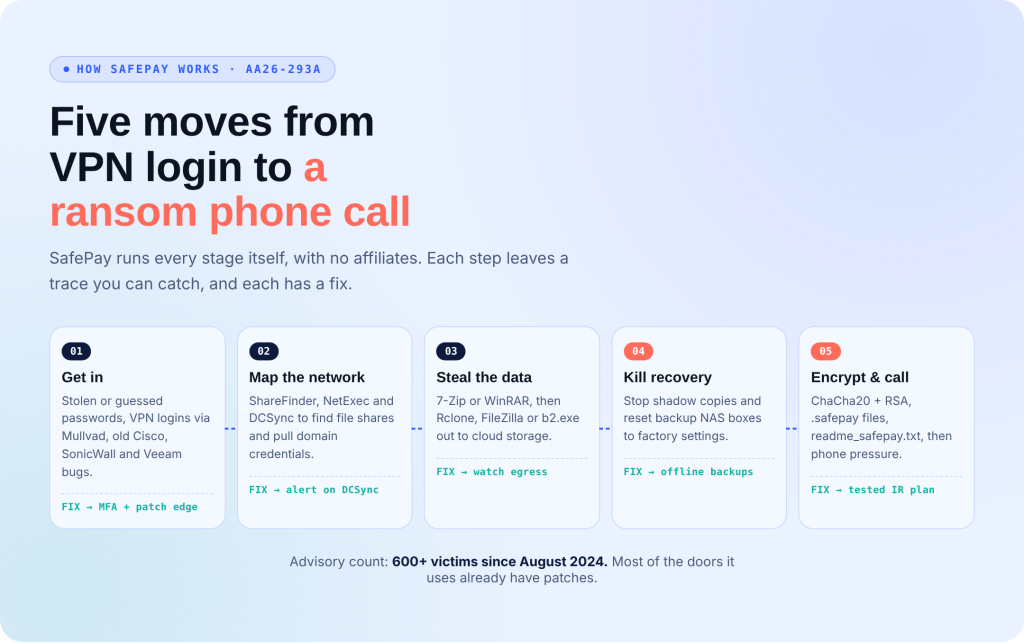
A joint advisory from the FBI, CISA, the Secret Service and German and UK partners, published October 20, links SafePay to at least 600 victims since August 2024.
The group gets in with stolen or guessed passwords, VPN logins routed through Mullvad, and old bugs in Cisco, SonicWall and Veeam gear. Before it encrypts anything, it moves data out with Rclone or Backblaze tools, stops shadow copies and has reset backup NAS boxes to factory settings. Then someone phones the victim to push for payment.
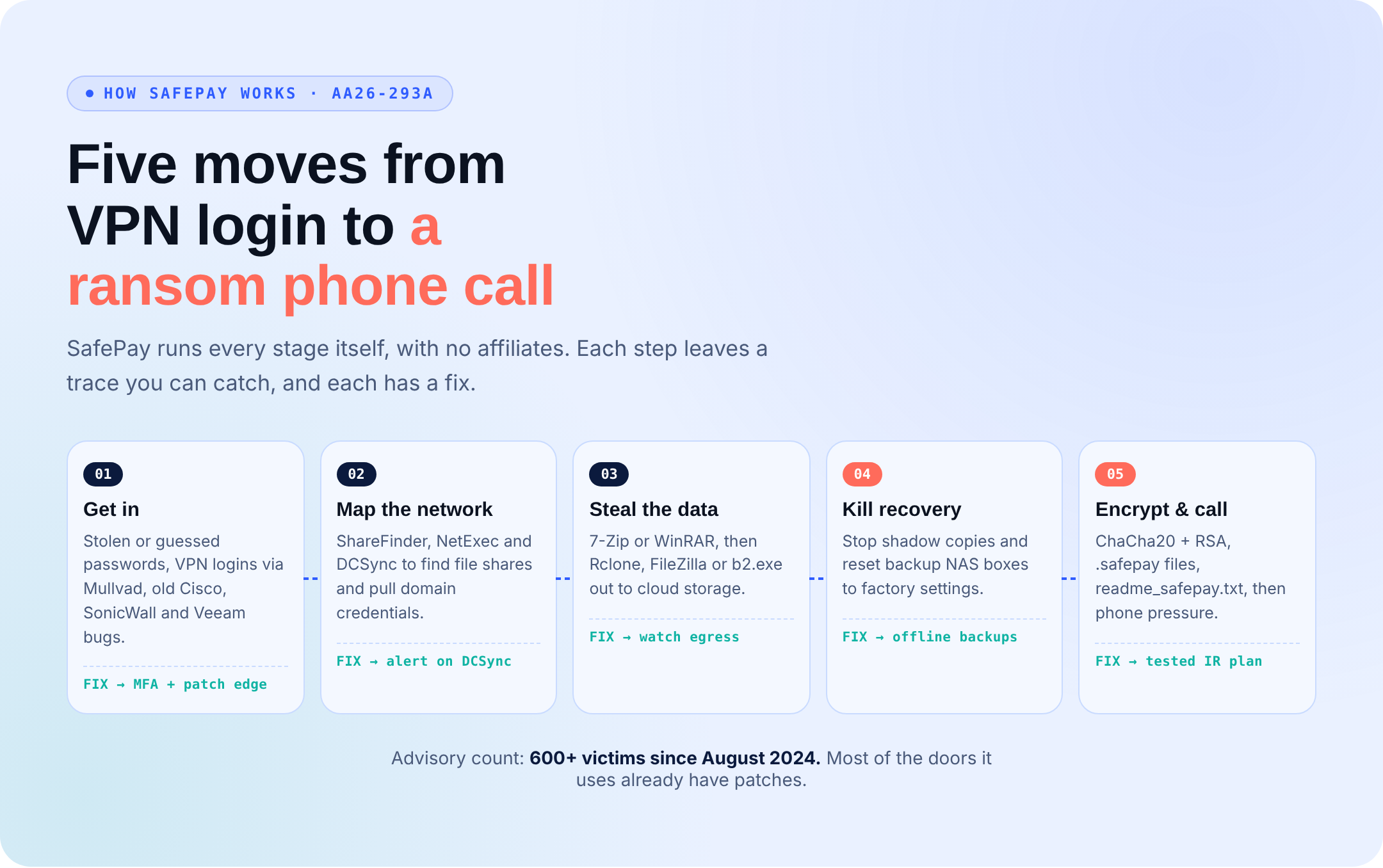
What’s the Impact of the Kneron SafePay Ransomware Claim?
For a chip designer, the worst case is leaked NPU designs, toolchain code and documents shared with manufacturing partners. Carmakers and camera brands that use Kneron silicon will want to know whether firmware or signing keys walked out. Until samples appear, treat the Kneron SafePay ransomware claim as unverified.
How to Avoid This
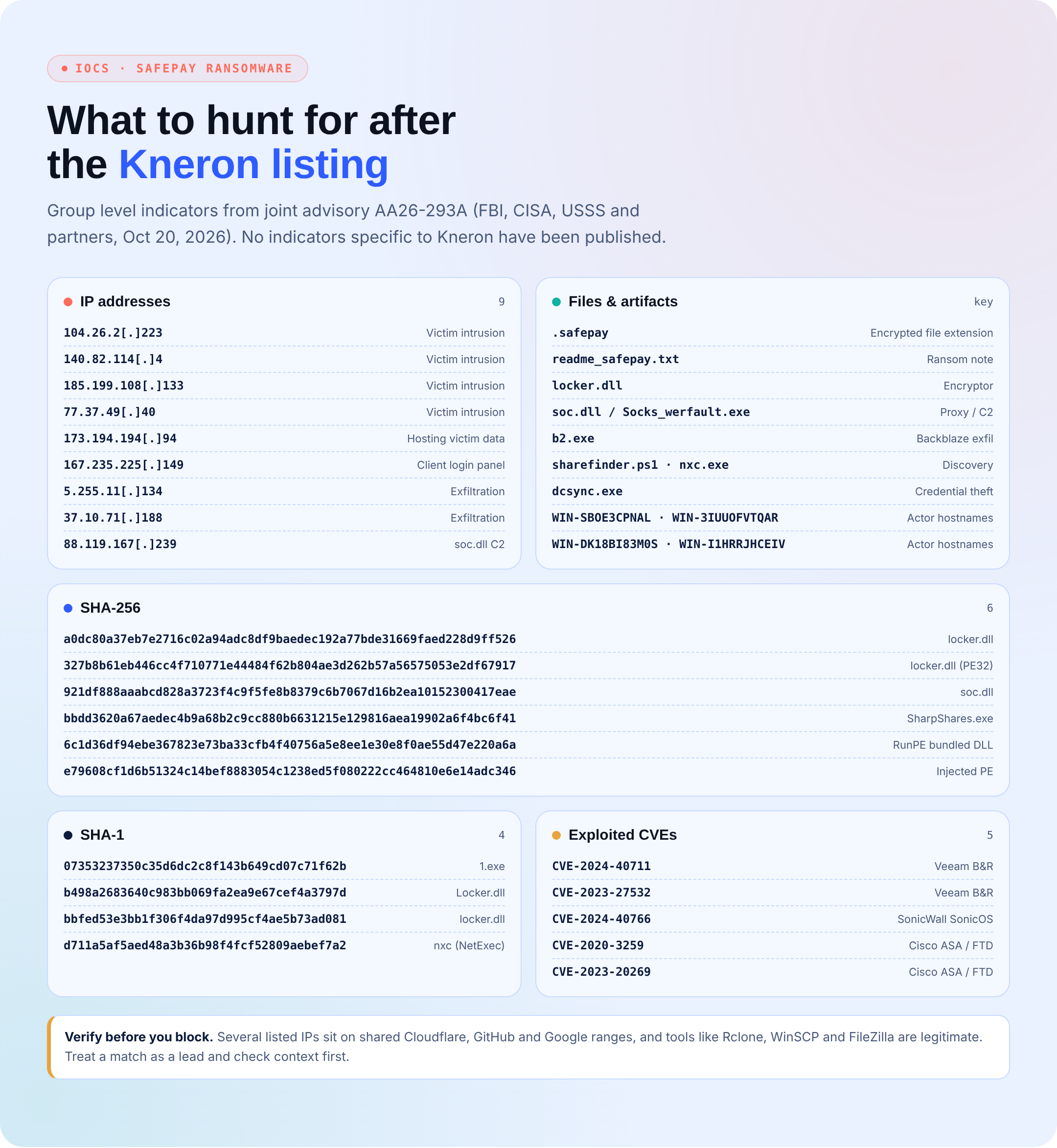
- Patch CVE-2024-40711 and CVE-2023-27532 (Veeam), CVE-2024-40766 (SonicWall), and CVE-2020-3259 plus CVE-2023-20269 (Cisco ASA and FTD).
- Require MFA on VPN, webmail and admin accounts, and alert on logins from commercial VPN ranges.
- Keep one backup copy offline or immutable, and test a restore every quarter.
- Flag Rclone, WinSCP, FileZilla or b2.exe on servers that have no reason to run them.
- Reset any credentials that turn up in infostealer logs.
The indicators below come from the October advisory and cover the SafePay group as a whole. None of them is tied to the Kneron SafePay ransomware listing itself, so check context before you block anything.
Your Backup Server Is on SafePay’s Shopping List
SafePay wins when an old VPN bug, a reused password and a reachable backup box sit unnoticed for months. Secure.com runs that work for you as a service, with one team and one bill.
- Managed Exposure Management finds every VPN, firewall and Veeam server you expose, ranks them by how reachable they really are, patches the ones SafePay targets and verifies each fix.
- Our experts attack your perimeter the way SafePay would, harden what breaks and prove it is closed.
- Managed SecOps watches 24/7 for Mullvad logins, shadow copy deletion and bulk uploads to cloud storage, and people step in to contain it fast.
- A vCISO sets your backup and MFA policy and gives the board a plain answer on ransomware exposure.
Related articles