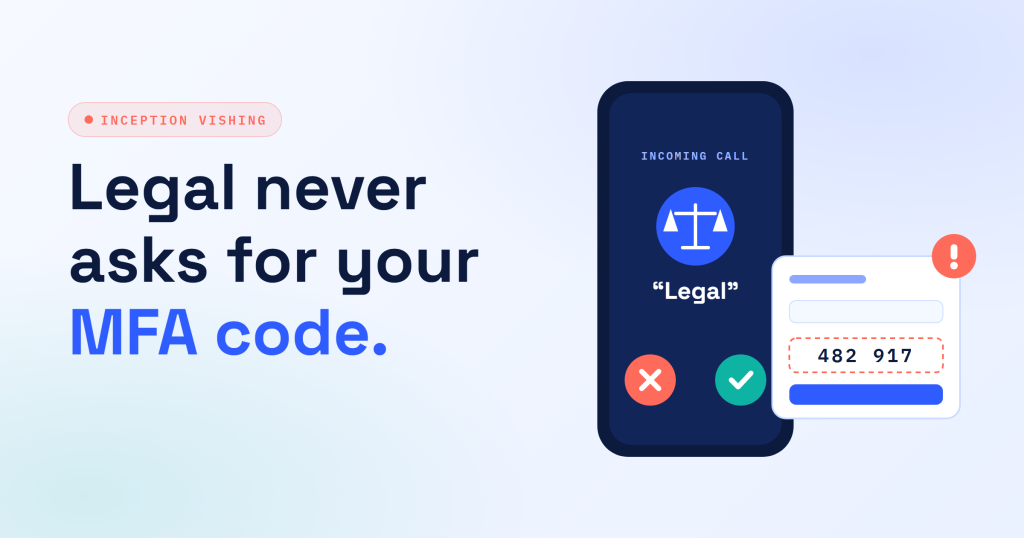
Inception Vishing Campaign Poses as Your Legal Team, Steals SSO Logins and Names 7 Firms in a Week
- Who should care: Any company that signs in through Okta or NetIQ SSO, and the help desk that resets its passwords.
- What could go wrong: One phone call hands an attacker a live SSO session and every SaaS app behind it.
- Do this: Move admins and high risk users to passkeys or FIDO2 keys this week.
- Worth remembering: The phishing kit can’t beat phishing resistant MFA. It lives on one time codes and push taps.
The phone rings. The caller says they’re from Legal and needs you to sign in right now. Okta says that call now comes from a crew once tied to ShinyHunters, and its stolen data has a new home.
What Happened?
Okta Threat Intelligence tracks the group as O-UNC-053, active since March 2026. Its victims used to show up on the ShinyHunters leak site, which went dark after arrests in September. In late October the callers switched to a legal theme. On November 16, a new leak site called Inception went live and began naming companies Okta had already tied to the crew’s phishing domains. Okta says the group has “very likely changed their brand affiliation.”
How the Call Works
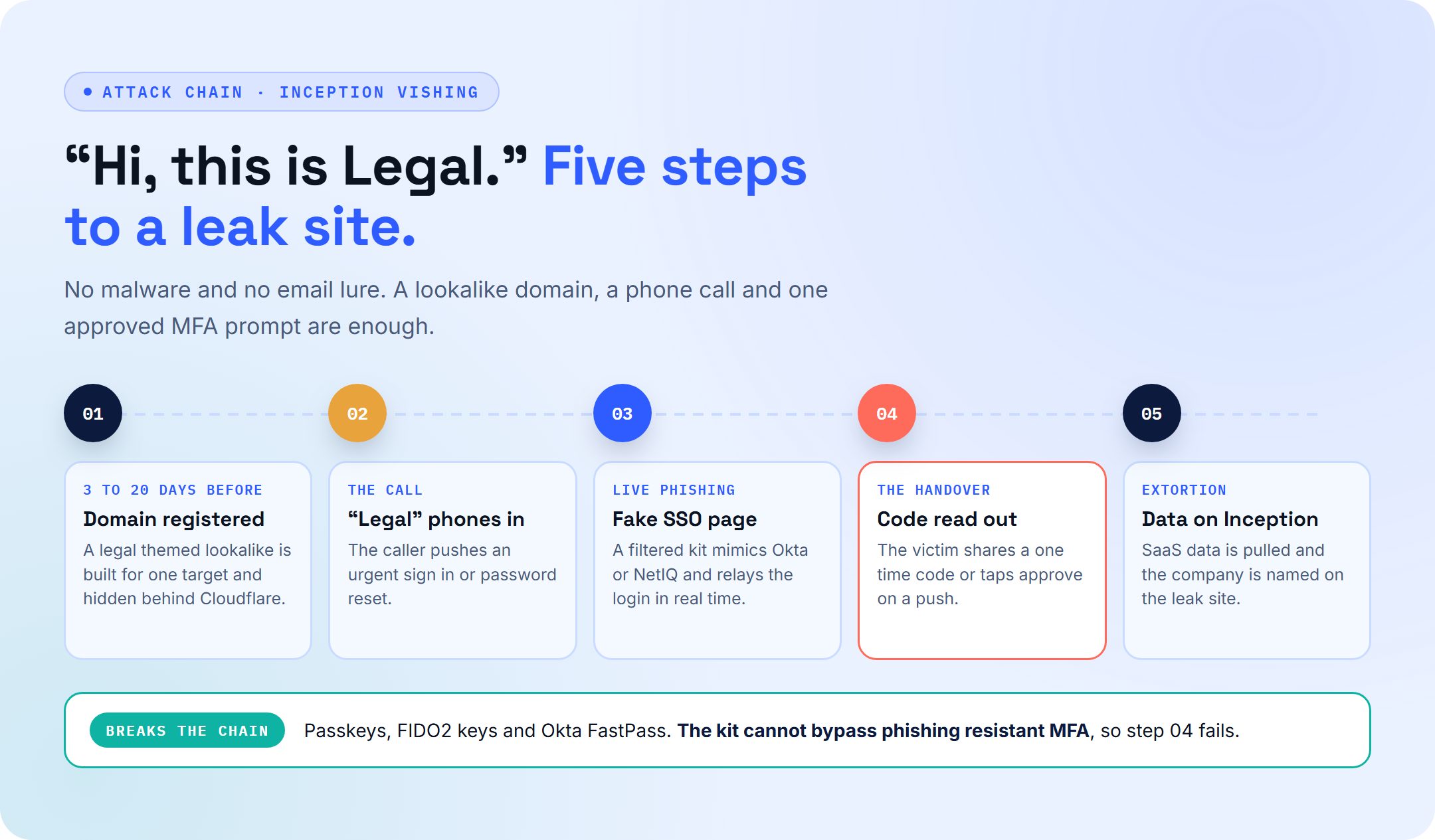
Each target gets its own lookalike domain, such as legal-company[.]com. Researchers have counted more than 70. A filtered kit shows the fake Okta or NetIQ page only to the victim, while the caller talks them into reading out a one time code or approving a push.
What’s the Impact?
Inception named AMD, Cigna Healthcare, Henry Schein, Paychex and PepsiCo on November 17, then AutoZone and Lucid. None has confirmed a breach, and Okta can’t verify the data. Still, one stolen SSO session opens every SaaS app connected to it.
How to Avoid This
- Switch to phishing resistant MFA: passkeys, FIDO2 keys or Okta FastPass. The kit can’t get past them.
- Tell staff and help desks that Legal will never call asking for a sign in or a code.
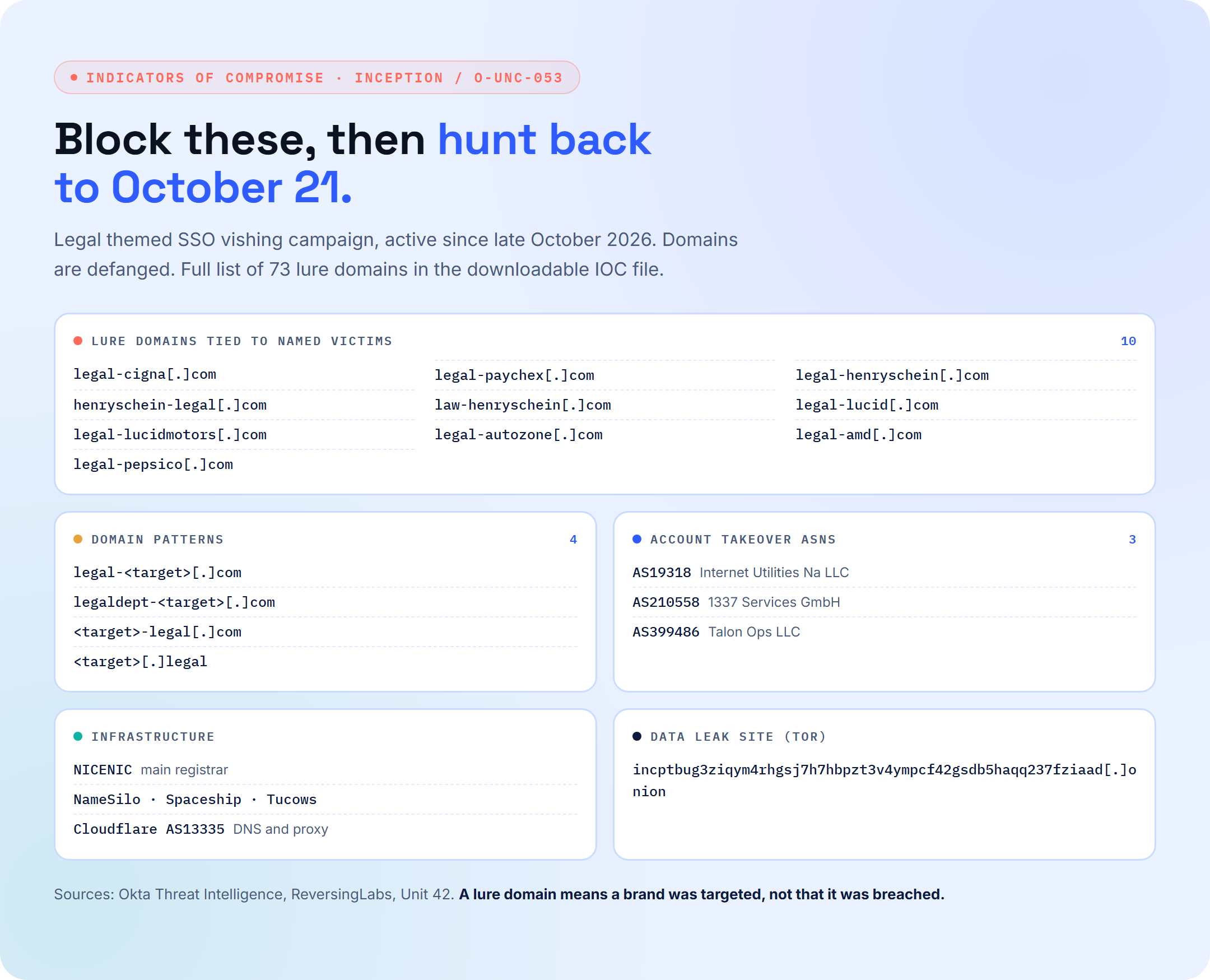
- Block the IOC domains below and alert on new ones that start or end with “legal.”
- Limit sensitive apps to managed devices and challenge sign ins from AS19318, AS210558 and AS399486.
- Hunt IdP, DNS and proxy logs back to October 21, 2026, and revoke sessions on any hit.
Caller ID Lies. Your Sign In Logs Don’t.
Vishing crews win in the minutes between a stolen code and someone noticing. Secure.com closes that gap with governed defense that runs around the clock and proves every fix.
- Managed SecOps watches SSO sign ins 24/7 and cuts off sessions from odd networks.
- Experts hunt your logs for the Inception domains and ASNs.
- Managed Exposure Management finds accounts still using codes or push, then verifies the move to phishing resistant MFA.
- Attack simulations test whether your help desk takes the “legal” call, then gaps get fixed and rechecked.
- A vCISO sets help desk verification rules and reports the risk to your board.
Inception Vishing Campaign: Indicators of Compromise
Okta, ReversingLabs and Unit 42 have published the domains and networks below. A lure domain means a brand was targeted, not that it was breached.