Coles Cyber Attack Hits Australia’s No. 2 Grocer. Shoppers Told to Lock Down Their Logins.
- Who should care: Coles, Liquorland and Flybuys customers following the Coles cyber attack, plus every retail security team that runs loyalty accounts at scale.
- What could go wrong: Scammers ride the headline with fake “reset your password” texts long before the investigation wraps up.
- Do this: Change any reused Coles password today and treat every Coles-branded message as suspect for a few weeks.
- Worth remembering: “No evidence so far” is an early finding. It isn’t a clean bill of health.
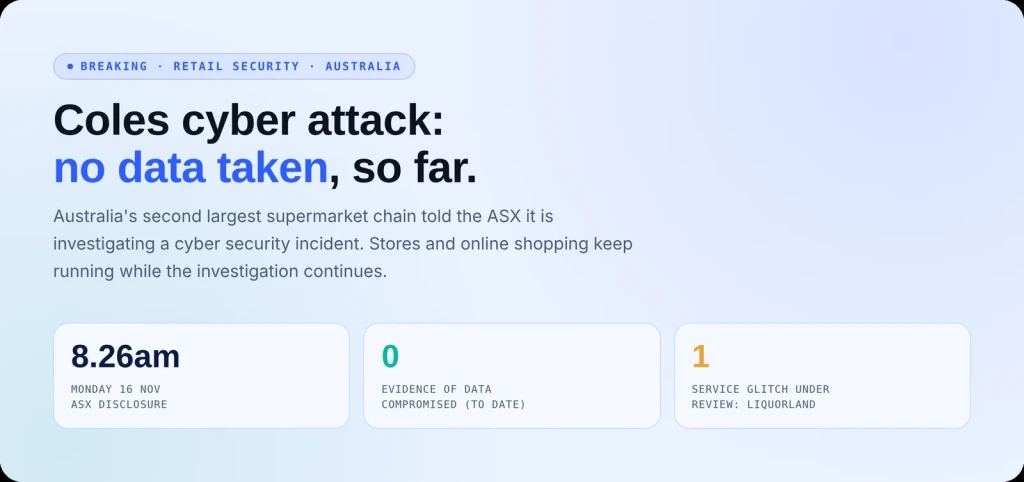
The Coles cyber attack hit Australia’s second-largest supermarket chain, and on Monday morning it told the market. So far, Coles says no data has left the building. Even so, it still wants customers to change their passwords.
What Happened in the Coles Cyber Attack?
Coles told the ASX at 8.26am on Monday 16 November that it was investigating a cyber security incident. Based on its work to date, it has found no evidence that customer, team or supplier data was compromised or removed. It is working with the Australian Cyber Security Center and outside security experts to contain and secure its IT environment.
For now, stores, the app and online orders are running normally. Gift cards also work, Flybuys shows no sign of trouble, and Coles Plus is unaffected. However, one crack has appeared: a small number of Liquorland click and collect customers have hit problems, and Coles hasn’t said whether that’s linked.
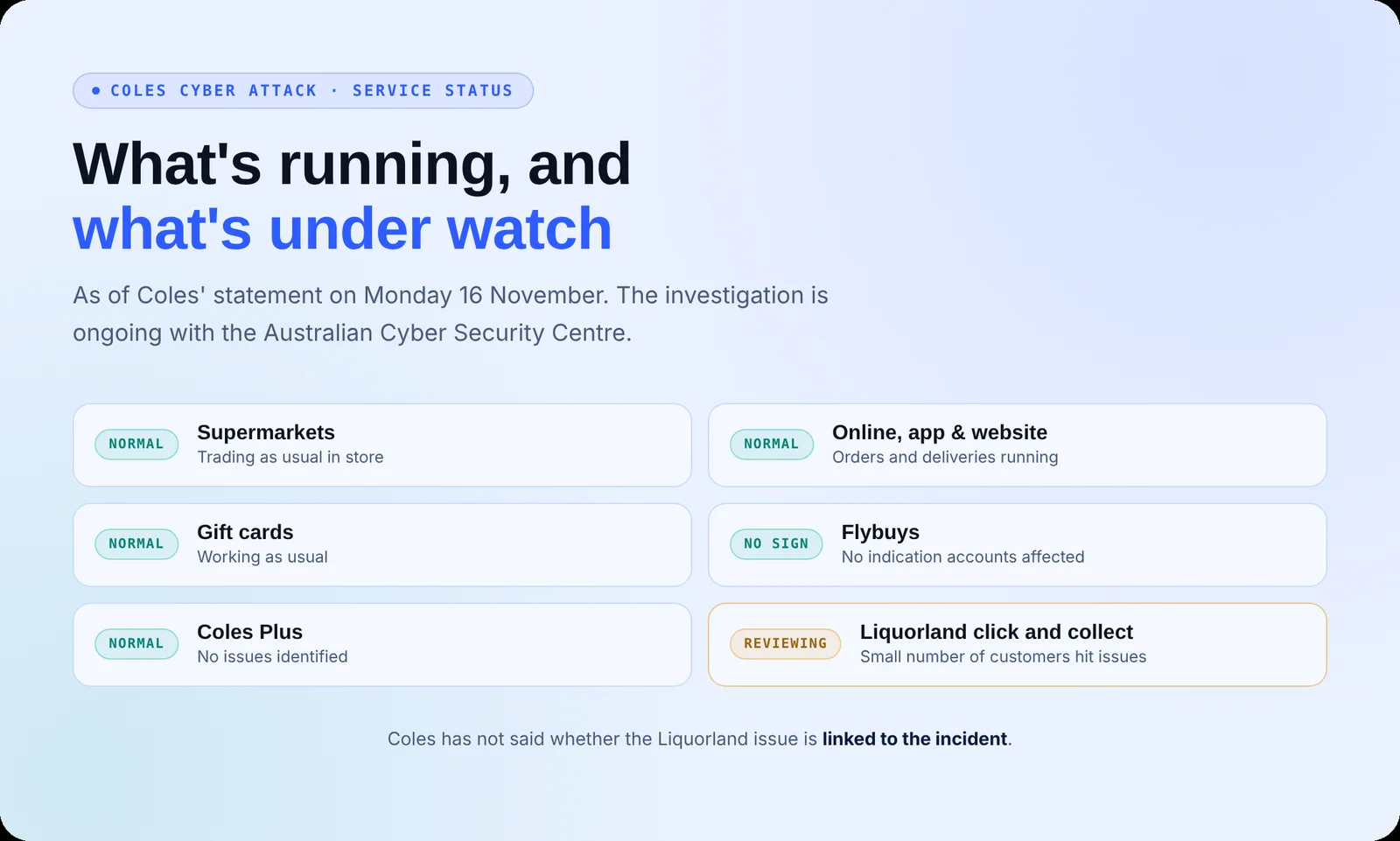
So far, nobody has claimed the Coles cyber attack. No one has published technical indicators.
What’s the Impact of the Coles Cyber Attack?
Right now, the damage is uncertainty. After all, a household grocery brand makes a perfect phishing costume, and attackers rarely wait for a forensic report. Also, Coles only knows what it has found “to date,” and early findings in big incidents often shift as investigators dig deeper.
Coles Cyber Attack: Indicators of Compromise
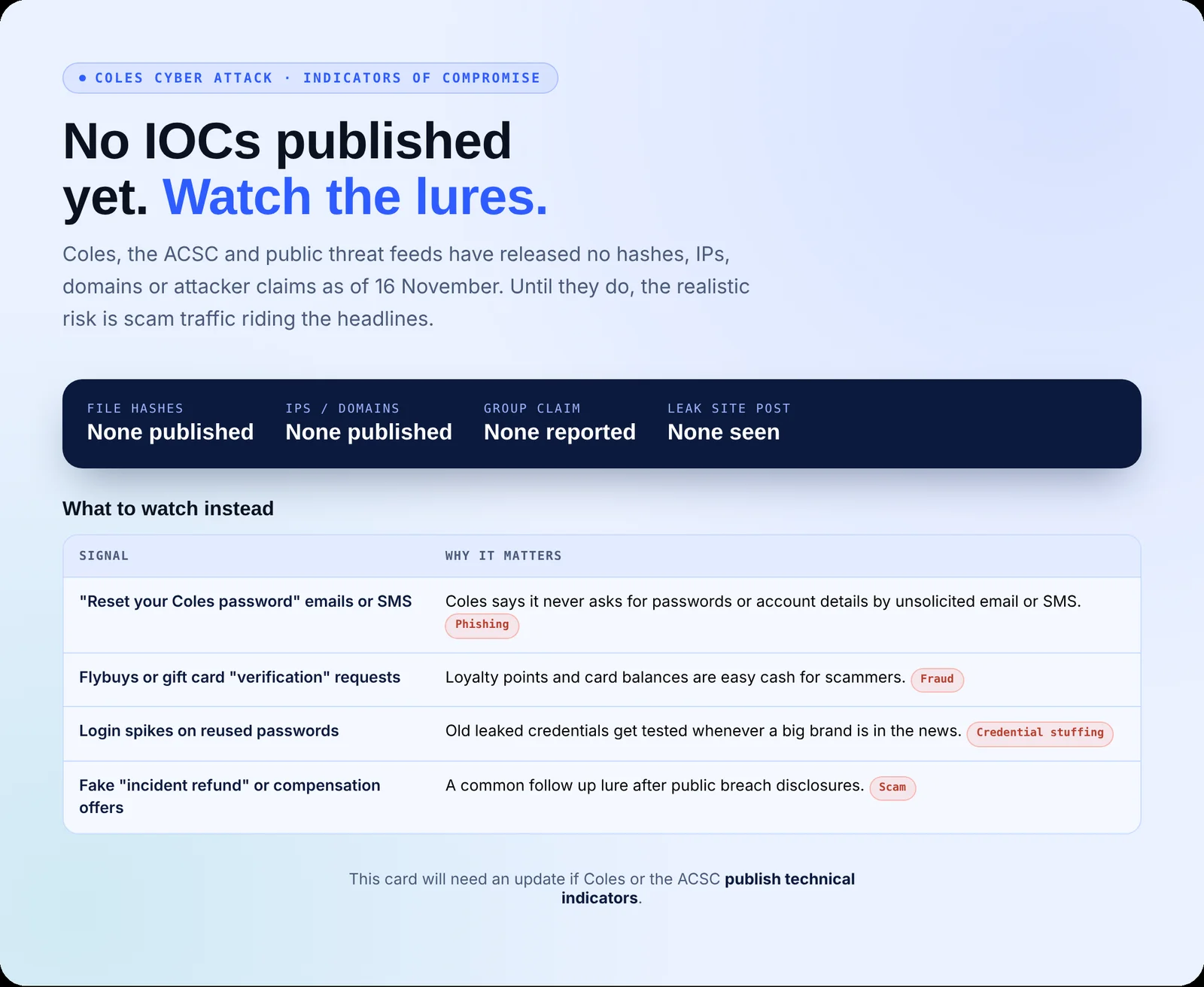
As of 16 November, Coles, the ACSC and public threat feeds have released no hashes, IPs, domains or attacker claims. Until they do, the realistic risk is scam traffic riding the headlines.
Not Coles’ First Brush
This isn’t the grocer’s first data scare. In April 2023, former service provider Latitude told Coles that its own breach had caught historical Coles credit card holder data. More recently, Qantas warned customers this month about an attack on travel tech provider Amadeus. Meanwhile, in October, a suspected overseas hacker pulled dental provider data from a NSW Health server. In short, Australian brands are getting hit from every side, and loyalty-heavy retailers hold exactly the logins criminals want.
How to Avoid This
- Use a unique password for your Coles, Flybuys and Liquorland accounts.
- Turn on multi-factor login anywhere the option exists.
- Ignore unsolicited emails or texts asking for passwords. Coles says it never asks that way.
- Check Flybuys points and gift card balances for anything odd.
- For businesses: test your own login flows for credential stuffing before a headline does it for you.
Your Team Sets the Rules. Ours Run the Drills.
A retailer’s worst week usually starts with a gap nobody tested. That’s why Secure.com’s AI teammates attack your defenses first, then harden what they find, and finally prove it worked.
- Simulate credential stuffing and phishing against your real login and loyalty flows.
- Spot exposed services and weak access paths before outsiders map them.
- Push fixes through approvals your team controls.
- Keep audit-ready evidence for regulators and the board.
- Give analysts back hours lost to alert triage. No more grunt work. No more burnout.
Attack. Harden. Prove. Repeat.