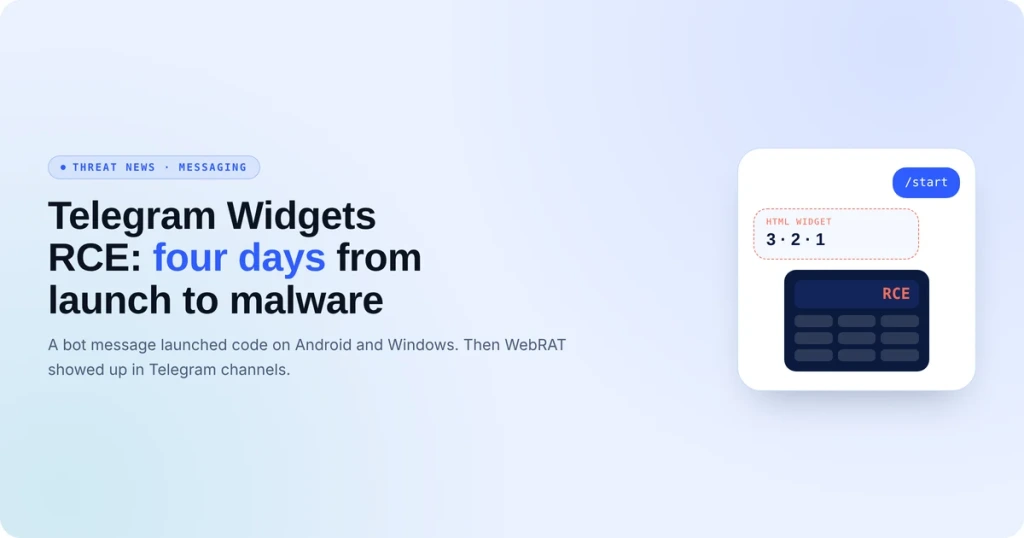
Telegram Widgets RCE: A Bot Message Opened the Calculator. Then Came the Malware.
- Who should care: Any team that lets staff run Telegram Desktop or Telegram for Android on work devices, since the Telegram widgets RCE hits both.
- What could go wrong: One tap on a bot widget or a channel visit can launch a hidden PowerShell script.
- Do this: Update Telegram today and stop opening widgets until every platform is confirmed fixed.
- Worth remembering: Telegram has fixed Android. It has not publicly confirmed a fix for Windows.
Telegram gave bots a way to send small apps inside chat messages on November 9. Two days later, researchers showed a Telegram widgets RCE that let one of those messages run code on a phone.
By the end of the week, Kaspersky was tracking malware. Here is what happened, what Telegram changed and what your team should do now.
What Happened?
HTML widgets arrived in Telegram 13.2, and on November 9 Bot API 10.4 opened them to every bot. Widget code runs in what Telegram calls an isolated QuickJS sandbox. In practice, it did not hold.
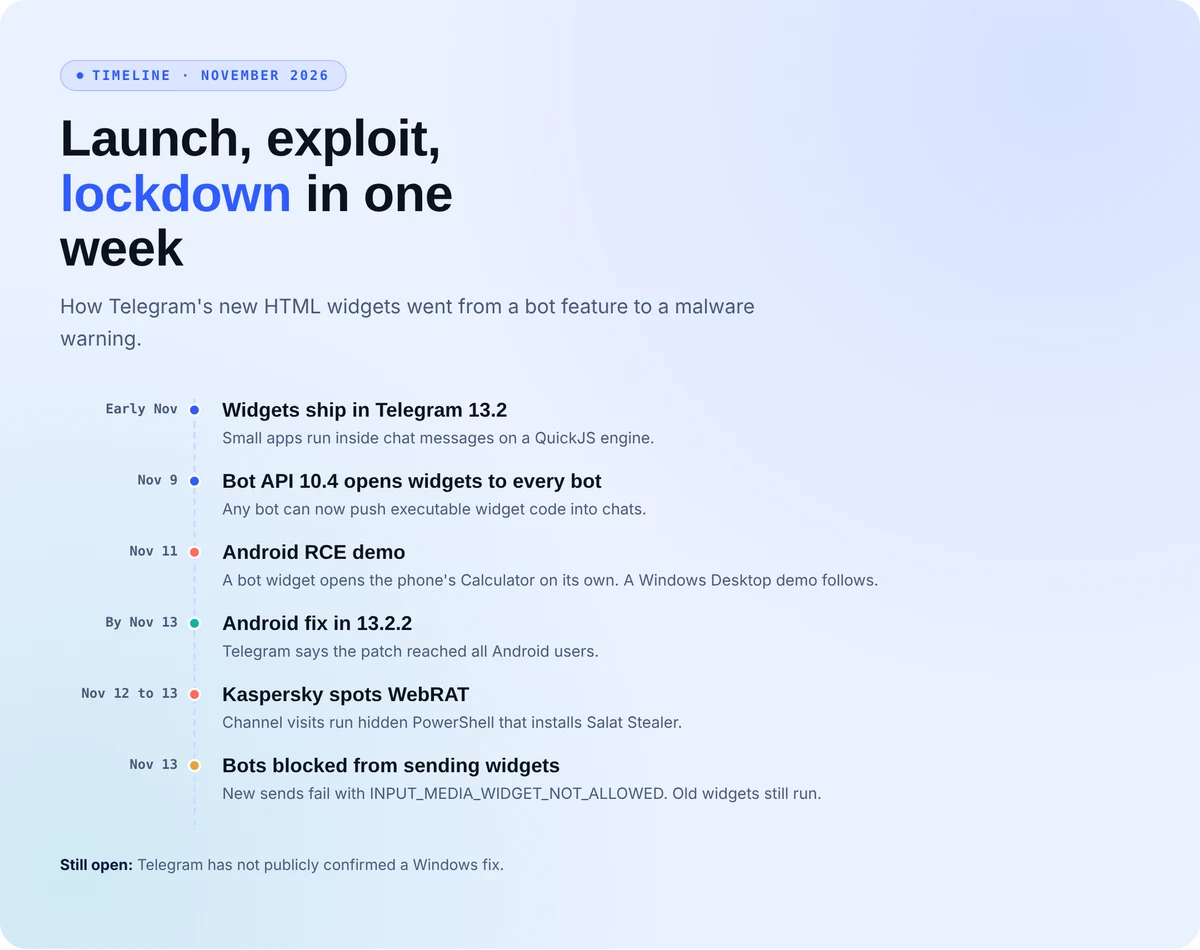
On November 11, researchers posted a video of an Android user tapping Start on a bot, and the phone opened its Calculator by itself. A second demo showed the same Telegram widgets RCE on Telegram Desktop for Windows.
On the night of November 12 to 13, Kaspersky caught visits to certain Telegram channels silently running a PowerShell script that fetched WebRAT, also called Salat Stealer, according to Kod.ru. Kaspersky calls the widget link likely, not proven.
What’s the Impact of the Telegram Widgets RCE?
WebRAT is a remote access trojan and infostealer that hands attackers full control of an infected PC. It steals crypto wallet data, browser credentials, and Telegram sessions. Crypto exchange Bybit warned users that a compromised phone puts the other apps on it at risk.
As a result, if the widget flaw is the entry point, one chat message is enough to put a stealer on a work laptop.
Telegram’s Response
Telegram patched the Android bug in version 13.2.2 and pushed it to all users. On November 13, it also blocked ordinary bots from sending widgets, even in private chats. Developers now get an INPUT_MEDIA_WIDGET_NOT_ALLOWED error. However, old widgets already sitting in chats still work.
Telegram’s founder disputes the RCE claims. He says nobody can be hacked just by receiving a message, because the user had to start a third-party service first, and that the server-side fix closed even that path. No outside team has confirmed the researchers’ Telegram widgets RCE claims yet.
How to Avoid This
- Update Telegram on Android to 13.2.2 or later, and update Telegram Desktop as soon as a new build lands.
- Do not open widgets, and do not press Start on bots you do not know.
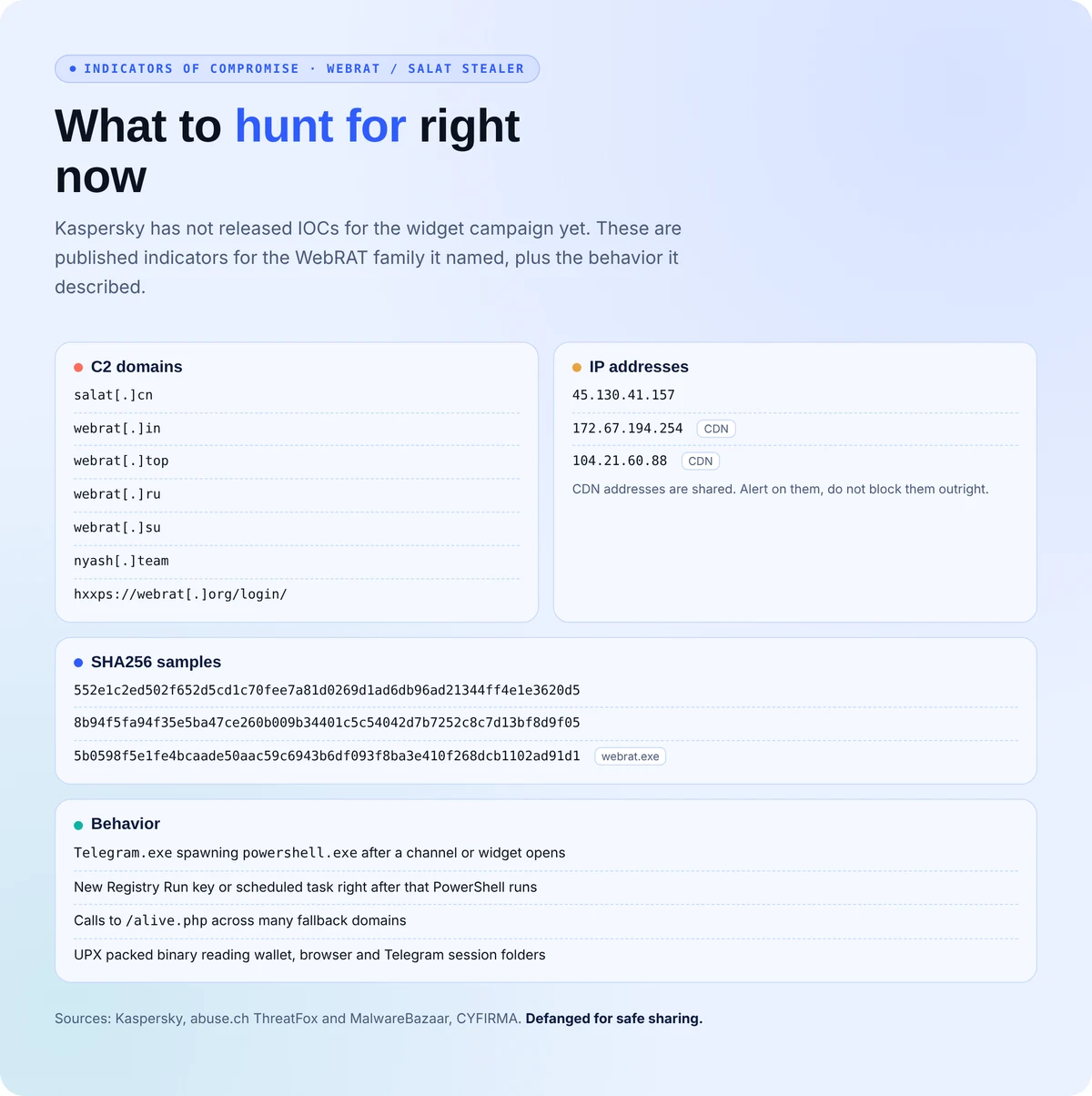
- Alert on
Telegram.exespawningpowershell.exeon Windows endpoints. - Block known WebRAT domains at DNS and hunt for new Run keys and scheduled tasks.
- If a device looks infected, revoke all Telegram sessions and move crypto funds from a clean machine.
WebRAT IOCs to Hunt For
Kaspersky has not published indicators for this campaign yet. The list below covers known WebRAT and Salat Stealer infrastructure from abuse.ch ThreatFox, MalwareBazaar, and CYFIRMA, plus the behavior Kaspersky described. Two of the IPs are shared CDN addresses, so alert on them instead of blocking them.
The Bottom Line
Telegram says the Telegram widgets RCE never existed. Kaspersky, on the other hand, thinks someone is already using it. So patch your clients, leave widgets closed, and watch for PowerShell where it does not belong.