ARTEX AI Agents Raid Exposed LiteLLM and Dify Apps, Then Spend the Stolen Keys Hunting for More
- Who should care: Anyone running self-hosted AI gateways or app builders.
- What could go wrong: One open admin page hands over every provider key you store.
- Do this: Change default admin credentials and rotate any key that ever sat in a repo or config file.
- Worth remembering: Amazon says none of these techniques were new.
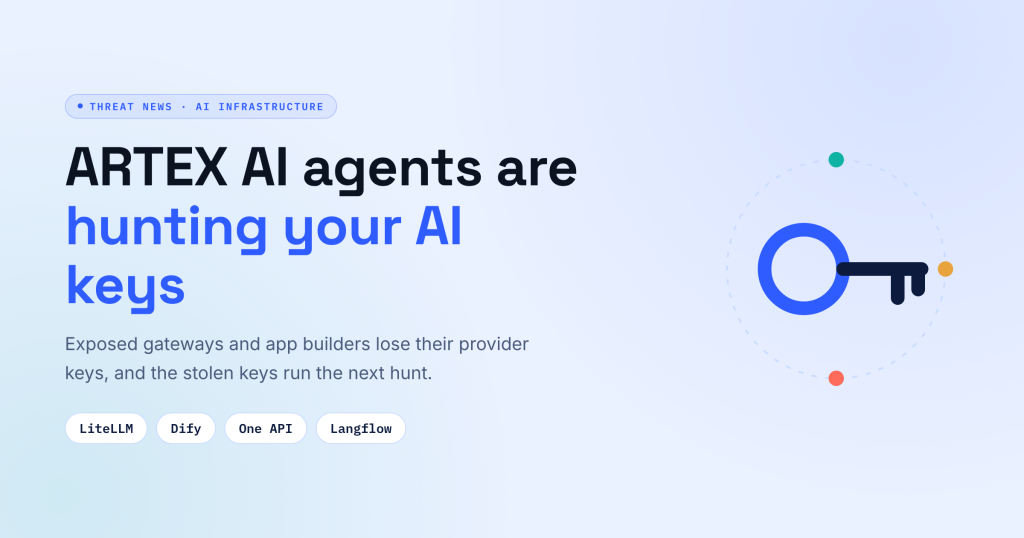
Attackers have handed the dull part of credential theft to AI agents. Amazon’s decoy servers caught ARTEX AI agents scanning exposed AI apps, pulling stored provider keys, testing them, and feeding the working ones back into the hunt.
The FBI warned about the ARTEX AI hacking tool last week. Amazon’s report adds a narrower target: the AI gateways that hold your provider keys.
What Happened?
Between October 3 and November 5, Amazon’s MadPot decoy network logged requests from autonomous agents, according to a new Amazon Threat Intelligence report. Some decoys posed as LLM inference APIs, so the agents sent over their own campaign records: instructions, tool output, and results.
Amazon says, with moderate confidence, that the agents ran on ARTEX, an open-source AI penetration testing framework, and that several separate China-linked groups operated them. The main campaign of ARTEX AI agents targeted apps that pool keys for many providers, such as One API, New API, Veloera, Sub2API, and LiteLLM, plus builders like Dify, FastGPT, Langflow, RAGFlow, Open WebUI, LobeChat, and Ollama.
How the ARTEX AI Agents Worked
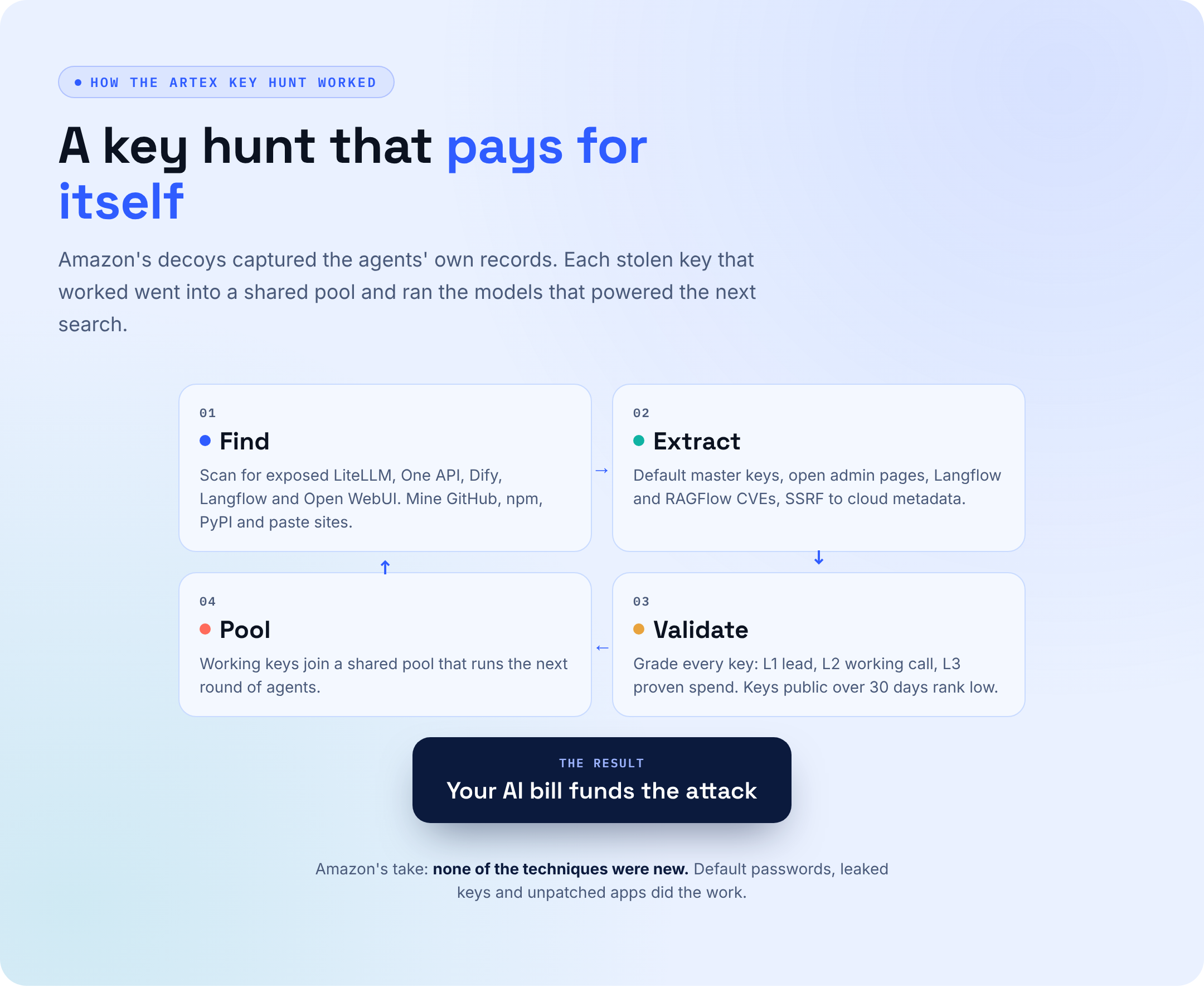
An operator set a goal, a planner agent split it into tasks, and worker agents ran the tools. They tried LiteLLM’s default master key, half-finished installs, CVE-2025-3248 in Langflow, CVE-2026-28797 in RAGFlow, an isCliRequest header bypass in One API systems, and SSRF to cloud metadata services.
They also mined GitHub, npm, PyPI, container layers, paste sites, and Telegram for leaked keys. They graded every key, from lead to working call to proven spend. Keys public for more than 30 days counted as low value. Someone else had probably found them first.
A second campaign aimed deepfakes at identity checks on two crypto exchanges. The live deepfake failed every attempt.
What’s the Impact?
Someone else runs premium models on your bill. The ARTEX AI agents also used stolen keys to power the next round of hunting, so every leak funds the attacker. When agents found cloud credentials, they went after secret stores. Amazon can’t confirm which attacks worked.
Indicators of Compromise
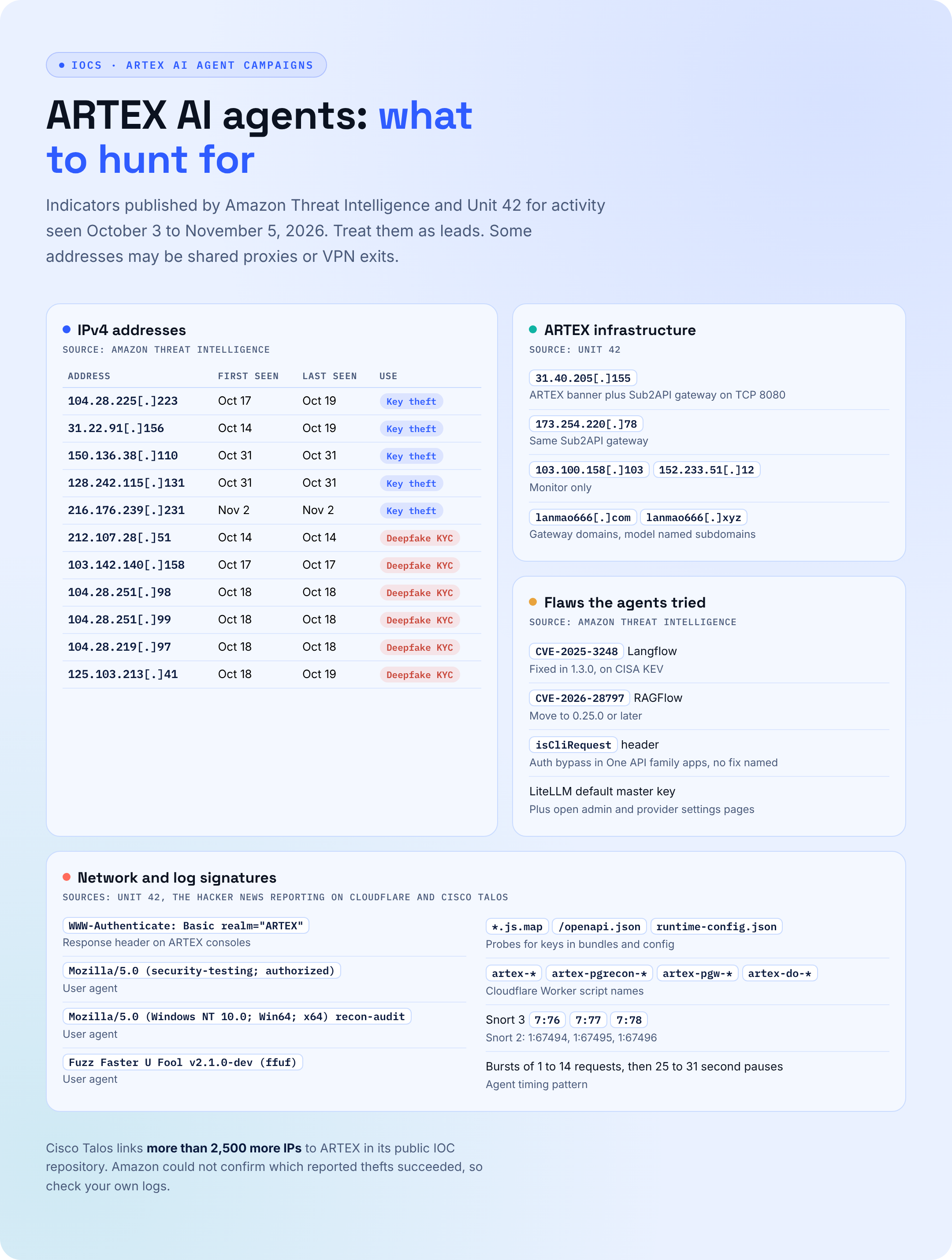
Amazon released 11 IPv4 addresses seen between October 14 and November 2. Cisco Talos ties more than 2,500 IPs to ARTEX, The Hacker News reports, and Unit 42 shared user agents and gateway domains tied to ARTEX AI agents. Treat them as leads, since some may be shared proxies or VPN exits.
How to Avoid This
- Change default admin credentials, including the LiteLLM master key, and finish every install.
- Patch Langflow to 1.3.0 or later and RAGFlow to 0.25.0 or later, and check One API family systems for the isCliRequest bypass.
- Scan for leaked keys in repos, container images, JavaScript bundles and env files, then rotate anything exposed.
- Keep AI gateways and admin pages off the public internet.
- Set spend alerts on every AI provider account and search your logs for the published IPs.
Their Agents Hunt Your Keys. Send Yours First.
ARTEX AI agents ran a loop that never got tired: find a gateway, pull the keys, test them. Secure.com’s AI teammates run that loop against your stack first, and your team sets the rules.
- Red Teammate probes your AI gateways for default master keys and open admin pages, inside a scope you approve.
- AppSec Teammate finds provider keys in repos, bundles, and env files before a scanner does.
- Cloud Teammate flags SSRF paths to metadata and long-lived cloud keys.
- SOC Teammate hunts the published IPs across your logs, and flags AI spend spikes.
- Every fix gets a named approver and a retest, so you can prove the door is shut.
Attack. Harden. Prove. Repeat.