ARTEX AI Hacking Tool Reaches Admin Access in Under 3 Hours, FBI Warns
- Who should care: SOC teams, MSPs, and anyone running Microsoft 365 or public web apps the ARTEX AI hacking tool can reach.
- What could go wrong: An AI agent finds the one forgotten app you stopped watching and turns it into domain admin before lunch.
- Do this: Inventory every internet-facing system this week, then lock down OAuth app consent.
- Worth remembering: ARTEX uses no zero days. It wins on weak identity hygiene and exposed services.
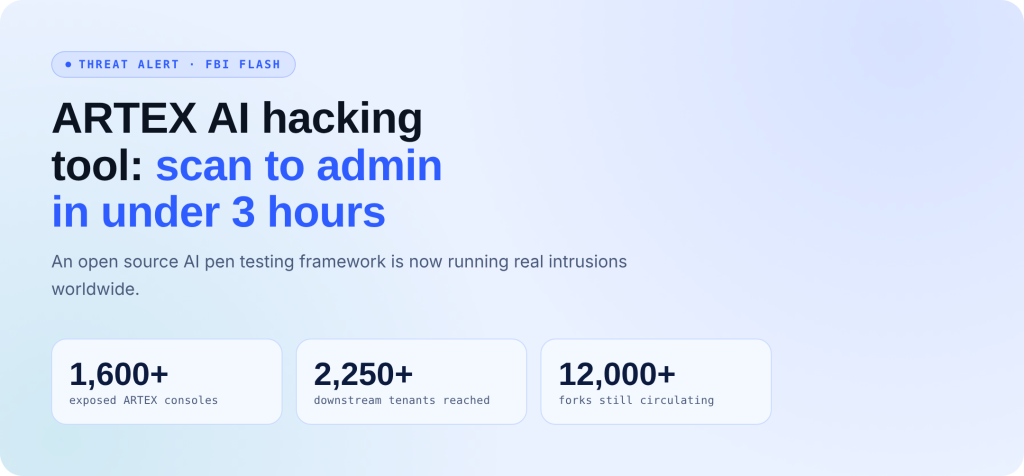
The FBI has a fresh warning for defenders. The ARTEX AI hacking tool, an open-source penetration testing framework, is now running real attacks worldwide. Some intrusions went from first scan to privileged access in under three hours.
What Happened With the ARTEX AI Hacking Tool?
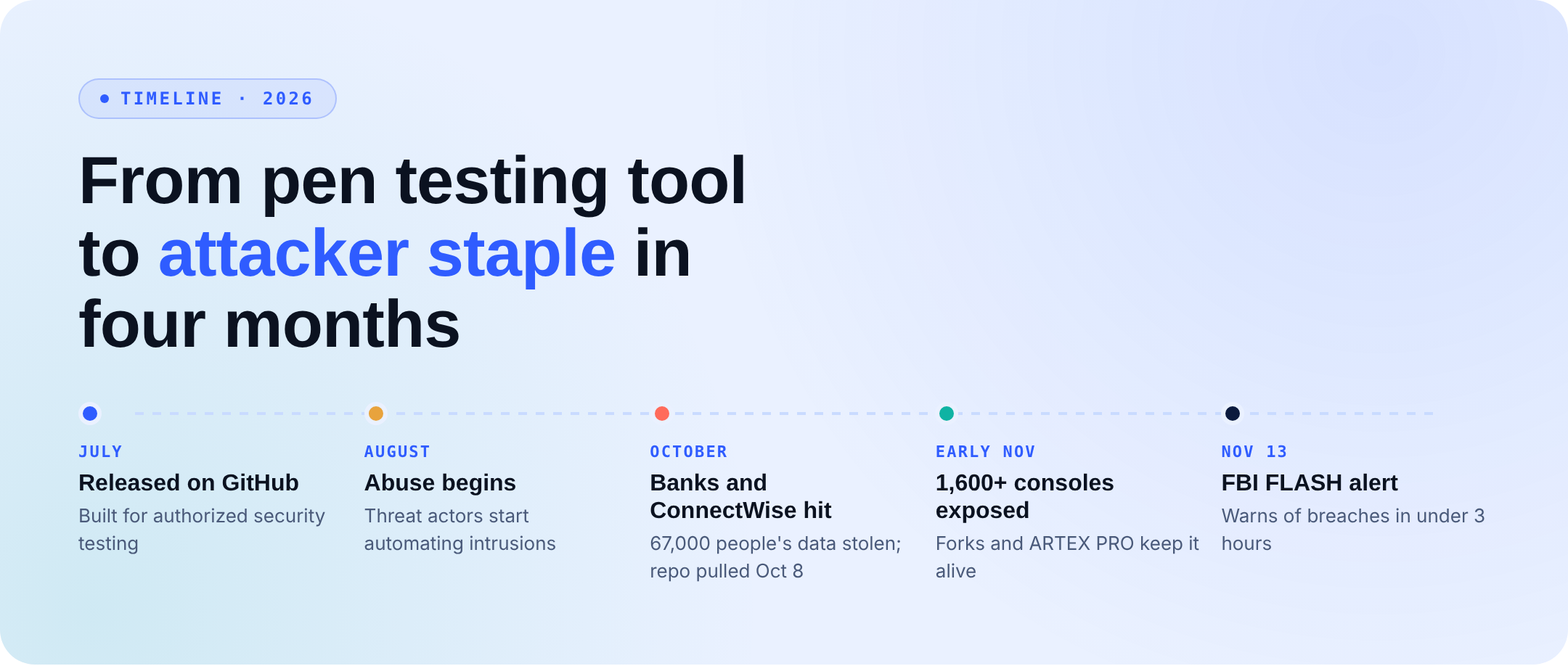
On November 13, the FBI issued a FLASH alert on ARTEX. The tool landed on GitHub in July 2026 for authorized security testing. Written in Go, it connects to outside language models, takes a goal in plain English, and hands the job to AI agents that scan, exploit, escalate, and pull data out with little human input.
Attackers have used it since at least August. The developer pulled the repository on October 8, yet more than 12,000 forks, archived copies, and a paid ARTEX PRO edition keep it in circulation. In early November, the FBI counted over 1,600 exposed ARTEX consoles. It fits a wider shift we covered in Hackers Now Run AI as a Daily Work Tool.
What’s the Impact?
One campaign stole personal data on about 67,000 people from South Korean financial institutions. A China-aligned group used the ARTEX AI hacking tool to speed up the ConnectWise Cloud Backup breach, which reached more than 2,250 downstream Microsoft 365 tenants. Researchers have tracked ARTEX activity against 200+ organizations.
How the Attack Runs
ARTEX does not need a fresh CVE. It goes after the boring stuff. Agents hammer partner portals and employee apps for SQL injection, SSRF, XXE, forged SAML assertions, and open file uploads. Once inside, they drop web shells, add credentials to existing OAuth apps, and run DCSync or Kerberoasting to grab domain keys. Data leaves through Tor, Chisel tunnels, and rotating webhook.site endpoints.
ARTEX AI Hacking Tool: Indicators of Compromise
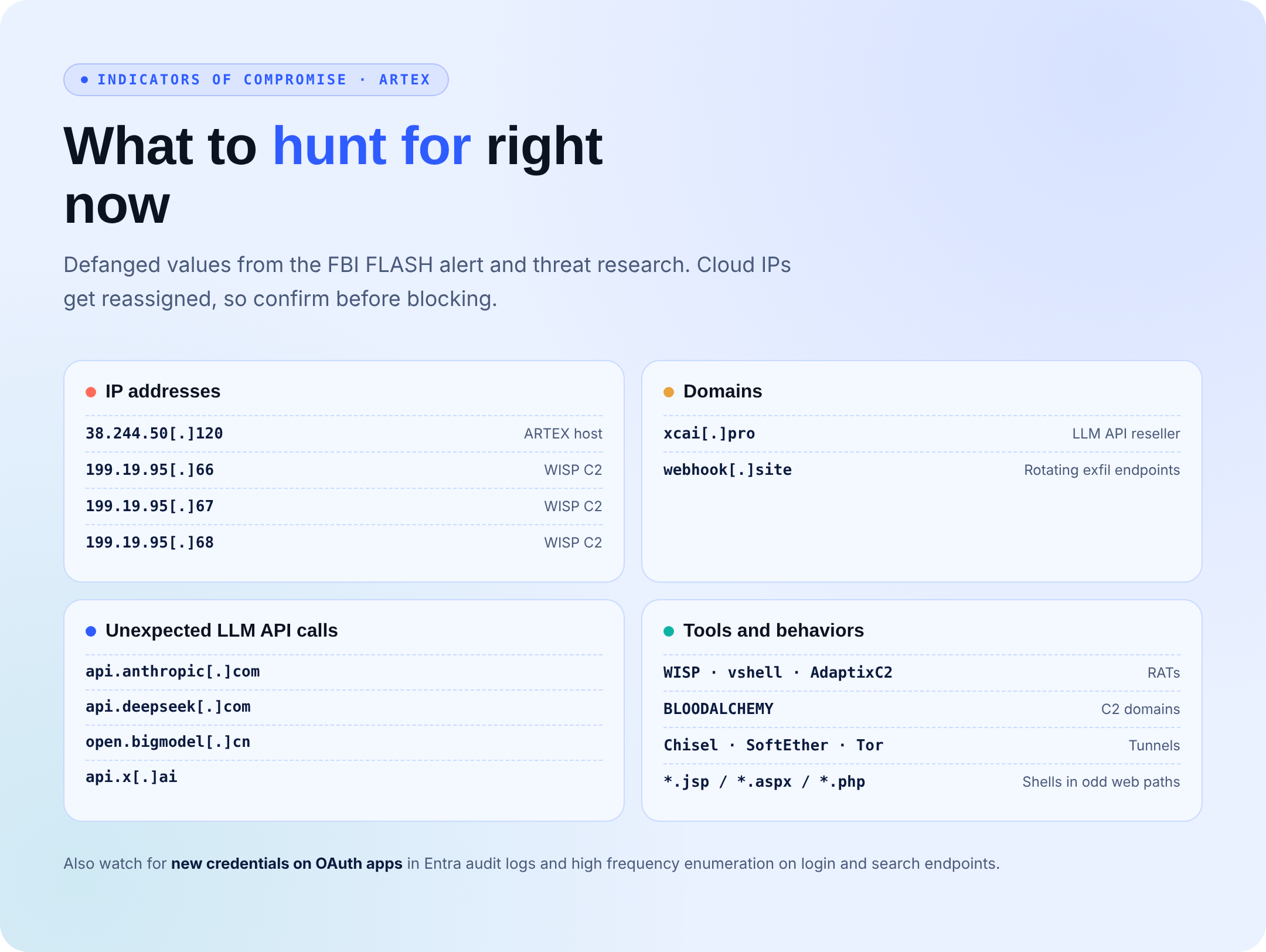
The FBI and threat researchers flagged an ARTEX host at 38.244.50[.]120, WISP C2 nodes at 199.19.95[.]66 through 199.19.95[.]68 and the LLM API reseller domain xcai[.]pro. Watch for outbound LLM API calls from servers that should never make them, and confirm cloud IPs before blocking. Cyberpress has more on how the agents behave once inside.
How to Avoid This
- Inventory every internet-facing app, including partner, supplier and business unit portals
- Restrict Kudu, SCM, and cloud admin endpoints, and turn off basic publishing auth
- Apply least privilege to multi-tenant app consent and review Entra audit logs for new credentials
- Rate limit login and search endpoints, and stop returning stack traces or SQL errors
- Preserve logs before cleanup, and do not delete enterprise apps as a first response
Beat the Agent to Your Own Weak Spots
Attackers now probe your perimeter around the clock. Defenders need that speed too, with humans holding the rules.
- AI Teammates attack your own defenses continuously, so exposed apps surface before an outside agent finds them
- Findings turn into hardening tasks with owners, so fixes ship instead of sitting in a report
- One shared context of assets, identities and exposure lets Teammates spot risky OAuth grants and stale vendor access fast
- Your team sets the rules and approves the actions, with every step logged for audit
- Analysts get hours of triage back: no more grunt work, no more burnout
Worth remembering: The gap between scan and breach is now measured in hours. Attack yourself first, harden what you find, and prove it worked. Then repeat.