
SOC
What Broke in Your Last Red Team Exercise That Your Tools Didn’t Catch
Your stack didn't catch it. The red team did. Here's what keeps slipping past tools in modern red team exercises, and what to do about it.
Practical SOC playbooks for alert triage, enrichment, investigation workflows, case management, and reducing MTTR with automation.
Your stack didn't catch it. The red team did. Here's what keeps slipping past tools in modern red team exercises, and what to do about it.
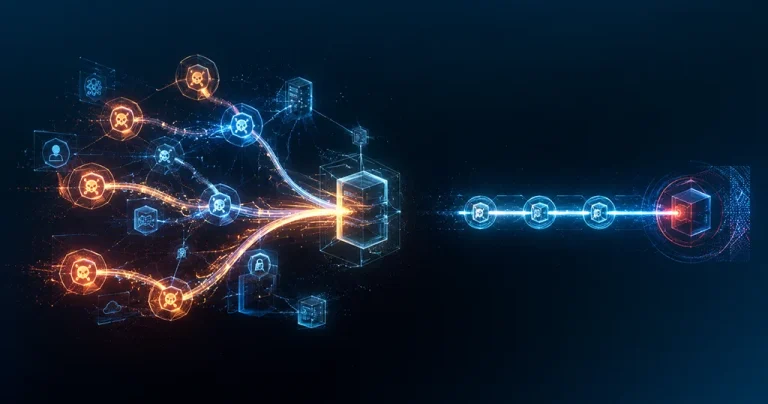
Red teaming and breach and attack simulation both mimic attackers, but they answer different questions. Here is how the two compare and when each fits.
A practical playbook for scoping, running, and scaling purple team exercises that actually close detection gaps instead of sitting in a PDF.

The data behind why most SOC alerts never need a human, and what to do about the ones that do.

Incident response automation helps SOC teams stop threats faster by replacing slow manual workflows with smart, policy-bound playbooks that act in seconds.

Red teaming and penetration testing get mixed up all the time. Here is the real difference, when to use each, and where autonomous testing fits.

Secure.com joins Anthropic's Cyber Verification Program, earning verified access to Claude's dual-use capabilities for defensive security work.

A big agent fleet spreads thin and owns nothing. Learn why one teammate that owns a function end to end delivers provable value on day one.

Alert fatigue is not a staffing problem. Here is how SOC automation helps lean and mid-market security teams close the gap.

Agentic describes how an AI works. Autonomous describes how far it goes without a human. The difference decides who answers for the action.
Why human in the loop breaks down in agentic SOCs, and how governed AI teammates gate only the actions that matter, without slowing your team.
SOC teams are drowning in alerts — asset intelligence is what separates the noise from the threats that actually matter.