- Who should care: The Osaki Electric ransomware attack is a warning for manufacturers and utilities that run internet facing VPNs.
- What could go wrong: One guessed password turns into a stopped production line.
- Do this: Put MFA on every VPN account today, including old service and vendor logins.
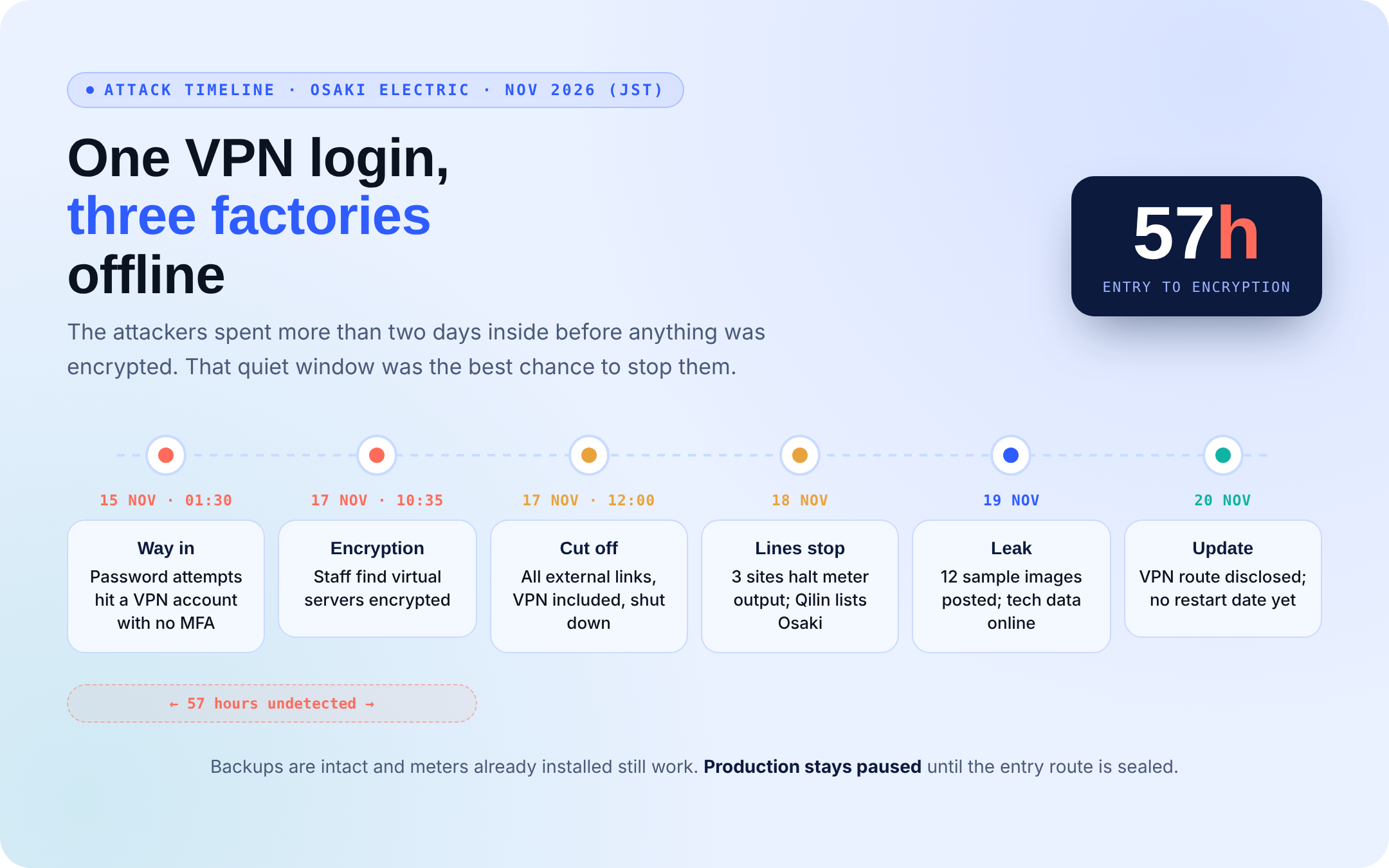
- Worth remembering: The attackers sat inside for 57 hours before they encrypted anything.
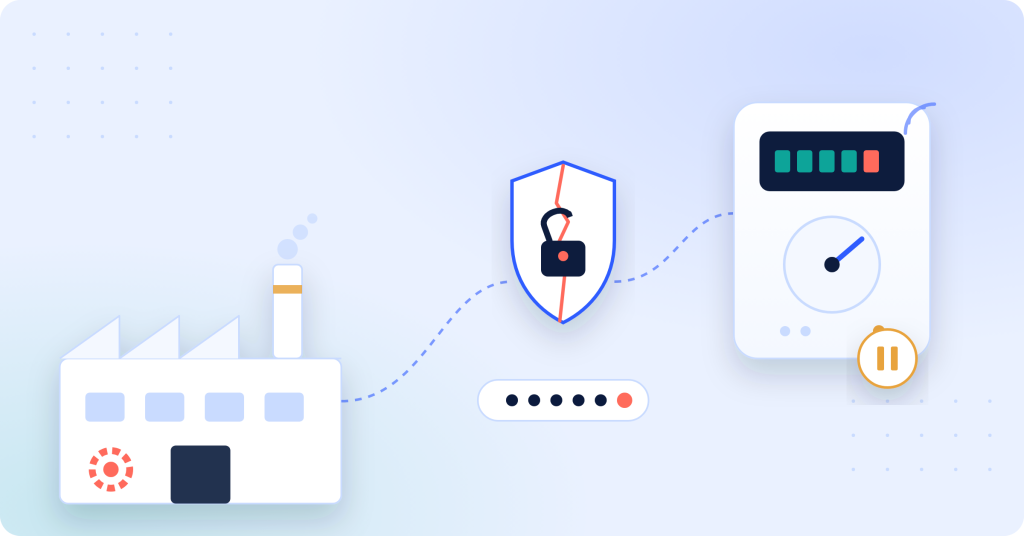
Japan’s largest smart meter maker can’t make smart meters right now. The Osaki Electric ransomware attack started at a VPN device used for remote connections. Osaki says the attackers used an account that lacked multifactor authentication (MFA). They stayed quiet for over two days, then encrypted the servers its factories depend on.
What Happened in the Osaki Electric Ransomware Attack?
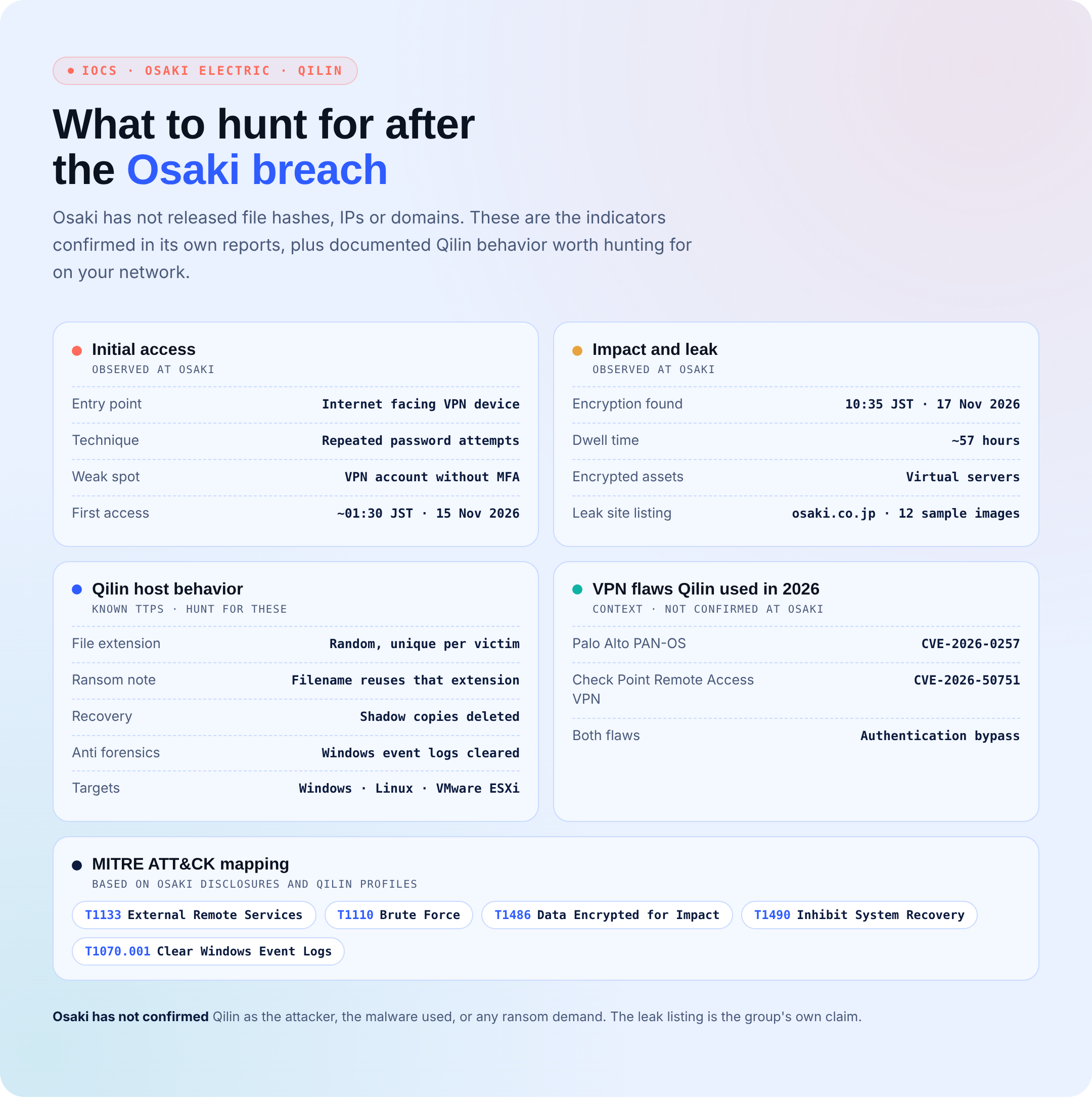
The intrusion began around 1:30 a.m. on Sunday, November 15. Osaki believes repeated password attempts targeted the account without MFA. At 10:35 a.m. on November 17, staff confirmed encryption on some virtual servers, about 57 hours after the intrusion. By noon, the company had cut all external connections, including the VPN. On November 18, it shut down production systems at Saitama Works, Iwate Osaki Electric and Osaki Platec. The Qilin gang listed Osaki on its leak site that same day.
What’s the Impact of the Osaki Electric Ransomware Attack?
Osaki has frozen smart meter production and shipments, and it has no restart date yet. Meters already installed still work, and backups are intact. Qilin posted 12 sample images. Some show confidential documents and names believed to belong to employees. Long shipment delays could push back utilities’ plans to install and replace meters.
The Bigger Picture: Osaki Electric Ransomware Fits a Pattern
Osaki hasn’t confirmed Qilin as the attacker or said whether the attackers demanded a ransom. Still, the details match what police have seen across Japan. Japan logged 123 ransomware cases in the first half of 2026, the most of any half year on record. Manufacturing made up about 30%, and VPN devices accounted for half of the reported infection routes. Qilin affiliates have also used two VPN authentication bypass flaws this year: CVE-2026-0257 in Palo Alto Networks gear and CVE-2026-50751 in Check Point VPNs.
How to Avoid This
- Require MFA on every VPN account, including service and vendor logins.
- Alert on repeated failed VPN logins and lock the account.
- Remove stale remote access accounts every month.
- Patch VPN appliances as soon as fixes ship.
- Keep offline backups and test your restores often.
57 Hours Is a Long Time to Go Unnoticed
The Osaki Electric ransomware attackers needed one weak account and two quiet days. Secure.com delivers security as a service: experts test your defenses the way an attacker would, harden what they find, and prove the fix works.
- Managed Exposure Management finds internet facing VPNs and accounts missing MFA, ranks them by risk, then fixes and verifies each one.
- Managed SecOps watches logins around the clock, so a 1:30 a.m. password run on a Sunday gets shut down on day one.
- Analysts isolate the compromised account and session before encryption starts.
- A vCISO sets remote access and MFA policy, then explains the risk to your board in plain language.
- One service and one bill, with no extra tools for your team to look after.