TL;DR
Attack surface is what can be attacked (your exposed assets and entry points), while attack vectors are how attacks happen (the specific techniques used to exploit those exposures). Effective security requires managing both.
Introduction: Why the Distinction Matters
Security teams often use “attack surface” and “attack vectors” interchangeably, which leads to incomplete security strategies and misallocated resources.
The distinction matters: Attack surface answers “what can be attacked”—the exposed entry points in your infrastructure. Attack vectors answer “how attacks happen”—the specific techniques attackers use to breach those points.
Both require different defensive approaches. Your attack surface determines what you must protect. Attack vectors determine how you protect it. The relationship between them determines your actual security posture.
Key Takeaways
- The attack surface represents your exposure landscape—your assets, endpoints, and entry points that could be targeted.
- Attack vectors are the exploitation methods—specific techniques attackers use, such as phishing, malware, or SQL injection.
- Reducing the attack surface eliminates entire categories of attack vectors by removing the targets themselves.
- Incident response differs dramatically: surface remediation can take hours to days with architectural changes, while vector response can take minutes to hours for active threat containment.
- Attack surface intelligence bridges both strategies by providing continuous visibility into what’s exposed and how it’s being targeted
What is the Difference between an Attack Surface and an Attack Vector in Cybersecurity?
Attack Surface
Think of your attack surface as every possible entry point an attacker could target in your systems. It’s everything that’s exposed and potentially vulnerable—your network, servers, cloud environments, applications, endpoints, APIs, and even user behaviors. The larger your attack surface, the more opportunities an attacker has to find a weakness.
For example, a company using multiple cloud platforms, remote work devices, and third-party apps has a bigger attack surface than a small office network with only a few systems. The goal of security teams is to reduce the attack surface wherever possible—by closing unnecessary ports, removing unused accounts, and ensuring that only essential services are exposed.
Attack Vector
An attack vector, on the other hand, is the specific path or method an attacker uses to exploit a vulnerability within that attack surface. It’s how an attacker actually gets in.
Common attack vectors include:
- Phishing emails that trick employees into revealing credentials
- Exploiting unpatched software or misconfigured cloud resources
- Malware delivered through downloads or attachments
- Compromised third-party integrations (supply chain attacks)
Using the earlier example, if your attack surface includes a cloud database, the attack vector might be a misconfigured permission that allows unauthorized access, or stolen credentials from a phishing attack.
Putting It Together
Think of it like this: your attack surface is all the doors and windows in your house—every possible way someone could get in. An attack vector is the specific method a burglar uses to break in. Security teams work to reduce the number of doors and windows (shrinking the attack surface) and strengthen the ones that remain to block likely entry points (defending against attack vectors).
By understanding both concepts, organizations can prioritize defenses more effectively: shrink the attack surface to reduce exposure and protect against known attack vectors to prevent exploitation.
Can Someone Explain How Attack Vectors Relate to a Company’s Overall Attack Surface?
The Relationship Dynamic
Attack vectors exploit specific elements within your attack surface. Your attack surface provides the landscape; attack vectors are the paths through that landscape.
How Attackers Think
Attackers first identify your attack surface through reconnaissance—scanning exposed IP addresses, enumerating cloud resources, discovering employee email addresses, and mapping DNS records. This reveals which assets are exposed, what data they hold, and where the weakest points exist.
The Multiplication Effect
Every new system expands your attack surface and creates opportunities for multiple attack vectors. For example, a misconfigured cloud storage bucket might be vulnerable to 5-10 attack vectors, ranging from unauthorized access to data exfiltration to privilege escalation.
How Do Incident Response Plans Differ When Addressing Attack Surface Vulnerabilities vs Specific Attack Vectors?
Incident response differs fundamentally when addressing attack surface vulnerabilities versus attack vectors—the focus, timeline, and actions required are distinct:
1. Attack Surface Vulnerabilities (Architectural Focus)
These are the structural weaknesses in your environment—like exposed servers, misconfigured cloud storage, or unused accounts. Response focuses on strategic fixes: patching systems, removing unnecessary services, segmenting networks, and decommissioning orphaned accounts. The goal is to reduce opportunities for attackers across the board.
- These are structural weaknesses in your overall environment, like exposed servers, misconfigured cloud storage, unnecessary open ports, or overly permissive IAM policies.
- Response is more strategic and structural. You might patch systems, remove unused services, decommission orphaned accounts, or implement network segmentation.
- The goal is to shrink the attack surface, reducing opportunities for attackers across the board.
2. Attack Vectors (Tactical Focus)
These are the specific ways attackers try to exploit your systems—like phishing emails, malware, or credential stuffing. Response is tactical: investigate incidents, contain the attack, block malicious activity, and remediate affected systems. The goal is to stop active threats before they succeed.
- These are the specific methods attackers use to exploit weaknesses, like phishing emails, malware, or credential stuffing.
- Response is immediate and operational. You investigate the breach, contain the attack, block malicious activity, and remediate affected systems.
- The goal is to stop active exploitation and prevent attackers from succeeding along known paths.
Practical Strategies for Managing Both
Reducing Your Attack Surface
- Continuously discover all assets (including shadow IT) to maintain complete visibility.
- Identify and secure shadow IT, unauthorized devices, and applications.
- Enforce least privilege for users and systems.
- Decommission unused assets, including orphaned accounts and abandoned applications.
- Segment networks to limit lateral movement.
- Apply zero trust principles across your infrastructure.
Defending Against Attack Vectors
- Keep systems up to date with regular patch management.
- Deploy email security controls to block phishing and malware.
- Deploy endpoint protection such as EDR/XDR to detect and respond to threats.
- Secure identities with MFA and credential monitoring.
- Monitor network traffic for unusual or suspicious activity.
- Train employees to recognize social engineering attempts.
The Integrated Approach
Neither approach works alone. Shrinking the attack surface limits opportunities for attackers, while defending against attack vectors stops them from exploiting weaknesses. Together, they create a layered, defense-in-depth strategy that significantly strengthens your overall security.
How Secure.com Addresses Both Underlying Issues
Attack Surface Management
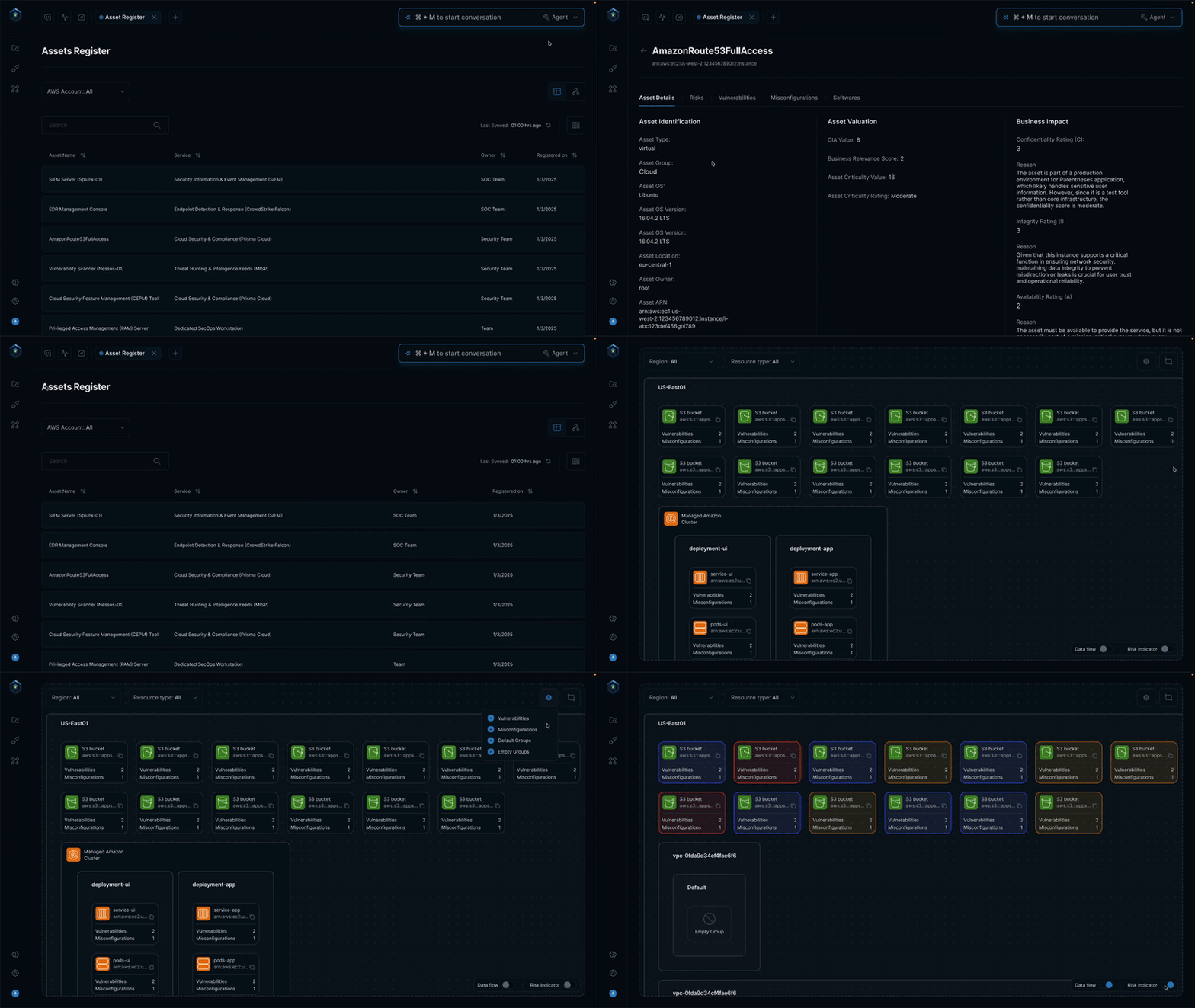
Secure.com continuously discovers assets across all environments and maps your attack surface in real time with clear visualizations. It detects shadow IT, identifies misconfigurations, and prioritizes risks based on business criticality, so you know what matters most.
Attack Vector Defense
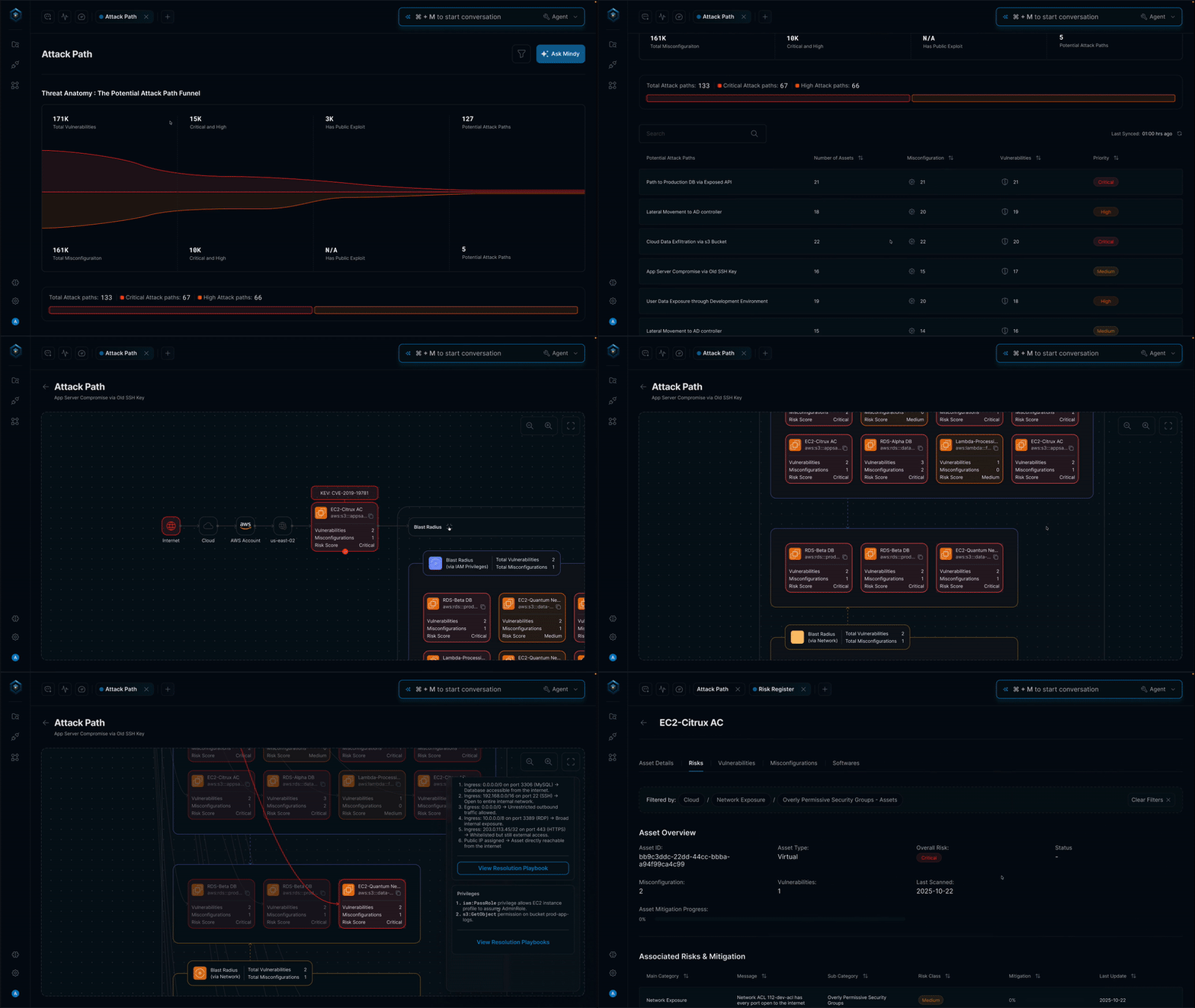
Digital Security Teammates work 24/7 to keep your environment safe. They automatically detect threats and execute approved response workflows (with human approval for sensitive actions), while AI-powered case management helps your team triage incidents faster, reducing MTTR by 45-55%. Combined with threat intelligence and behavioral analytics, they spot unusual activity early, before it turns into a breach.
Unified Visibility
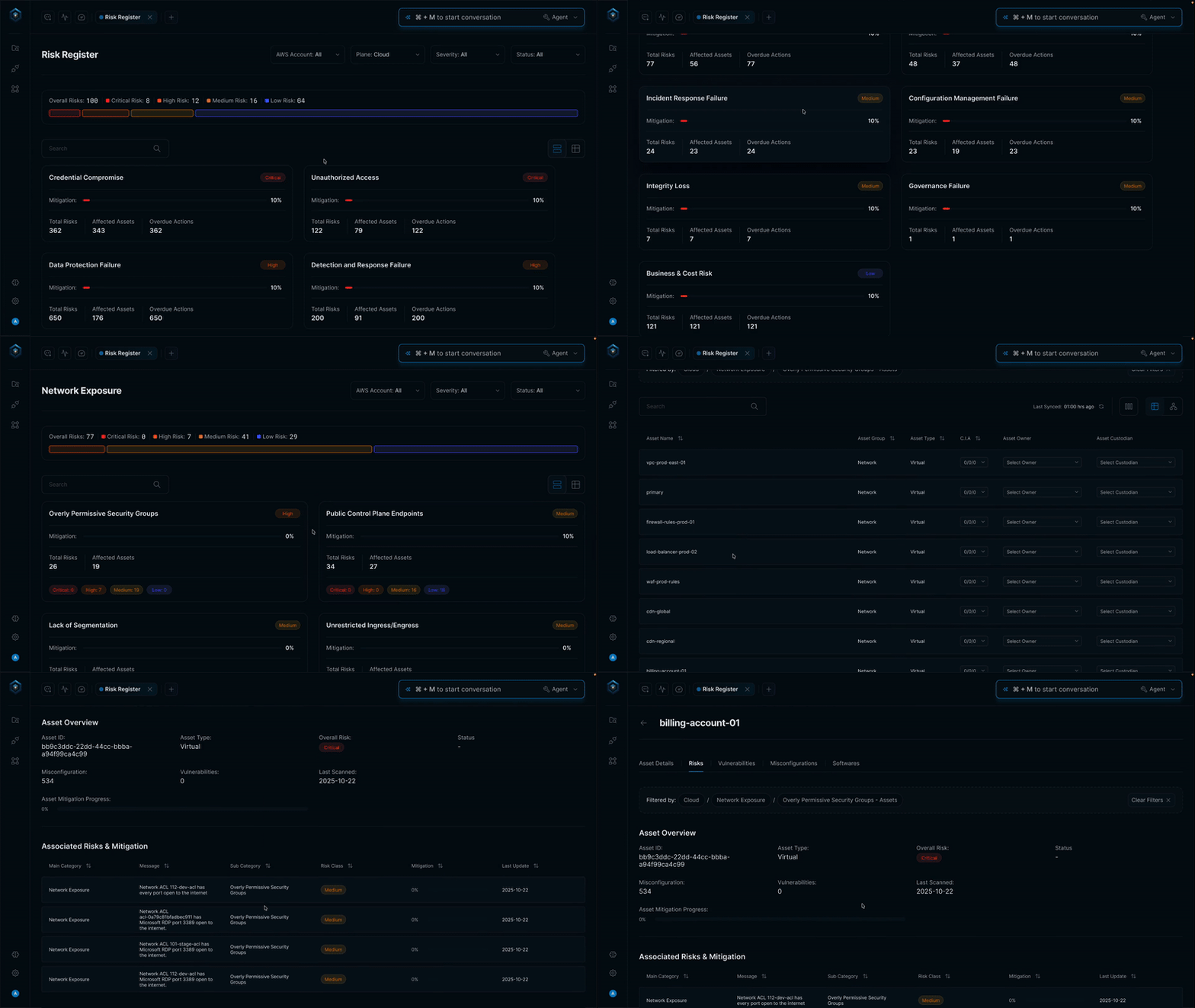
All your assets, users, identities, and vulnerabilities connect through a knowledge graph that provides a single, unified view of your security posture. Context-aware risk scoring and automated workflows link remediation and response, ensuring both attack surface reduction and vector defense work together seamlessly.
FAQ
Can you have a small attack surface but still be vulnerable to many attack vectors?
How often should organizations reassess their attack surface?
Do third-party vendors expand my attack surface or introduce new attack vectors?
Which should I prioritize: reducing attack surface or defending against attack vectors?
How does zero trust relate to attack surface and attack vectors?
Conclusion
Attack surface and attack vectors are closely linked, but they’re not the same, and understanding the difference matters. Your attack surface is everything that could be targeted. Attack vectors are the specific paths attackers use to exploit those weaknesses.
Adequate security means tackling both: reducing your exposure and defending against potential attacks. Incident response varies too—remediating the surface is more about architecture, while stopping attack vectors is tactical. With attack surface intelligence, you get the visibility needed to manage both effectively.
Secure.com gives you a unified view of your attack surface and active attack vectors—with continuous asset discovery, context-aware risk prioritization, and automated response workflows (with human approval for sensitive actions).