Key Takeaways
- AI is a force multiplier. It can absorb the repetitive, high-volume work that currently consumes most of an L1 or L2 analyst’s shift. That frees your human analysts to do the work they were actually hired for.
- Gartner predicts that 50% of Tier 1 SOC analyst positions will be eliminated or fundamentally transformed by automation by 2025.
- AI and machine learning systems now classify and respond to security alerts with 95% accuracy for common threat scenarios.
- AI cannot replace human judgment, ethical decision-making, or complex incident reasoning.
- Teams that adopt AI-backed triage report up to 70% less manual work and 45 to 55% faster incident response.
- Secure.com already operates as a digital security teammate, absorbing L1 and L2 work without replacing the humans who matter most.
Introduction
Picture a junior analyst nine months into the job, six hours into their shift, staring at their 400th alert of the day. Most are noise. A few matters. The problem is telling which is which without the context, the tools, or the time to dig properly. That is not a talent problem. It is a system problem. And AI is solving exactly that part.
What AI Can Replace
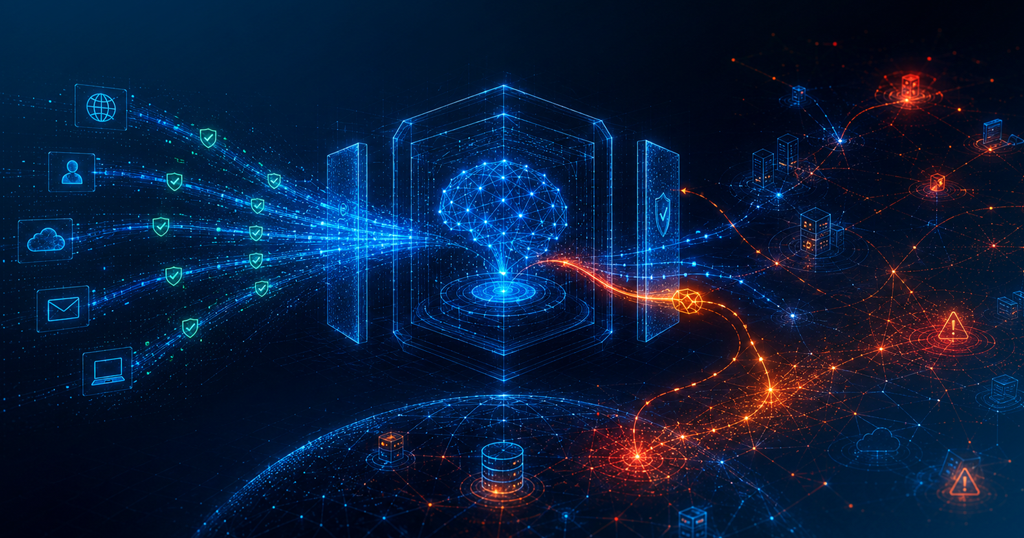
- First-pass alert triage: AI can review, enrich, and prioritize incoming alerts before a human ever touches them.
- Log correlation: AI cross-references signals from SIEM, EDR, cloud, and identity tools in seconds instead of minutes.
- False positive filtering: AI suppresses known-benign alerts based on environment behavior, cutting noise by up to 50%.
- Initial case documentation: AI auto-generates incident summaries and fills in context so analysts open a case with answers, not questions.
- Routine playbook execution: Containment steps for common threats like phishing or account compromise can run automatically.
What AI Cannot Replace
- Novel threat analysis: Attackers change tactics. AI trained on past patterns will miss what it has never seen.
- Judgment calls on ambiguous risk: Some alerts live in a gray zone. A human has to weigh business context, risk tolerance, and organizational knowledge.
- Stakeholder communication: Explaining a breach to a leadership team or a board requires human clarity and trust.
- Threat hunting: Proactively looking for adversaries who have not triggered alerts yet is a skill, not a workflow.
- Ethical and legal decision-making: Deciding when to escalate, when to preserve evidence, and when to involve legal or HR is not automatable.
Outcomes and KPIs That Matters to the Board or CFO
- Mean Time to Detect (MTTD): AI continuously monitors around the clock, shrinking the window between breach and detection.
- MTTR reduction: Teams using AI-assisted triage see response times cut by 45% to 61% depending on alert type.
- False positive rate: Goal is a reduction of at least 40 to 50% within the first quarter.
- Alert-to-incident ratio: Measures how much noise AI is filtering out before analysts touch a case.
- Analyst utilization: Time spent on investigation and threat hunting vs. time spent on manual triage.
- Burnout indicators: Job satisfaction scores, absenteeism, and turnover rates all improve when repetitive work is automated.
Can We Replace L1 and L2 SOC Analysts with Automated Triage Systems?
Yes, for the repetitive parts of the job. No, for the work that actually requires a person. That distinction matters. Secure.com is already handling the L1 and L2 workload through its Digital Security Teammate, an AI that works alongside your team rather than replacing it.
- Automatically enriches cloud, IAM, and phishing alerts with context before any analyst sees them.
- Executes automated playbooks for common threat types in under two minutes from alert detection.
- Runs continuous triage across your entire stack with no shift gaps, no fatigue, and no coverage holes.
- Delivers full Transparency Traces so analysts can see exactly what the AI did, why it did it, and where to tune it.
How Secure.com Already Does This
Most security tools hand you a dashboard and leave you to figure out the rest. Secure.com works differently. It deploys specialized Digital Security Teammates across the functions where analyst time gets wasted most, each one focused on a specific domain, all operating under the same governed execution layer.
- SOC Teammate: Handles alert enrichment, triage, and first-pass investigation automatically. It assembles the full incident picture before a human analyst sees the case, so your team spends time deciding, not gathering.
- Compliance Teammate: Continuously tracks control status against frameworks like ISO, HIPAA, PCI DSS, and NIST. Evidence is generated from real actions in real time, not assembled manually the week before an audit.
- Infrastructure Security Teammate: Monitors configuration drift across cloud and hybrid environments, evaluates the actual blast radius of each issue, and routes remediation to the right owner with an approval trail built in.
- AppSec Teammate: Connects code-level findings to runtime risk and routes remediation to the right engineering team. It gates CI/CD pipelines based on actual exploitability and asset criticality, not blanket rules that teams learn to work around.
- Risk and Governance Teammate: Translates security activity into a risk story that leadership can act on. It connects assets, identities, vulnerabilities, and misconfigurations into a single exposure narrative with the audit trail to back it up.
Every teammate operates with human approval gates, reversible actions, and full transparency traces. Your team stays in control. The repetitive work just stops landing on their plate.