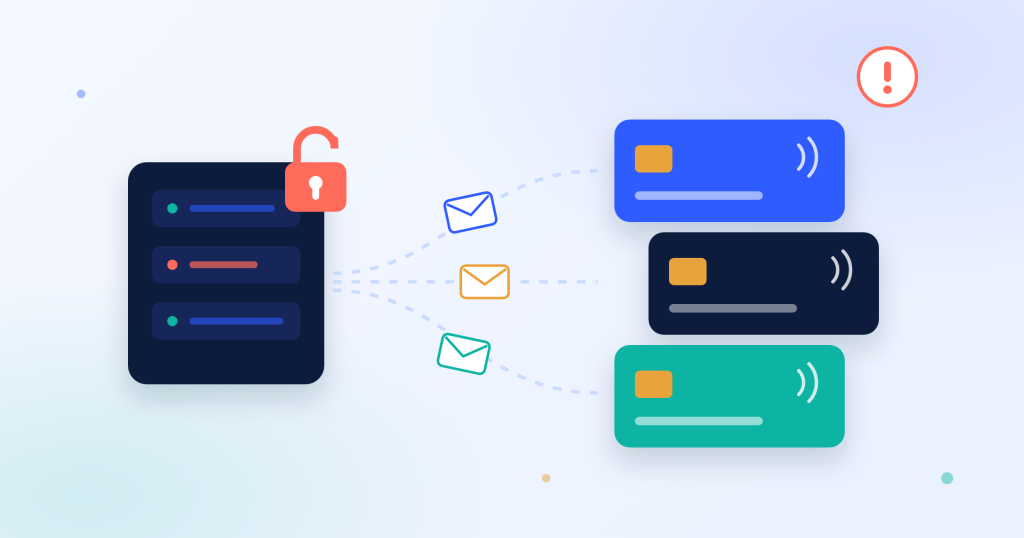
November 20, 2026: The 48-hour clock ran out on Thursday, and the files went public. A ransomware crew called n0n has published customer data tied to JPMorgan Chase, Visa, and Mastercard after its ransom deadline passed. The JPMorgan data breach did not start inside JPMorgan. However, none of the three firms was hacked directly. Instead, their vendors were, and now their customers carry the risk.
Who should care: Banks, card issuers, and any company that hands customer lists to a marketing, loyalty, or perks vendor.
What could go wrong: A vendor you never audit leaks your customers’ contact details, and scammers send them convincing “card benefit” emails.
Do this: List every vendor that holds your customer data this week, and revoke the long-lived access keys they hold.
Worth remembering: Your own network can be clean while your customers end up on a leak site.
What Happened in the JPMorgan Data Breach?
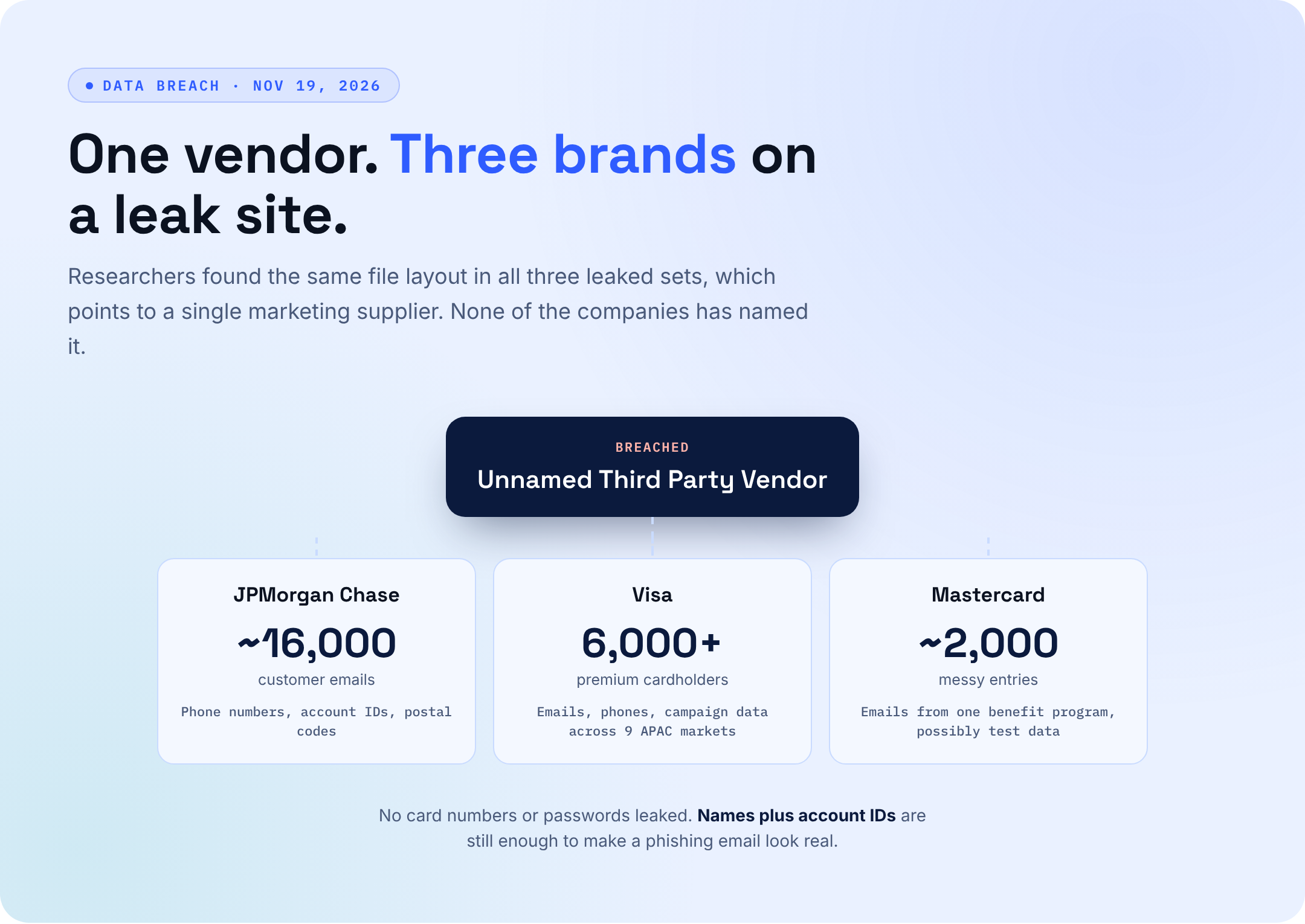
n0n added all three firms to its leak site on November 16 with a 48-hour deadline. Nobody paid. As a result, the data went live on November 19.
At the center of the JPMorgan data breach is a file of about 16,000 customer emails, some with phone numbers, account IDs and postal codes. Meanwhile, the Visa set covers more than 6,000 premium cardholders across nine Asia Pacific markets, with attached marketing campaign data. Finally, the Mastercard set has roughly 2,000 badly formatted entries that may be test data.
In addition, a researcher found the same file layout in all three sets, which points to one shared marketing supplier. So far, nobody has named it.
What They Said
Visa blames a service provider in Asia Pacific and says no card numbers were affected. Similarly, Mastercard says a small group of cardholders in one benefit program had email addresses exposed. JPMorgan says attackers reached marketing data held by its vendors, and it will offer free credit monitoring. JPMorgan also says an unrelated Chase outage earlier in the week came from a software bug.
Who Is n0n?
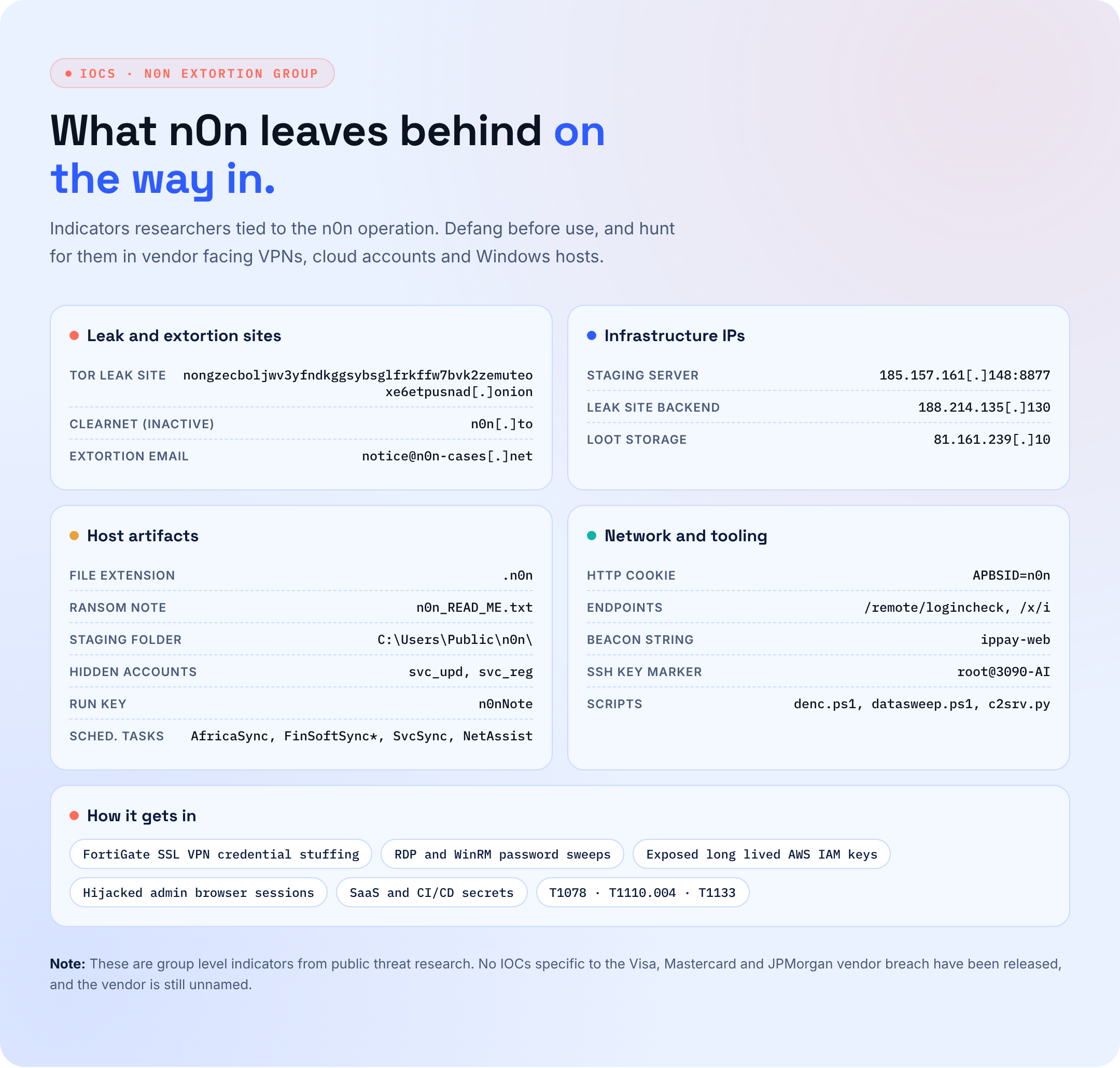
n0n is the extortion group behind the JPMorgan data breach. It appeared in September 2026 and is believed to operate from Russia. In fact, researchers found no exploited software flaws in its campaigns. Instead, it gets in with stolen passwords, credential stuffing against FortiGate SSL VPN logins, and long-lived AWS keys left exposed. Earlier in November, it also claimed Expedia.
What’s the Impact of the JPMorgan Data Breach?
Based on what has been reported so far, the leak exposed no card numbers or passwords. Names, emails and account IDs still make a phishing email look real, though. For this reason, expect fake “Reserve concierge” and “card benefit” messages aimed at premium cardholders over the next few weeks, some quoting real account details.
How to Avoid This
The lesson here is that vendor access needs the same controls as your own systems:
- Map your vendors. Record every vendor that holds customer data, which fields it keeps, and which staff can export them.
- Share less. Send marketing vendors only the fields a campaign needs, and mask account IDs.
- Lock down logins. Require MFA on vendor VPNs and admin consoles, and rotate long-lived cloud keys every quarter.
- Set a notice deadline. Write a 24-hour breach notification rule into vendor contracts.
- Warn customers early. Tell premium customers now that you will never email them to “verify” a benefit.
Your Vendor’s Weak Login Can Become Your Headline
Notably, every firm here says its own systems were fine. That is the gap: customer data lives where your team never looks, and nobody tests it until a gang does.
Secure.com runs security as a service, so you get outcomes on one bill instead of another stack of tools:
- Managed Exposure Management finds where your customer data sits outside your walls, flags exposed keys and weak vendor logins, then fixes them and proves the fix held.
- Managed SecOps watches around the clock for credential stuffing, unusual bulk exports, and leaked logins, and experts contain them before data moves.
- vCISO gives you a senior security leader to set vendor data rules, run third-party reviews, and report vendor risk to the board.
- You set the rules, Secure.com does the work. Attack. Harden. Prove. Repeat.