Air Force Cloud One Breach: Hackers Get Inside the Military’s Flagship Cloud
- Who should care: Defense contractors, government cloud teams and any company running critical apps on a shared cloud platform.
- What could go wrong: One flaw in a shared platform can expose every app and record sitting on top of it.
- Do this: Patch anything internet facing this week, then hunt for strange admin activity.
- Worth remembering: Nobody knows yet how long the intruders were inside.
Hackers have broken into Cloud One, the US Air Force’s flagship cloud platform, according to people familiar with the matter who spoke to Reuters. The platform holds tactical, personnel and logistics data, and investigators still can’t say how much of it was taken.
What Happened?
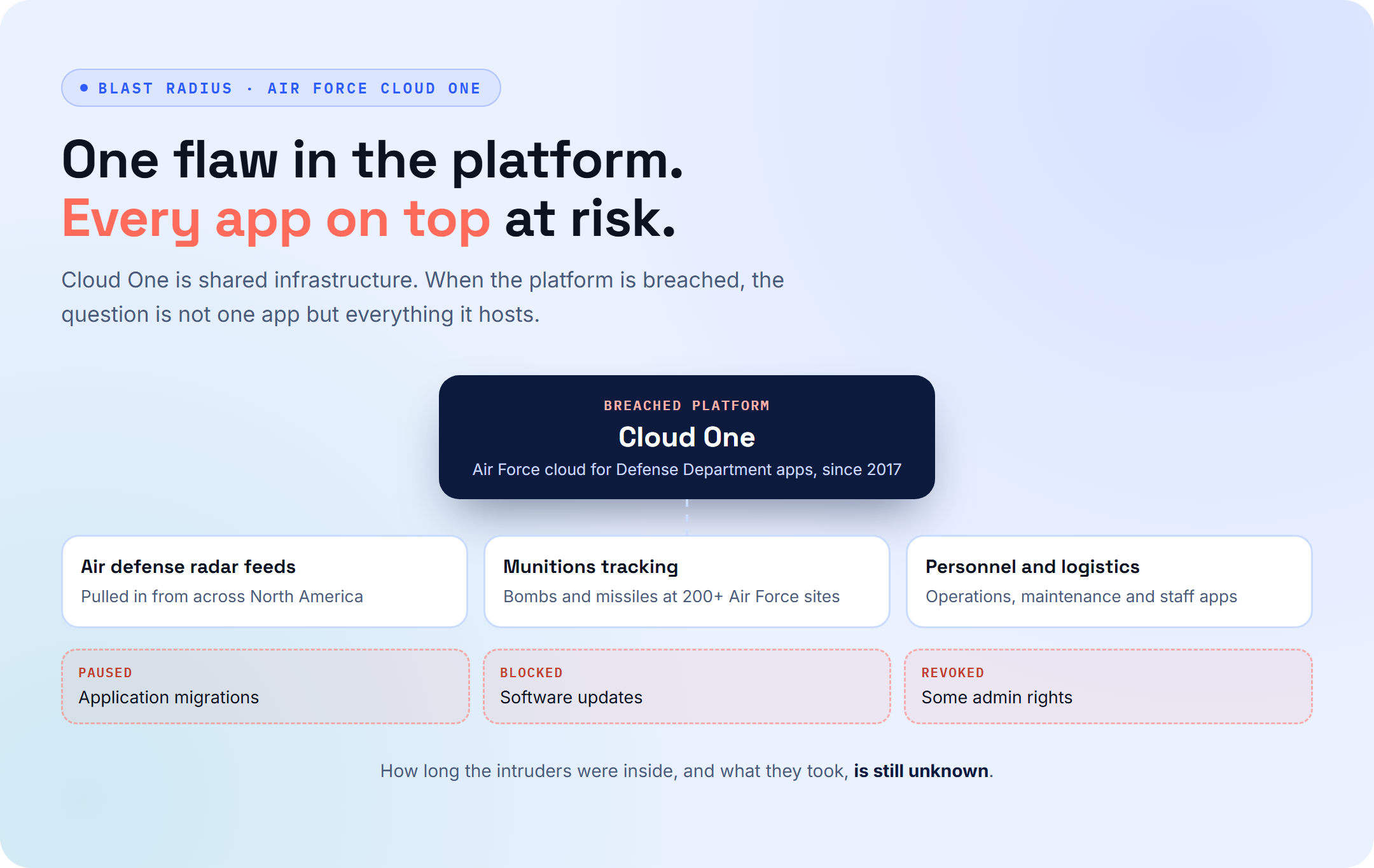
The intrusion surfaced within the past month while teams were upgrading the system. One source said the attackers got in through an unidentified software flaw. Launched in 2017, Cloud One lets Defense Department agencies host apps for operations, personnel, logistics and maintenance. Leidos took over from SAIC as prime contractor in 2025. Cyber Command has been called in to assess the damage, and the Air Force declined to comment on specific systems.
What’s the Impact?
Cloud One hosts the system that pulls air defense radar feeds from across North America, plus a tool tracking bombs and missiles at 200+ Air Force sites. Migrations are paused, updates are blocked and some users lost admin rights.
The breach follows reported intrusions at the FBI, CIA and Treasury’s FinCEN in recent weeks. No one has linked them yet.
How to Avoid This
- Patch internet facing apps and cloud management planes first.
- Treat upgrade and migration windows as high risk, with extra logging and tighter admin access.
- Hunt for web servers spawning shells or PowerShell on management hosts.
- Remove standing admin rights and review cloud admin actions every week.
- Ship logs somewhere an intruder can’t edit or delete them.
Air Force Cloud One Breach: Indicators of Compromise
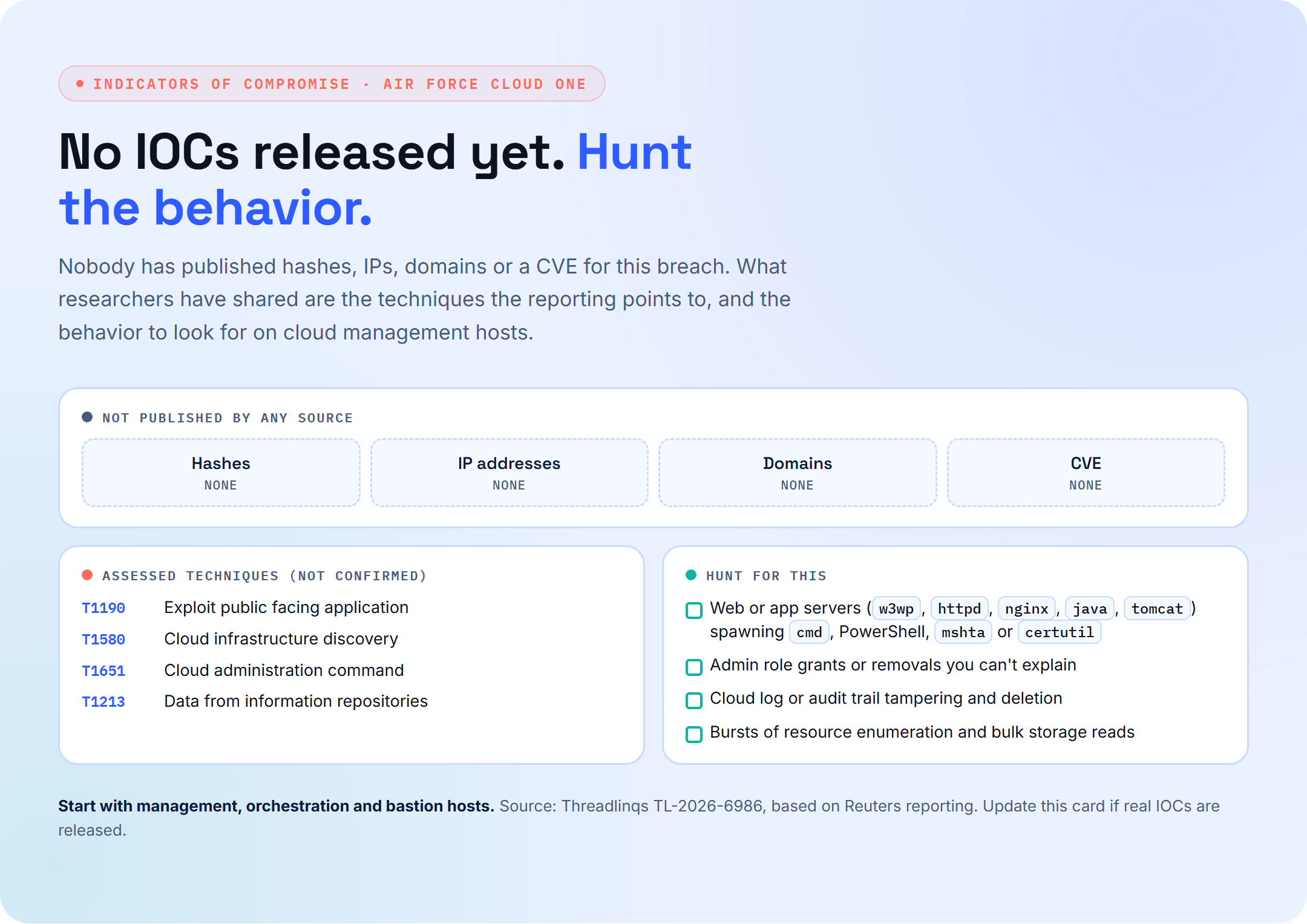
No hashes, IPs, domains or CVEs have been released for this breach. Threadlinqs has published assessed techniques and behavior based hunting cues, shown below. They are assessed, not confirmed.
Find the Weak Spot Before Someone Else Does
One unpatched flaw was enough to get inside one of the military’s biggest clouds. Secure.com sells security as an outcome, run by our experts under one bill, so your team can stop juggling tools and chasing alerts.
- Managed Exposure Management: We attack your cloud the way an intruder would, rank what’s reachable, then fix and verify it.
- Managed SecOps: Around the clock monitoring and response, with experts shutting down real threats fast.
- vCISO: A senior security leader who sets patching and change window policy and reports risk to your board.
- Your team sets the rules. We handle the grunt work. Attack. Harden. Prove. Repeat.
Related Reading
Sources: Reuters exclusive (via US News), BleepingComputer, Threadlinqs TL-2026-6986.