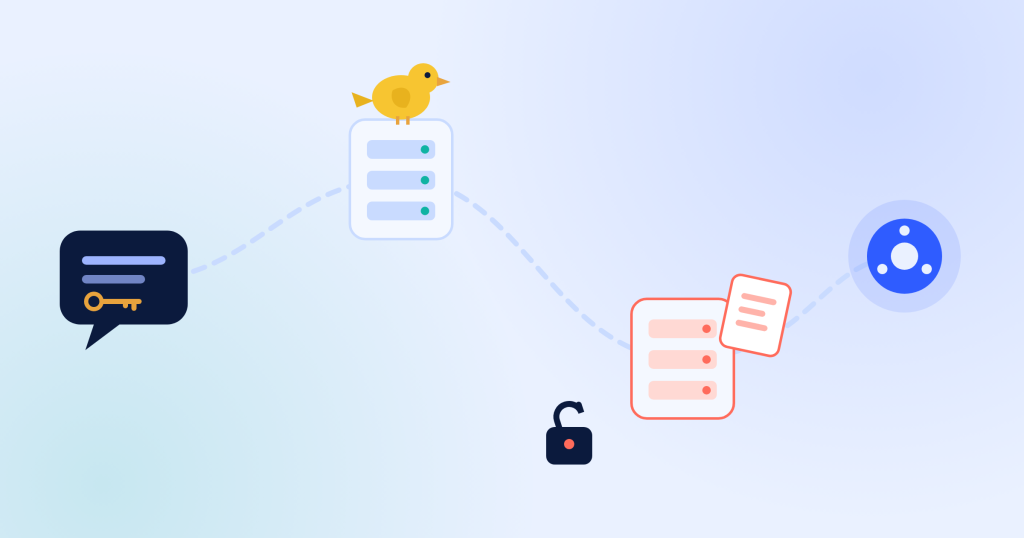
November 23, 2026: Suppose your team uses an AI tool and has switched on the setting that says nothing you send is kept. Now suppose your request passes through other companies on its way to the AI model, and one of them keeps a copy anyway. That is AI prompt theft, and new research from Dragos shows it reached requests marked “do not store.”
Who should care: Any company whose staff or software send work to AI models run by another company.
What could go wrong: Outsiders could copy passwords and confidential text from those requests, even with the no-storage setting on.
Do this: Check for a provider notice, replace the passwords it covers, and choose which companies handle your requests.
Worth remembering: You cannot check the no-storage promise from the outside, so decide what your AI tools are allowed to read before you rely on a setting.
What Happened?
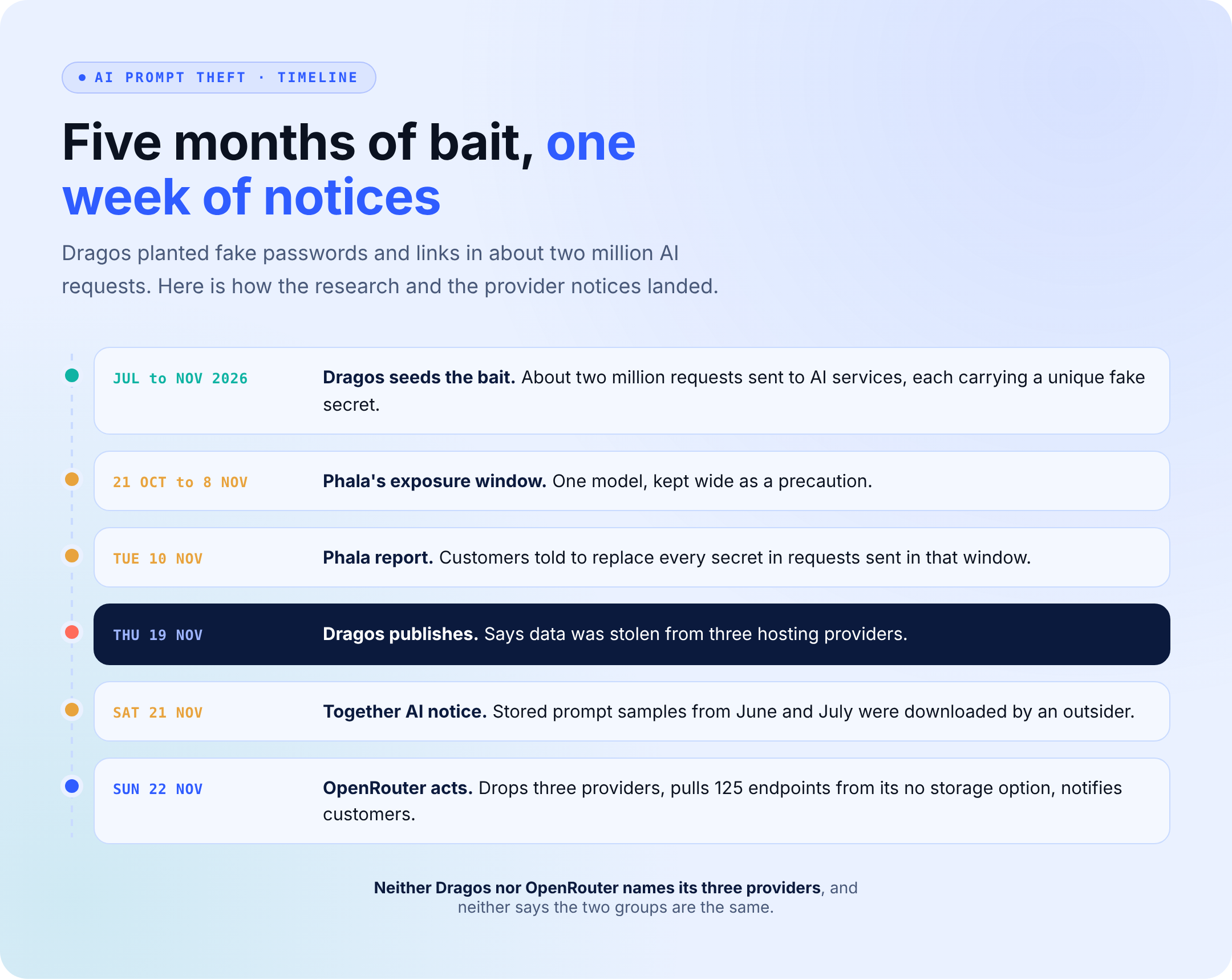
On Thursday, November 19, 2026, Dragos published research on AI prompt theft. The work used about two million bait requests sent to AI services from July to November. Each request carried a fake password, key, or link that raises an alarm when someone uses it. Dragos says attackers were stealing data from three hosting providers. It adds that real customers’ requests “were almost certainly copied too.”
On Sunday, November 22, OpenRouter, which routes requests to many AI hosts, said it had dropped three providers. It also removed 125 endpoints from its no-storage option, some of them as a precaution, and notified potentially affected customers. OpenRouter says the findings showed no breach of its own systems.
Which Providers Were Hit by AI Prompt Theft?
No one has named them yet. Dragos does not name the three providers it says attackers broke into. OpenRouter does not name the three it dropped, and neither company says the two groups are the same.
Two providers have published their own notices. Phala’s report of Tuesday, November 10, covers requests sent to one model from October 21 to November 8. Phala kept that window wide as a precaution and tells customers to replace every secret in those requests. Together AI’s notice of Saturday, November 21, covers stored prompt samples from June and July that an outsider downloaded. Do not match either notice to the three unnamed providers.
What Dragos Says It Saw
Dragos says one unnamed AI lab opened the secret links in more than half of the bait requests sent to its models from July to October. That included about two-thirds of the requests flagged for no data collection or no storage. Those figures describe that one lab only. Dragos also says sellers on an AI marketplace could read customer requests through ordinary logging, with no hacking needed.
What’s the Impact of AI Prompt Theft?
The no-storage setting is worth having, but it does not stop AI prompt theft on its own. Together AI still tells customers with sensitive data to turn it on. Dragos, however, says a privacy flag does nothing once an attacker is already inside a provider. If a password sat in a copied request, someone else may hold it now.
How to Avoid AI Prompt Theft
These steps limit the damage, whether or not a provider has contacted you:
- Look for a notice. Check your inbox and your AI providers’ pages for a notice that covers your requests.
- Replace exposed secrets. Change the passwords and keys that the notice covers, and watch those accounts for strange activity.
- Pick your providers. Choose which companies handle your requests instead of leaving routing on automatic.
- Plant your own bait. Put a fake password in what your AI tools send, and treat any use of it as an incident.
- Limit access. Decide what each AI tool is allowed to read.
Our Reading
Most AI prompt theft coverage stops at “rotate your keys.” That advice only works if you know what your AI tools sent. Phala asks customers to replace every secret sent over roughly 18 days. A company that can’t list what its tools sent in that window has to replace everything those tools could read.
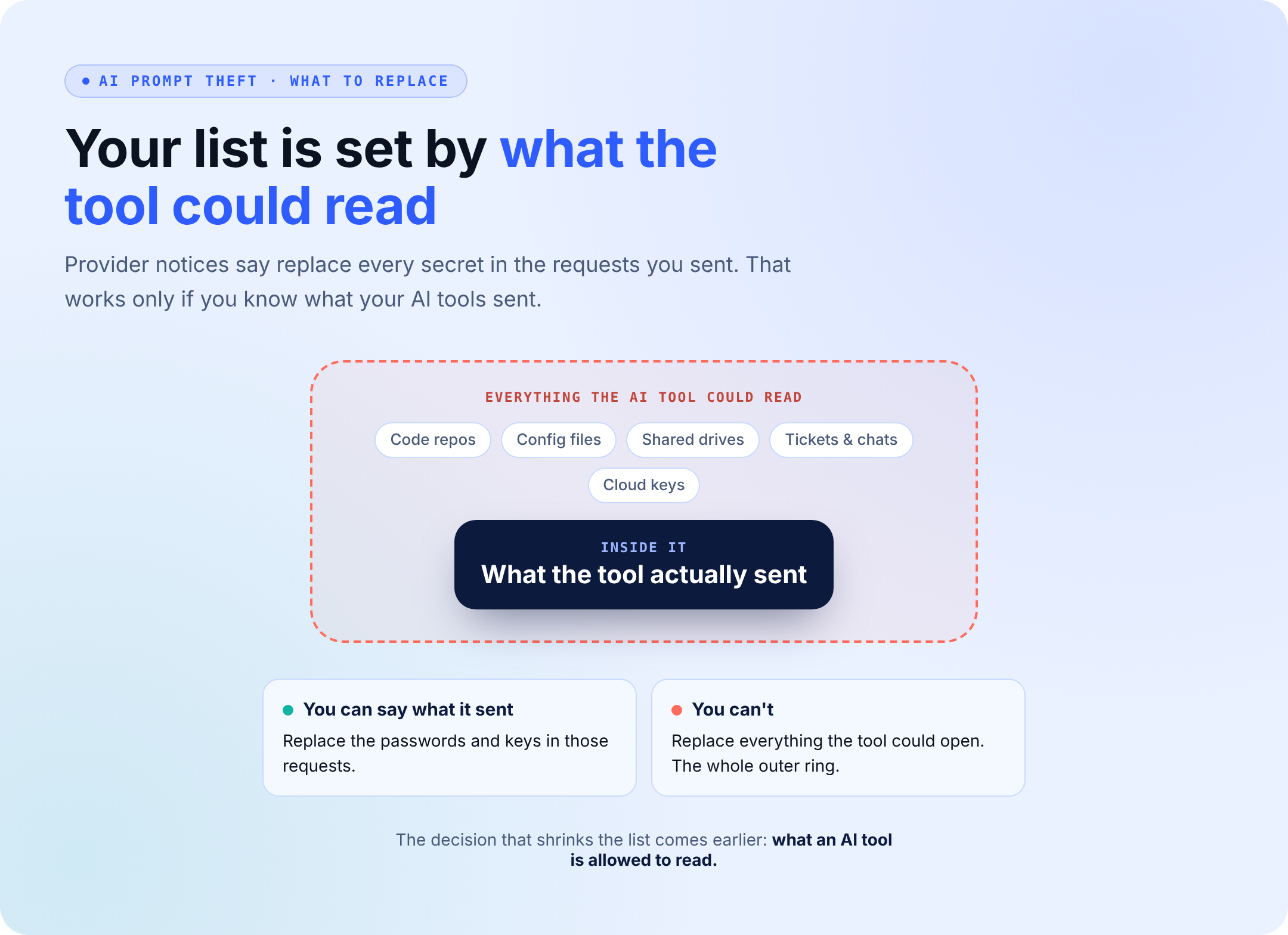
So the choice that limits the damage comes much earlier. It happens on the day someone decides what an AI tool may open.