Key Takeaways
- The average SOC analyst receives 174 security alerts per day, but only 22% actually need investigation.
- False positives consume 52% of analyst time, time that should be going toward real threats.
- Organizations using AI and automation extensively shortened their breach lifecycle by 80 days and saved $1.9 million per incident compared to those without AI.
- Evidence trails and governed execution keep every AI action auditable, explainable, and reversible.
- Whether you run a lean security team or a regulated enterprise, AI-driven investigation is no longer a nice-to-have.
Introduction
It’s 9 AM, and a SOC analyst starts the day facing a dashboard already flooded with alerts. They log in to find hundreds of unfiltered alerts across four different tools. Three hours later, they have closed 12 false positives and have not touched a single real threat.
IBM’s 2025 Cost of a Data Breach Report found organizations averaged 158 days to identify breaches, the lowest in nine years. That sounds like progress. But for the analyst staring down that queue, 158 days still means months of exposure.
The bottleneck is not detection. It is everything that happens between detection and response.
The Alert Volume Problem Is Not a Workflow Problem
Most CISOs, when MTTR climbs, reach for process improvements. Better runbooks. Clearer escalation paths. More documentation.
That rarely moves the number.
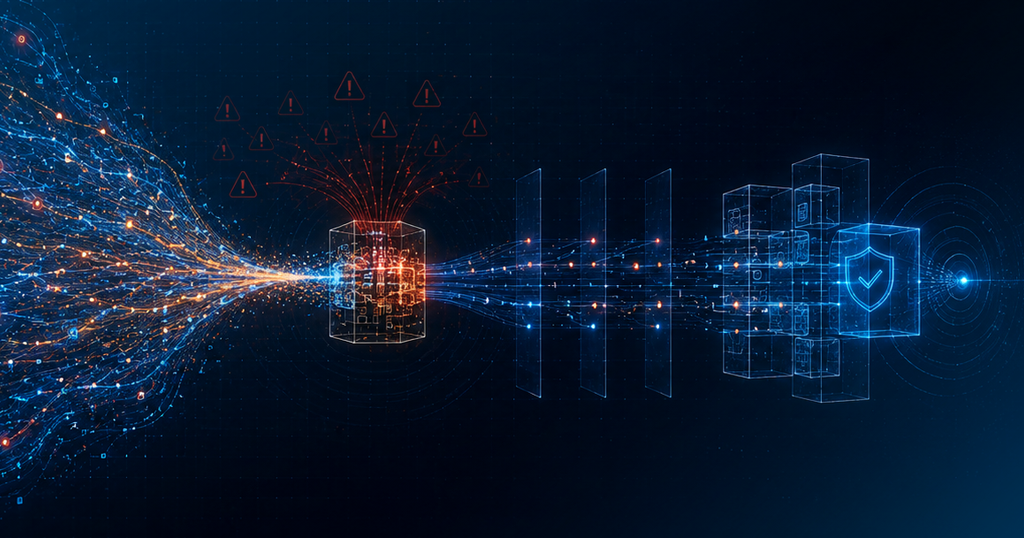
Alert fatigue peaks at 174 security alerts per analyst daily, with only 22% requiring genuine investigation. False positives consume 52% of analyst time, while manual processes that could be automated represent 38% of daily tasks.
That is the actual problem. Not a broken process. A broken signal-to-noise ratio.
When most of what analysts see turns out to be noise, their brains adapt. They start treating new alerts with skepticism by default. This desensitization causes analysts to overlook, dismiss, or inadequately investigate alerts, including genuine threats. And when that happens, real incidents wait.
What Alert Fatigue Actually Costs
This is not just an operational inconvenience. The downstream effects are measurable.
- Between 63% and 76% of SOC analysts report experiencing burnout.
- The 2025 SANS survey found that 70% of analysts with five years or less of experience leave their roles within three years.
- 63% of security alerts go unaddressed, and 42% go uninvestigated entirely.
- Mean Time to Resolution rises as analysts waste time on false alerts. Low-value tickets crowd out meaningful work, causing critical alerts to be misclassified or missed entirely.
Hiring your way out of this is not realistic. There are 4.8 million unfilled cybersecurity roles worldwide. The talent pool is not growing fast enough to outpace the alert volume.
Alert fatigue is not a volume problem you can hire your way out of. It is an architectural failure in how security tools generate, prioritize, and present signals to human decision-makers.
What changes this is not more people. It is smarter triage at the front of the pipeline.
How Security Teams Automate Incident Investigation With AI
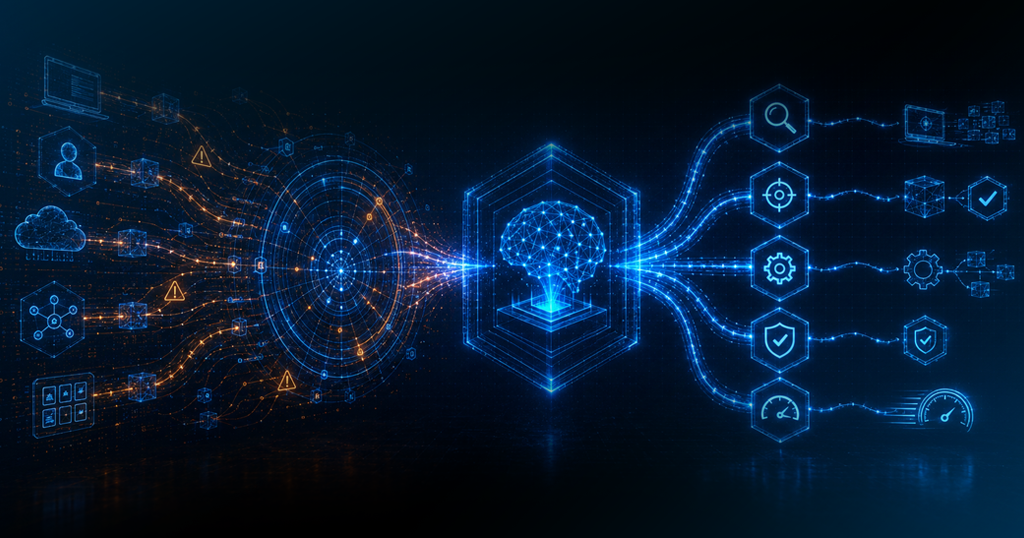
When AI enters the triage layer, the analyst’s starting point changes completely.
Instead of pulling logs manually, cross-referencing threat intel sources, and building investigation context from scratch, the system handles that entire first pass. The analyst does not start from zero. They start from almost done.
How AI Automatically Enriches Security Investigation Cases
AI-driven enrichment pulls together what a senior analyst would spend hours gathering manually:
- Threat intelligence matched against the incoming alert from multiple sources
- Historical behavior baselines for the affected user, device, or asset
- Cross-tool correlation linking signals from SIEM, EDR, identity providers, and cloud environments
- Attack path mapping that shows where the threat could move next
- Risk scoring based on asset criticality and actual business context
All of that happens in minutes. In well-configured environments, much of it happens in seconds.
Instead of investigating 100 individual firewall alerts, your team reviews one correlated incident showing a coordinated attack pattern. It is already scored by risk level, already mapped to the relevant attack framework, already tagged with recommended response actions.
66% of SOC teams reported they cannot keep pace with the volume of alerts they receive. AI changes that ratio directly, by handling the volume that human analysts never realistically could.
How AI Reduces Mean Time to Respond in Security Operations
Before automation, analysts spend their time flipping between firewall logs, Active Directory, and ticketing tools, doing 15 minutes of validation per alert, closing false positives for hours without touching a real threat.
Every step in the traditional investigation workflow adds delay. Alert acknowledgment. Manual enrichment. Escalation. Each one is a gap where attackers have room to move.
Organizations using AI-based incident response reduced MTTR from 75 to 90 hours down to 18 to 25 hours. Secure.com’s Digital Security Teammates achieve a 45 to 55% improvement in MTTR through automated triage, enrichment, and pre-approved response playbooks. For phishing-linked account compromise cases specifically, response time dropped by 66.7%.
- ✕ Manual log correlation per alert
- ✕ Sequential triage, one alert at a time
- ✕ Hours spent building case context
- ✕ Real threats buried under noise
- ✓ Automated enrichment in 3 to 10 minutes
- ✓ Parallel investigation across all alerts
- ✓ Analysts start from pre-built context
- ✓ Critical threats surface immediately
AI SOC analysts compress MTTR by eliminating MTTA (alert acknowledgment), running parallel investigations that complete in 3 to 10 minutes, and executing automated containment actions. Human analysts can only handle alerts one at a time. AI does not have that constraint.
Automation also cuts up to 80% of alerts before they reach human analysts at all, which means the analyst queue shrinks to what actually needs human judgment. That is the real mechanism behind MTTR reduction. Not faster humans. Fewer things for humans to touch.
What Evidence Trails for Investigations Require in an AI SOC Platform
Automating investigation is one thing. Automating it in a way that holds up to scrutiny is something else.
This is where a lot of AI SOC tools fail. They move fast, they close tickets, they look good on a dashboard. But when someone asks “why did the system take that action?” or “show me the evidence trail for this case,” the answer gets murky fast.
For regulated enterprises, lean security teams, and mid-market SaaS companies alike, that is not an acceptable answer. Evidence trails are how you defend AI decisions to auditors, compliance teams, and executives after the fact.
What a Proper Evidence Trail Looks Like
AI SOC explainability is the ability of an AI-driven security operations platform to show exactly how it reached each investigation conclusion, including the data sources queried, hypotheses tested, evidence collected, and reasoning applied. It transforms opaque “alert closed” verdicts into auditable, reproducible investigation chains that analysts, auditors, and executives can independently verify.
In practical terms, a proper evidence trail in an AI SOC needs to capture:
- Which data sources informed the decision and exactly what they returned
- What threat intelligence was matched and from where
- How each triage condition was evaluated and with what confidence score
- Every action taken, timestamped, with the policy that authorized it
- Whether the action is reversible and what the rollback path looks like
That last point is often the one buyers overlook. If an agent can isolate an endpoint, it must be able to un-isolate it cleanly. If it can disable an account, it must be able to re-enable it. Rollback is not just nice to have. It is the difference between safe automation and chaos.
Regulatory frameworks now explicitly require documented decision-making in automated systems. SOC 2 Type II audits demand evidence that security decisions follow consistent, reviewable processes. The EU AI Act requires organizations to make sure AI outputs are explainable and governed by defined policies.
How Different Teams Should Evaluate Evidence Trails in an AI SOC
The specifics change depending on who is asking.
- ✓Every action tied to a governing policy
- ✓Defensible under SOC 2, HIPAA, ISO 27001
- ✓Immutable logs, signed artifacts
- ✓Auditor-readable decision summaries
- ✓Human approval gates on high-impact actions
- ✓Reversibility documented for every automated step
- ✓Plain-language investigation summaries
- ✓Readable by a generalist, not just a senior analyst
- ✓One-click review of what AI did and why
- ✓Fast reversal paths, clearly labeled
- ✓Low-noise dashboards, not raw logs
- ✓Auto-generated compliance prep output
- ✓Audit-ready output for customer trust reviews
- ✓Evidence tied to compliance certifications
- ✓Continuous collection, not quarterly sprints
- ✓Shareable reports for security questionnaires
- ✓Works without a dedicated compliance team
- ✓Scales with growth, no re-architecting
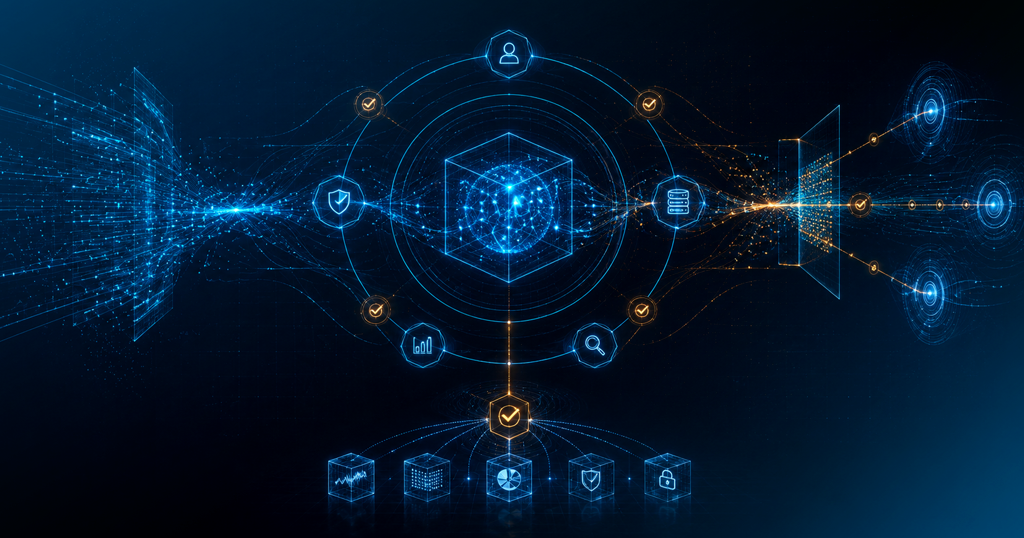
In all three cases, the baseline is the same: governed execution, where every AI action is scoped, policy-driven, explainable, and reversible before it runs.
Where Secure.com’s SOC Teammate Fits In
Most AI SOC tools give you speed or governance. Rarely both.
When Secure.com’s Digital Security Teammate takes automated action, like isolating a compromised endpoint or revoking a credential, it does so within the guardrails you have defined and with full explainability.
Here is what that looks like in practice. You click “Approve” in Slack, the teammate revokes the session, forces a password reset, notifies the user via email, creates a ticket, and logs everything with a complete audit trail. All within minutes.
Specific things the SOC Teammate does:
In pre-launch testing across finance, healthcare, and technology, the Digital Security Teammate delivered 70% faster mean time to detection, 75% faster alert triage and prioritization, and saved 2,000+ hours annually through automated triage, investigation, and evidence collection.
Those are not theoretical benchmarks from a slide deck—they are numbers from actual environments.
Those are not theoretical benchmarks from a slide deck. They are numbers from actual environments.
FAQs
How much does an AI SOC reduce MTTR?
Does an AI SOC lower mean time to detect?
How can an AI SOC maintain evidence trails for investigations for lean security teams?
What does evidence trails for investigations require in an AI SOC platform?
Conclusion
Your SOC team is not slow because analysts are bad at their jobs. The global cybersecurity talent gap sits at 3.5 million unfilled positions, meaning most SOCs operate well below required headcount. The people in those roles are doing the best they can with a system that generates more noise than signal. UnderDefense
AI does not fix that by replacing analysts. It fixes it by removing the 78% of alerts that never needed a human in the first place, enriching the ones that do, and making sure every action taken, automated or human, is documented well enough to defend.
Faster MTTR is the outcome. Governed, auditable investigation is the mechanism. Those two things need to show up together, or you are just moving fast in the wrong direction.