Security operations centers were built for a different era. A time when networks were smaller, alerts were manageable, and analysts could manually investigate most incidents.
That environment no longer exists.
Modern organizations generate thousands of security signals every day. Endpoint alerts, identity anomalies, cloud activity, network events. Analysts spend much of their time sorting through alerts that never become real threats. The workload piles up quickly, and investigations slow down.
This pressure is one of the reasons security teams are exploring the idea of an Autonomous SOC.
Instead of relying primarily on manual investigations, an autonomous model shifts much of the operational work to automated systems that can triage alerts, investigate activity, and trigger response actions in real time.
The goal is simple: let machines handle repetitive investigation work while humans focus on complex security decisions.
What is an Autonomous SOC?
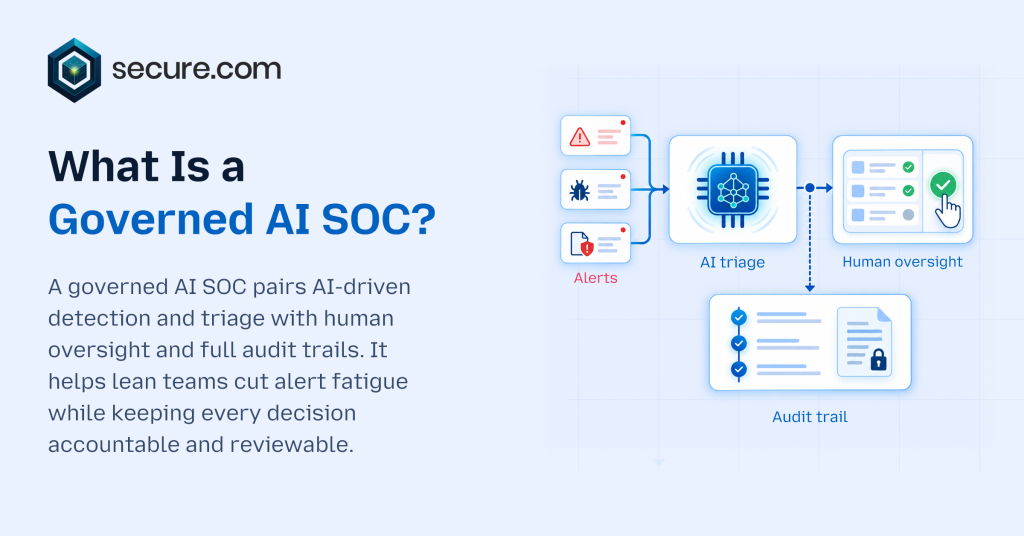
A modern SOC powered by Digital Security Teammates is a security operations model where alert triage, threat investigation, and parts of incident response are handled automatically through integrated security systems—with human approval for critical actions.
In a traditional SOC, analysts manually review alerts, collect evidence from different tools, and determine whether an event is malicious. This process often involves switching between SIEM platforms, endpoint tools, identity systems, and cloud dashboards.
An autonomous SOC reduces that manual workload. Security systems automatically gather context, analyze signals, and take predefined actions when suspicious activity appears.
Human analysts still play an important role. They design response workflows, investigate complex attacks, and make strategic decisions. But routine work such as alert enrichment, correlation, and first-level investigation happens automatically.
For many organizations, autonomy in the SOC is not about replacing analysts. It is about giving them time to focus on real threats instead of drowning in alerts.
How an Autonomous SOC Works?
Autonomous security operations rely on several interconnected capabilities working together.
Automated alert triage
Security platforms generate massive numbers of alerts, but only a small portion represent real threats.
Automated triage systems review incoming alerts, analyze their context, and rank them based on risk. Signals from endpoints, identity systems, networks, and cloud services are correlated to determine whether activity is suspicious or benign.
Low-risk alerts can be closed automatically. Higher-risk alerts move forward for deeper investigation.
Automated investigation workflows
When suspicious activity appears, automated workflows gather supporting evidence from multiple systems.
These investigations often include:
- Retrieving endpoint telemetry
- Checking identity access logs
- Reviewing network activity
- Examining recent configuration changes
- Mapping related alerts across systems
This evidence collection happens instantly instead of requiring analysts to manually pull data from multiple dashboards.
Decision logic and response playbooks
Security teams define response playbooks that guide how incidents should be handled.
For example:
- Isolate an endpoint if malware is detected
- Disable a user account after repeated suspicious logins
- Block a malicious IP address across security tools
- Open an investigation case with all collected evidence
The system executes these actions automatically when certain conditions are met.
Continuous monitoring and feedback
Autonomous SOC systems constantly analyze security signals and adjust their behavior based on investigation outcomes.
Over time, this improves detection accuracy and reduces unnecessary alerts. Analysts can review automated decisions, refine playbooks, and add new investigation logic as threats evolve.
Key Characteristics of an Autonomous SOC
Automated case management
Incidents are automatically grouped into investigation cases. Evidence, alerts, and response actions are tracked in a single workflow so analysts can quickly understand what happened.
Cross-tool visibility
Autonomous SOC platforms connect with endpoint security tools, identity systems, cloud platforms, and network monitoring solutions. This integration allows investigations to pull context from multiple sources without manual effort.
Real-time investigations
Automated workflows investigate suspicious activity immediately after detection. This shortens the time between alert generation and incident response.
Reduced analyst workload
Routine investigation tasks are handled automatically. Analysts spend less time gathering logs and more time analyzing complex threats.
Technologies That Enable Autonomous SOC Operations
Several security technologies support autonomous operations.
Security data platforms
Security data platforms collect telemetry from endpoints, networks, identities, and cloud environments. This data becomes the foundation for automated investigation and detection.
Behavioral analytics
Behavioral analysis systems look for deviations from normal activity. Unusual login behavior, unexpected privilege changes, or abnormal data transfers can trigger automated investigations.
Investigation automation engines
Automation engines execute predefined workflows when certain conditions appear. These workflows collect evidence, correlate signals, and trigger response actions.
Threat intelligence feeds
Threat intelligence adds external context to security investigations. Known malicious domains, IP addresses, and attacker techniques help systems recognize suspicious activity faster.
Benefits of an Autonomous SOC
Faster incident response
Automated investigations begin immediately when suspicious activity is detected. Security teams do not have to wait for analysts to manually review alerts.
Lower alert fatigue
Many alerts are investigated and resolved automatically. Analysts see fewer low-priority signals and can focus on meaningful threats.
Improved investigation consistency
Automated workflows follow the same investigation steps every time. This reduces errors and prevents important evidence from being missed.
Scalable security operations
As organizations grow, security alerts increase dramatically. Autonomous SOC systems allow security teams to manage larger environments without expanding analyst headcount at the same pace.
Challenges and Risks of Autonomous Security Operations
Trust in automated decisions
Security teams must be confident that automated investigations and response actions are accurate. Incorrect automation can disrupt business operations if legitimate activity is blocked.
Integration complexity
Autonomous SOC systems depend on data from many security tools. Integrating these systems can take time and careful planning.
Evolving attack techniques
Threat actors constantly change tactics. Automated workflows must be updated regularly to detect new attack patterns.
Human oversight remains essential
Full autonomy is rarely realistic. Experienced analysts are still needed to investigate advanced attacks, refine detection logic, and manage security strategy.
The Future of the Autonomous SOC
Security operations are steadily moving toward greater automation. Organizations are dealing with larger attack surfaces, more connected infrastructure, and a growing volume of alerts.
Autonomous SOC models are likely to continue evolving as security platforms gain stronger investigation capabilities and better data correlation across environments.
The long-term direction is clear. Security teams want systems that can detect suspicious activity, gather evidence, and take immediate action without waiting for manual intervention.
Human analysts will remain at the center of security strategy. But their role will shift toward oversight, threat hunting, and complex investigations rather than repetitive alert triage.
Conclusion
An Autonomous SOC represents a shift in how security operations are run. Instead of relying primarily on manual investigations, much of the routine work is handled automatically through integrated systems and investigation workflows.
This approach helps security teams respond faster, reduce alert overload, and maintain visibility across complex environments.
As security environments grow more complex, the ability to investigate and respond at machine speed is becoming less of a luxury and more of a necessity for modern security operations.