Key Takeaways
- SIEM collects logs and fires alerts. AI SOC investigates them and takes action.
- The average enterprise SOC gets nearly 3,000 alerts a day. About 40% go completely uninvestigated.
- Most SIEM problems happen after the alert fires. That is where AI SOC picks up.
- You do not have to choose between them. AI SOC works on top of your SIEM, not instead of it.
- Teams using Secure.com’s SOC Teammate report 30-40% faster detection (MTTD) and 45-55% faster resolution (MTTR)
Introduction
American organizations spend $3.3 billion a year on manual alert triage. And in 74% of breaches studied, the alert fired but was ignored because analysts were buried in noise. That is not a SIEM failure. That is a “what happens after the alert” problem.
This is where the AI SOC vs SIEM conversation gets real.
How an AI SOC and a SIEM Actually Compare
Before picking sides, it helps to understand what each one was built to do.
Understanding the Stack
SIEM vs AI SOC: Two Different Jobs
They’re not competing tools — they’re different layers of the same operation.
A SIEM (Security Information and Event Management) platform is a data aggregation and correlation engine.
- It pulls logs from across your stack, applies correlation rules, and fires alerts when something looks wrong.
- It gives security teams visibility.
- It was not built to act on what it sees.
A SOC, or Security Operations Center, is the team that responds to those alerts. When people talk about an “AI SOC,” they mean AI agents that handle the investigation and response work analysts normally do by hand — triage, enrich, prioritize, contain.
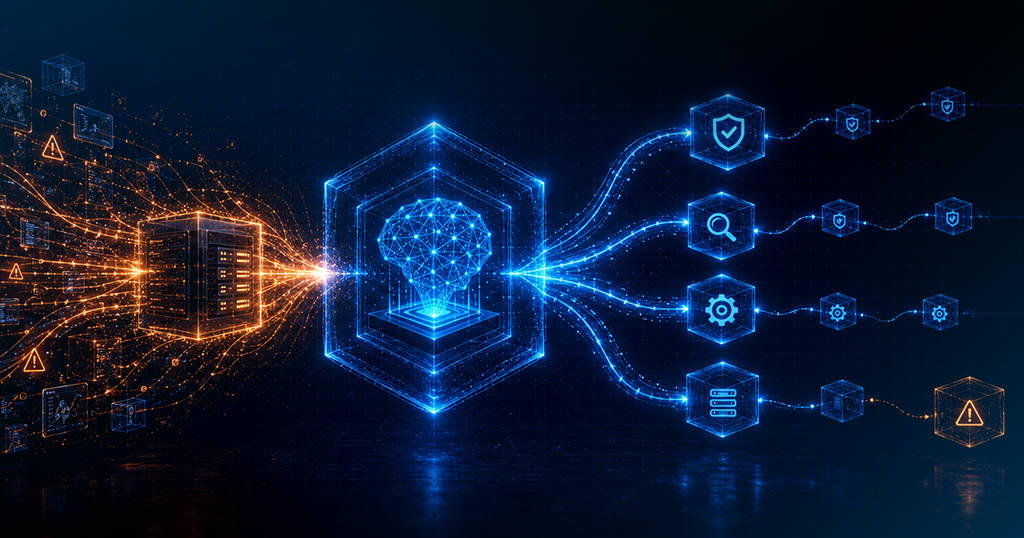
The simplest way to think about it: SIEM is the ears of your security operation. AI SOC is the brain that decides what to do with what those ears hear.
What an AI SOC Adds on Top of Your SIEM
Investigation Workflow
SIEM Alert Fires at Minute Zero.
What Happens Next?
Two workflows. Same alert. Very different outcomes.
Your SIEM fires an alert. What happens next?
In most teams, an analyst picks it up, manually checks if it is real, cross-references a few other tools, pulls context from an identity system, and decides whether to escalate. That process takes time—a lot of it. The average dwell time before an alert gets triaged sits at 56 minutes. The average attacker lateral movement time is now 29 minutes (CrowdStrike 2026 Global Threat Report).
That math does not work.
An AI SOC closes that gap. It ingests the alert, enriches it with threat intelligence, cross-references identity and endpoint data, scores it based on asset criticality and blast radius, and delivers a summary to the analyst that is ready for a decision. For low-risk incidents, it resolves them without human input at all.
The difference between SIEM and AI SOC is not detection — both detect. The difference is investigation speed and coverage. SIEM generates the alert. AI SOC runs the case.
Here is what AI SOC typically adds that SIEM does not do:
- Automated triage across 100% of alerts, not just the 40% humans can cover
- Cross-tool enrichment from EDR, IAM, cloud, and email security in seconds
- Context-aware prioritization based on blast radius, identity risk, and asset value
- Approved playbooks for containment, host isolation, and account lockdown
- Full audit trail on every action, readable by regulators
How Company Size Changes the Answer
For growing companies with lean security teams, the AI SOC vs SIEM decision is less of a comparison and more of a sequencing question.
Most of these organizations already have a SIEM. The problem is they do not have enough analysts to work the queue. An AI SOC slots into that gap without requiring a replacement of existing tools.
For enterprise teams running large SOC operations, the equation shifts. The SIEM is deeply integrated into compliance workflows and reporting. AI SOC here works as a force multiplier — handling repetitive L1 and L2 work so senior analysts can focus on threat hunting and complex investigations.
Both scenarios share the same root problem: alerts that no one has time to investigate. AI SOC is how you fix that without hiring a team you cannot find or afford.
The SOC Problems SIEM Cannot Fix on Its Own
SIEM was built when log volumes were smaller and attack surfaces were more contained. The modern threat environment has grown past that model in every direction.
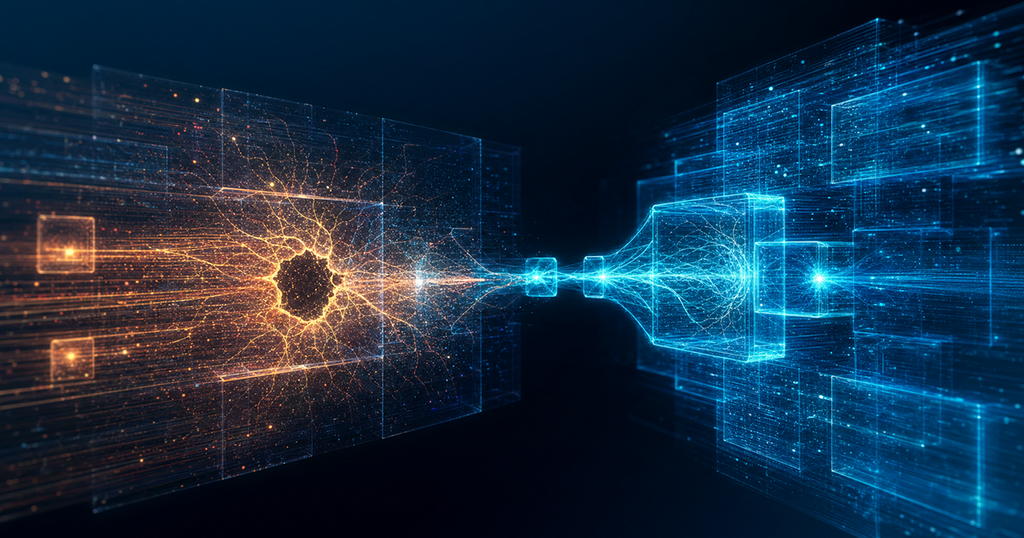
The Reality of Alert Overload
Nearly 3,000 Alerts a Day.
40% Go Completely Uninvestigated.
This isn’t a staffing problem. It’s a structural one — and SIEM alone can’t solve it.
Attackers move in 29 minutes. The average alert sits untouched for 56 minutes. That gap is where breaches happen — and it’s the exact problem AI SOC was built to close.
Here are the problems SIEM was not designed to solve:
Alert overload. About 90% of SOC teams report being overwhelmed by backlogs and false positives (Osterman Research). SIEM generates those alerts. It does not process them.
Context gaps. SIEM shows you what happened in the log. It rarely tells you whether that event matters — in the context of who the user is, what assets are at stake, and what attackers are doing on the network right now.
Speed mismatch. The average attacker lateral movement time is now 29 minutes (CrowdStrike 2026 Global Threat Report). Manual investigation workflows built around SIEM cannot match that.
Analyst burnout. Between 63% and 76% of SOC analysts reported burnout in 2025 (Tines/Sophos research). Drowning in SIEM alerts every shift is a core driver of that number. SOC analyst average tenure is now under two years.
Uninvestigated alerts. About 40% of alerts are never investigated at all (Prophet Security 2025). 61% of security teams admitted to ignoring alerts that later turned out to be real incidents. That is not a staffing problem. That is a structural one.
How AI SOC Improves What Happens After a SIEM Alert Fires
The SIEM fires the alert. The AI SOC takes over from there.
AI SOC platforms ingest the SIEM signal and immediately do what an L1 analyst would do manually: check the user’s history, look at the endpoint, pull relevant threat intelligence, assess how critical the affected asset is, and determine if this is noise or a real incident.
That work happens in seconds. And it happens for every single alert — not just the ones analysts have time to open.
The result is not just faster response. It is more coverage. Teams using AI SOC move from investigating 40% of alerts to 95% or more, without adding headcount.
IBM’s 2025 Cost of Data Breach research found that organizations using AI extensively cut their breach lifecycle by 80 days and saved about $1.9 million per breach on average. That number reflects exactly this shift — from alerts sitting in a queue to alerts getting investigated the moment they fire.
Do You Need Both a SIEM and an AI SOC?
For most teams: yes.
An AI SOC does not replace your SIEM. It works on top of it. Your SIEM continues to collect logs, manage compliance data, and fire alerts. The AI SOC processes those alerts at scale and takes action on the ones that matter.
Think of it this way: your SIEM is your security camera network. Your AI SOC is the team watching the footage and responding to what they see. One without the other leaves you with either footage no one reviews, or a team with nothing useful to watch.
How AI SOC Works Inside Your Existing Security Operations
Most AI SOC platforms are built to connect with existing SIEM deployments, not replace them.
A well-built AI SOC will:
- Ingest signals directly from your SIEM alongside EDR, IAM, and cloud sources
- Normalize and enrich those signals before they reach an analyst
- Run investigation playbooks mapped to your current workflows
- Feed case outcomes back into your SIEM for audit and reporting
This means you do not have to choose between keeping your SIEM investment and getting the speed of AI-driven response. You get both.
One caution: not all AI SOC tools are built equally. Some are SOAR platforms with an AI label added. The real differentiator is whether the platform investigates alerts or just scores them. Scoring is a filter. Investigation is a teammate. Some are SOAR platforms with an AI label on top. The real differentiator is whether the platform investigates alerts or just scores them. Scoring is a filter. Investigation is a teammate.
The AI Teammate That Runs the Case
Your Team Doesn’t Have Time For
SOC Teammate connects to your existing SIEM and 200+ security tools — ingests every alert, enriches it automatically, and handles the investigation triage queue your analysts are buried under. Operational within hours, not weeks.
Connects to your existing stack.
FAQs
Does an AI SOC replace a SIEM?
How can lean security teams compare AI SOC with SIEM options?
When should enterprise SOC teams choose AI SOC instead of SIEM?
What does an AI SOC add on top of SIEM workflows?
Wrapping Up
SIEM and AI SOC are not competitors. They are different layers of the same operation — and most teams need both working together.
Your SIEM is not going anywhere. It is where your compliance data lives, where your detection rules run, and where your security posture gets documented. What it cannot do is keep up with the volume of work it creates.
That is the gap AI SOC fills. And for teams that are already stretched thin, filling that gap is not optional anymore. According to IBM’s 2025 research, organizations using AI in their security operations save an average of $1.9 million per breach and cut the breach lifecycle by 80 days. The cost of waiting adds up fast.
If your current setup has a working SIEM but a growing backlog of uninvestigated alerts, Secure.com’s SOC Teammate is built for exactly that. It connects to your existing tools, starts delivering value in the first 30 minutes, and handles the triage queue your team does not have time to clear.