Modern applications aren’t built from scratch. They’re assembled.
A typical codebase pulls in dozens, sometimes hundreds, of open source libraries. Frameworks, packages, plugins, APIs. It adds up fast. And most of the time, developers don’t think twice about what’s inside those dependencies.
That’s where things get messy.
A single outdated library can introduce known vulnerabilities. A poorly maintained package can become a backdoor. Even licensing issues can turn into legal trouble later on. You don’t see these risks in your own code. They sit inside everything you import.
Software Composition Analysis exists to make those hidden pieces visible.
What is Software Composition Analysis (SCA)?
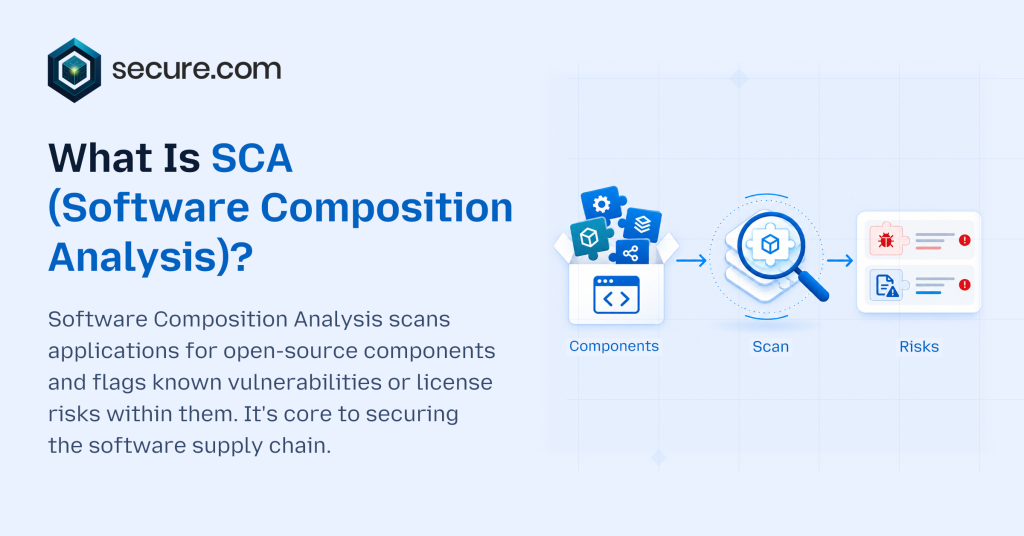
Software Composition Analysis (SCA) is a security practice that identifies, analyzes, and manages the open source components used in an application. It helps teams understand what third party code they are relying on, whether it has known vulnerabilities, and if it meets licensing and compliance requirements.
Instead of scanning only the code you write, SCA looks at the code you include.
It builds an inventory of dependencies, checks them against vulnerability databases, and flags anything that needs attention. This includes outdated versions, known security issues, and risky licenses.
How Software Composition Analysis works
SCA tools typically follow a straightforward process, though the depth can vary depending on how mature the setup is.
Dependency discovery
The tool scans your codebase, build files, and package managers to identify all libraries and components in use. This often includes both direct and transitive dependencies, which means packages pulled in by other packages.
Bill of Materials (SBOM) creation
Once everything is identified, the tool creates a Software Bill of Materials. Think of it as a detailed list of every component in your application, including versions and sources.
Vulnerability matching
Each component is checked against known vulnerability databases such as CVEs. If a library has a known issue, it gets flagged along with severity and impact details.
License analysis
Open source licenses come with obligations. SCA tools review licenses to highlight conflicts or restrictions that could affect how software is distributed or used.
Continuous monitoring
New vulnerabilities show up all the time. SCA tools keep monitoring dependencies even after deployment, so teams are alerted when something previously safe becomes risky.
Key characteristics of SCA
Focus on open source risk
SCA is built around the idea that third party code introduces its own risks. It doesn’t replace other security testing. It fills a gap they don’t cover.
Visibility into dependencies
Many teams don’t have a clear view of what’s inside their applications. SCA provides that inventory, which is often the first step toward better security decisions.
Ongoing tracking
This is not a one time scan. Dependencies change, new vulnerabilities appear, and risk levels shift over time.
Early detection in development
When integrated into CI pipelines, SCA can flag risky components before they reach production.
Technologies and Techniques Used in SCA
Package manager analysis
Tools scan files like package.json, requirements.txt, or pom.xml to map dependencies.
Binary and code fingerprinting
Some tools analyze compiled code or binaries to identify components even when source files are incomplete.
Vulnerability intelligence feeds
SCA relies on constantly updated vulnerability databases to match known issues with detected components.
SBOM standards
Formats like SPDX and CycloneDX help standardize how component inventories are shared and tracked.
Applications and Impact of SCA
Reducing known vulnerabilities
Most breaches don’t come from unknown flaws. They come from known ones that weren’t fixed. SCA helps teams catch those early.
Faster patching decisions
Instead of guessing which libraries are affected, teams get a clear list of what needs updating.
Compliance and audit readiness
Many frameworks now expect visibility into software supply chains. SCA makes it easier to show what’s being used and why.
Better software supply chain security
Attacks increasingly target dependencies. SCA gives teams a way to keep track of that expanding attack surface.
Detecting and Managing risks with SCA
SCA doesn’t fix issues on its own. It points them out clearly so teams can act.
Common steps after detection include:
- Updating vulnerable libraries to safe versions
- Replacing risky or abandoned packages
- Applying patches when updates are not immediately available
- Reviewing license conflicts before release
The real value comes from acting on what SCA finds, not just running the scan.
Challenges and Limitations of SCA
Too many alerts without prioritization
Large projects can generate a flood of vulnerability warnings. Without context, it becomes hard to know what matters first.
Transitive dependency complexity
You might not directly use a vulnerable library, but it can still exist deep in your dependency chain.
False sense of security
SCA only covers known vulnerabilities. It won’t catch new or undisclosed issues.
Integration gaps
If SCA isn’t part of the development workflow, issues get discovered late when fixes are harder.
The Future of Software Composition Analysis
As software supply chain attacks become more common, SCA is moving closer to the center of application security.
Teams are starting to combine SCA with runtime monitoring, risk scoring, and deeper context around how components are actually used. SBOM requirements are also gaining traction, especially in regulated industries.
There’s also a shift toward making SCA less noisy and more actionable. Fewer alerts. Better prioritization. Clearer decisions.
Conclusion
Software Composition Analysis shines a light on something most teams overlook: the code they didn’t write.
Dependencies speed up development, but they also bring hidden risks. Without visibility, those risks sit quietly until they don’t.
SCA gives teams a way to track, understand, and manage those risks before they turn into real problems. Not perfect. But necessary.