Key Takeaways
- An AI SOC agent is an autonomous system that investigates alerts, enriches context, and takes action — not just summarizes.
- It is different from a chatbot. A chatbot answers questions. An AI SOC agent closes cases.
- Agentic AI plans and adapts dynamically. Traditional automation follows a fixed script.
- Human-in-the-loop governance is what separates trustworthy SOC agents from black-box tools.
- Before buying, ask about autonomy controls, explainability, and how human approval thresholds are set.
Your SOC team is staring at 747 unread alerts on a Monday morning. A suspicious login from Iceland just came in. Normally, that is a 10-minute manual job — check the travel calendar, pull logs, cross-reference threat intel, decide. Multiply that by hundreds of alerts a day, and you understand why 84% of security professionals report being uncomfortably stressed and nearly 60% are considering leaving the field.
That is the environment AI SOC agents were built for.
What Is an AI SOC Agent?
An AI SOC agent is an autonomous software system built to do the core work of a security operations center — alert triage, investigation, enrichment, and response — without waiting on a human to start every task.
An AI SOC agent is not a dashboard or a report generator. It ingests signals from your SIEM, EDR, identity systems, cloud platforms, and email security tools, then reasons across that data in real time to determine the next best action.
The goal is straightforward: catch real threats faster, dismiss false positives automatically, and free your analysts to focus on the cases that actually require judgment.
What tasks does an AI SOC agent automate?
Quite a few of the ones burning out your L1 and L2 analysts:
Not a chatbot.
An autonomous analyst.
AI SOC agents investigate alerts, enrich context, and take action — without waiting on a human to start every task.
What is the difference between an AI agent and agentic AI?
These terms are often used interchangeably, but there is a real difference worth understanding.
An AI agent is the system itself — the autonomous software that performs a task.
Agentic AI describes the underlying behavior: the ability to plan dynamically, reason across multiple steps, and adapt based on what the agent finds along the way. A SOAR playbook executes the same steps regardless of context. An agentic AI system follows the evidence and changes course when something looks off — the way a senior analyst would.
That shift from scripted automation to dynamic reasoning is the core distinction. It is also why agentic AI is getting so much attention right now. Gartner tracked a 750% increase in AI-agent-related inquiries between Q2 and Q4 of 2024 alone.
How an AI SOC agent
actually investigates
Most security tools hand you a summary. An AI SOC agent runs the full investigation — dynamically, without waiting to be asked.
How is an AI SOC agent different from a chatbot?
A chatbot answers questions. You ask it something, it responds.
An AI SOC agent acts. It monitors continuously, pulls data from your tools, investigates without being prompted, and closes cases. You can interact with it conversationally, but that interface is a feature, not the product.
The clearest way to put it: a chatbot is reactive and passive. An AI SOC agent is proactive and autonomous. One waits for your question. The other does not wait for anything.
The Human-in-the-Loop Question (and Why It Matters)
The most common concern security leaders have about AI SOC agents is about control. What happens when the agent gets it wrong? Who is accountable when an automated action causes an issue?
These are the right questions to ask.
What decisions can an AI SOC agent make autonomously?
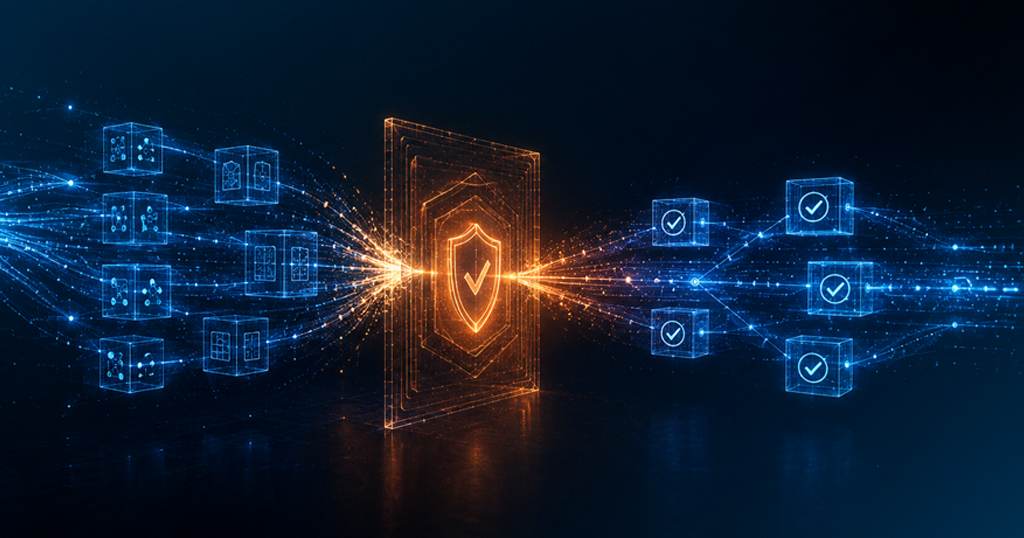
A well-designed AI SOC agent does not operate on an all-or-nothing model. Autonomy is calibrated to risk level:
- Low-risk, high-confidence — Handled automatically. False positive dismissals, routine enrichment, standard containment steps covered by pre-approved playbooks
- Medium-risk — Surfaced to an analyst with full context and a recommended action. One click to approve or redirect
- High-risk — Requires explicit human approval before anything happens
This tiered approach is what makes autonomous SOC work in practice. Teams that start conservatively can run the agent with tighter approval thresholds and expand autonomy as confidence builds. It is not a trust fall. It is a governance model.
How do AI SOC agents and human analysts work together?
The honest answer is: analysts stop doing the work they hate and start doing the work that actually matters.
Instead of spending their shift pulling IOCs, running log queries, and classifying alerts, analysts review escalations that are already pre-investigated. They make judgment calls on genuinely complex cases. They tune detection logic, supervise agent behavior, and handle anything that requires contextual knowledge of the business.
The agent handles volume. The analyst handles nuance. Neither replaces the other.
A traditional SOC needs five to seven analysts to maintain 24/7 coverage. An AI SOC agent runs continuously without that headcount — which is not about eliminating jobs. It is about making a three-person security team function like a ten-person one.
The analyst your team
never had budget to hire.
Built as a Digital Security Teammate — not a standalone tool. Connects to 500+ platforms and starts delivering value within 30 minutes of setup.
FAQs
What questions should you ask before buying an AI SOC agent?
Can an AI SOC agent replace a SOC analyst?
How does an AI SOC agent handle alert fatigue?
How long does it take to deploy an AI SOC agent?
What questions should you ask before buying an AI SOC agent?
Can an AI SOC agent replace a SOC analyst?
How does an AI SOC agent handle alert fatigue?
How long does it take to deploy an AI SOC agent?
Conclusion
Your security team does not have an attention problem. They have a volume problem.
AI SOC agents exist to fix the ratio between incoming alerts and the human capacity to handle them — not by cutting corners, but by doing the routine work faster and at a scale humans cannot match.
The ones worth evaluating are the ones that make every decision explainable, every action auditable, and every approval threshold something your team controls. That is not a feature list. That is the standard.