Key Takeaways
- A typical SOC 2 audit needs over 150 pieces of evidence. Gathering it by hand usually takes hundreds of engineering hours.
- Manual compliance is not “free.” The real cost shows up in lost engineering time, delayed deals, and audit findings that drag out fieldwork.
- Automated evidence collection can cut that manual effort by 50% or more, according to industry benchmarks.
- Control mapping, tying one control to SOC 2, HIPAA, and GDPR at once, is the fastest way to avoid doing the same work three times.
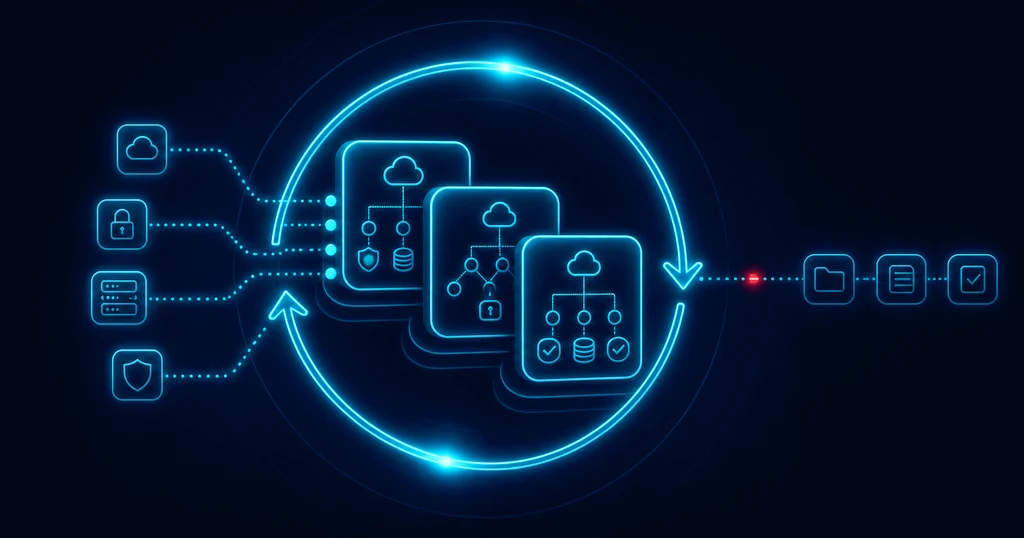
- Continuous compliance turns evidence collection from a once-a-year scramble into a background process that just keeps running.
Introduction
Picture a Tuesday, three weeks before your SOC 2 kickoff call. Your engineers are digging through AWS logs instead of shipping code. Someone is hunting for a screenshot from October. Nobody remembers where the vendor contracts live.
This isn’t a compliance problem. It’s a time problem, and it’s costing you more than you think.
What “Passing SOC 2 Quickly” Actually Requires
SOC 2 doesn’t grade your intentions. It grades your proof. Auditors need to see policies, access logs, screenshots, and training records tied to the AICPA’s Trust Services Criteria, and security is the one category every company must include, no matter what else gets added.
Type I looks at a single point in time. Type II, the version most enterprise buyers ask for, checks whether your controls held up over 3 to 12 months. That distinction matters because it changes what “quickly” even means. You can rush a Type I. You cannot rush a Type II, since the evidence has to be collected the whole way through, not assembled the week before the auditor shows up.
A few numbers worth knowing:
- Audits typically require 150+ distinct pieces of evidence
- Self-managed SOC 2 programs often run 9 to 12 months and consume 500+ internal hours
- Audit costs range from roughly $7,500 to over $100,000 depending on scope and firm
None of that time makes your company safer on its own. It only proves, after the fact, that you already were.
The Real Cost of Manual Compliance Versus Automated Compliance
Here’s the question most compliance leads never actually run the numbers on: what does manual compliance versus automated compliance cost, in real dollars?
Manual compliance looks cheap because there’s no invoice for it. But the bill still comes due, just spread across payroll instead of a software subscription.
Manual compliance isn’t free. It just hides the invoice.
The real cost of a SOC 2 audit shows up in engineering hours, stalled deals, and rework — not a line item you can point to.
- 9–12 monthsaverage timeline for a self-managed audit program
- 500+ hoursof internal time spent chasing screenshots and logs
- 150+ evidence itemsgathered by hand, one at a time, across teams
- Stalled dealswhile procurement waits on your SOC 2 report
- 50%+ less effortcut from manual evidence collection, per industry benchmarks
- Continuous collectionreplaces the once-a-year evidence scramble
- Timestamped automaticallyso nothing depends on one person’s memory
- Faster signed contractsas audit completion stops sitting in procurement
Based on industry benchmarks cited by Coalfire’s State of Cybersecurity Compliance research and typical SOC 2 program data.
Where the manual cost hides
- Engineering time pulled off the roadmap. Someone senior enough to know where the logs live is also senior enough to be building your product.
- Rework from inconsistent evidence. A screenshot without a timestamp gets rejected and has to be redone.
- Delayed enterprise deals. Procurement teams stall contracts until SOC 2 shows up, and every week of delay is a week of deferred revenue.
- Audit findings that extend fieldwork. A gap the auditor finds mid-audit costs more time than the same gap caught early.
Research firm Coalfire has tracked this trend for years: well over half of enterprise security teams report rising compliance operating costs year over year, even as headcount stays flat. That’s the manual model showing its age.
Where automation earns its keep
Compliance automation platforms pull evidence directly from the tools you already run: AWS, Okta, GitHub, Jira, your HR system. That evidence gets timestamped and logged automatically instead of hand-collected and reformatted.
The payoff shows up in three places:
- Time. Teams that automate evidence collection typically cut manual effort by 50% or more.
- Consistency. A control gets checked the same way every time, so nothing depends on one person remembering to run a report.
- Speed to revenue. Faster audit completion means fewer stalled deals sitting in procurement.
A useful way to think about it: manual compliance is a cost you pay in hours you can’t get back. Automated compliance is a cost you pay once, in setup, and then mostly stop paying at all.
Say a mid-size SaaS company pays $25,000 for the audit itself. That figure never shows the full picture. Add up the hours a security engineer, a DevOps lead, and an HR manager spend chasing screenshots and reformatting logs over four months, and the real internal cost often runs several times higher than the invoice. None of those hours went toward shipping product or closing security gaps. They went toward proving something that was probably already true.
Control Mapping: The Step That Saves You From Doing This Three Times
Most companies chasing SOC 2 also have HIPAA obligations, GDPR exposure, or both. Treating each one as a separate project is where a lot of the wasted hours come from.
Document a control once. Satisfy every framework it touches.
One quarterly access review can clear a SOC 2 control, a HIPAA safeguard, and a GDPR requirement — instead of becoming three tickets for three auditors.
Control mapping means you document one control (say, access reviews or encryption at rest) once and tie it to every framework it satisfies. A single MFA policy can serve SOC 2’s access control criteria, HIPAA’s technical safeguards, and GDPR’s security-by-design requirement all at the same time.
Why this matters for GDPR and HIPAA specifically
- GDPR applies the moment you handle personal data of anyone in the EU, regardless of where your company sits. It shares real ground with SOC 2 on encryption, access control, and incident response, but it’s a legal requirement, not a voluntary audit.
- HIPAA governs protected health information and overlaps heavily with SOC 2’s security criteria on things like access logging and breach notification.
Skip the mapping step, and you’ll find your team writing the same access control policy three separate times for three separate auditors. Map it once, and every framework update flows from a single source.
Think of it this way. A quarterly access review that removes a former employee’s login is one action. Done well, that single action becomes evidence for a SOC 2 access control, a HIPAA safeguard, and a GDPR accountability requirement, all at once. Done manually and separately, it becomes three tickets, three screenshots, and three explanations to three different auditors, for something that happened one time.
If you haven’t scoped this yet, start with a SOC 2 readiness assessment checklist to find your gaps before an auditor does. And since you can’t map a control to a system you don’t know you have, it’s worth running an asset inventory before you start building your control matrix. Shadow IT and forgotten cloud accounts are a common source of last-minute audit surprises.
How Secure.com’s SOC Teammate gets you there faster
Security is the one Trust Services Criterion every SOC 2 audit requires — and the hardest to prove by hand. Auditors want alert logs, incident timelines, and proof someone reviewed what happened, all timestamped and consistent for months. The SOC Teammate keeps that trail organized automatically, instead of scattered across Slack threads and someone’s memory.
Continuous tracking
Control status is monitored as it happens, and evidence is collected the moment a control runs — not reconstructed weeks later for the audit.
Full traceability
Every action is explainable and links back to the alert that triggered it — exactly what auditors ask to see.
Automated evidence
Every control is documented automatically, so your team spends time on strategic compliance work instead of chasing screenshots.
Answers on demand
When your auditor asks for CC6.1 evidence, it’s already documented — with timestamps, owners, and audit trails.
See the SOC Teammate in action
Continuous monitoring, automated evidence, and audit-ready documentation — built into your SOC.
FAQs
How long does it actually take to pass a SOC 2 audit?
Do I need to worry about GDPR if I’m only pursuing SOC 2?
What does control mapping actually mean in practice?
Can automation handle SOC 2 and HIPAA evidence at the same time?
Conclusion
Manual compliance isn’t free. It just hides its cost inside payroll, missed deadlines, and engineering hours you’ll never get back. Mapping your controls once and automating the evidence behind them turns SOC 2 from a recurring fire drill into something closer to background maintenance.
The AICPA’s Trust Services Criteria and IBM’s Cost of a Data Breach Report both point at the same underlying truth: proof costs less when you build it continuously instead of reconstructing it under pressure. If you’re staring down your next SOC 2 kickoff, the fastest path through it starts with knowing exactly what a manual process is costing you today.