Key Takeaways
- Purple teaming works best as a constant back and forth between attack and defense, not a once-a-year event.
- AI can now run adversary emulation on a schedule, mapping every test to a real MITRE ATT&CK technique.
- Detection as code lets teams turn what a simulation finds straight into a SIEM rule, without weeks of manual work.
- Human oversight still matters most at the judgment calls: which gaps to fix first, and whether a new detection is safe to ship.
- Secure.com’s SOC Teammate automates detection, triage, and investigation while requiring human approval for high-impact actions like host isolation or account disabling, ensuring speed never comes at the cost of accuracy.
Security teams that extensively use AI and automation in their security operations saw significantly lower breach costs, according to IBM’s 2024 Cost of a Data Breach Report. Most of that gain did not come from fancier alerts. It came from closing the loop between what attackers actually do and what the SOC actually catches, faster and more often than a person alone ever could.
That loop has a name: purple teaming. And it is finally becoming something you can automate.
Automating the Purple Team Loop With AI
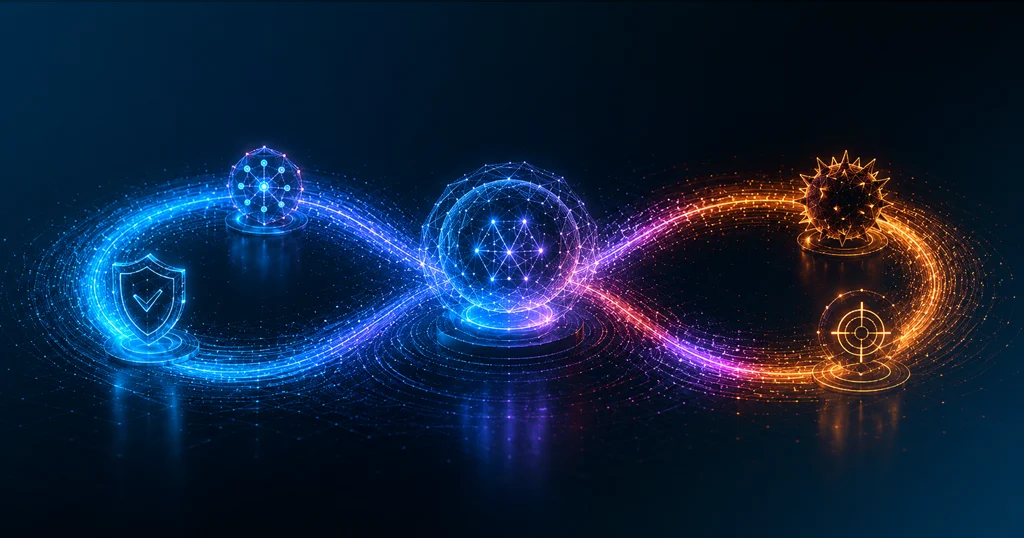
Red finds the gap. Blue validates the fix. AI closes the loop between them, continuously, instead of once a quarter.
-
Red Attacks
Simulates real attacker paths against live controls
-
AI Orchestrates
Turns findings into tests automatically, no handoff lag
-
Blue Validates
Confirms detection fired and response held, every time
What the Purple Team Loop Actually Looks Like
Purple teaming is not red teaming with a nicer name. It is a live handoff. The red side runs an attack technique. The blue side watches what fires and what stays silent. Then both sides fix the gap together, in the same session, instead of waiting for a report months later.
Most teams anchor this process to MITRE ATT&CK, a public framework that catalogs how real attackers move, from initial access to data theft. Mapping tests to ATT&CK gives red and blue teams a shared language. When a detection engineer says “we’re not catching T1055,” everyone knows exactly what that means, no translation needed.
The whole point of the loop is speed. Attackers do not wait for your next quarterly test, and a purple team program that only runs twice a year will always be behind. That is the gap AI is now closing.
Why the Offense-Defense Loop Breaks Down Manually
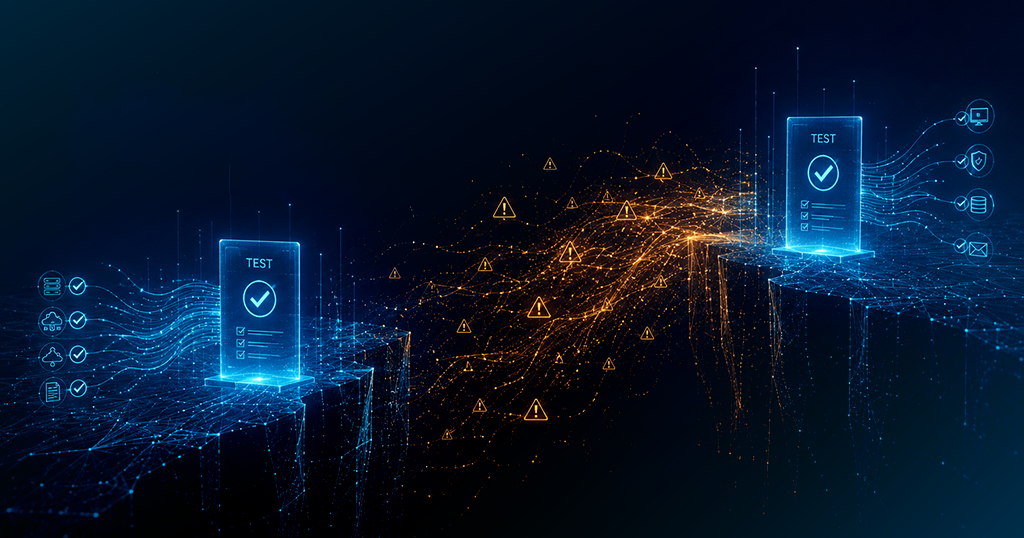
Running this by hand takes real people, real time, and a lot of coordination. A red teamer has to build the attack scenario. A detection engineer has to watch logs live. Someone has to write up what got missed. Then someone else has to actually build and test the new rule.
Every Handoff Adds Delay
Running the offense-defense loop by hand means real people, real time, and a lot of coordination, at every single step.
-
Red Teamer Builds the Scenario
An attack technique gets planned and staged by hand
⏱ Wait -
Detection Engineer Watches Live
Someone has to be watching logs in real time to catch what fires
⏱ Wait -
Findings Get Written Up
What got missed is documented, often days after the exercise
⏱ Wait -
Someone Builds & Tests the Rule
A separate person has to actually ship the fix
⏱ Wait
By the time a fix ships, the team has often moved on, and the next test slips another quarter.
Each handoff adds delay. By the time a fix ships, the team has often moved on to other priorities, and the next test slips another quarter.
How AI Is Automating Adversary Emulation
This is where automation earns its keep. Instead of a red teamer manually running each technique, AI-driven platforms can chain together adversary emulation profiles and fire them off on a schedule, day or night, without anyone babysitting the run.
How Does Automated Adversary Emulation Work
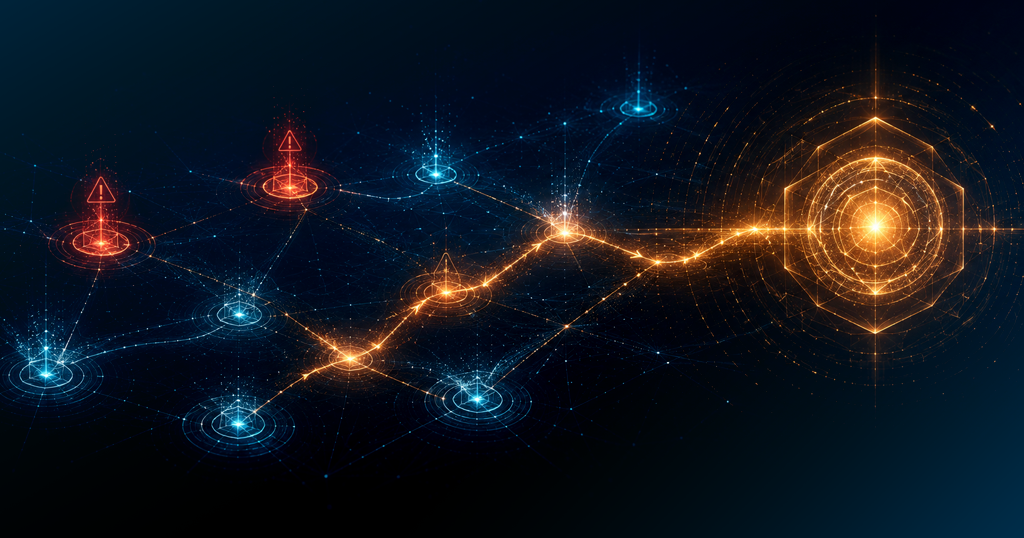
Tools built on frameworks like MITRE’s own CALDERA project let a system pick a set of ATT&CK techniques, string them into a realistic attack chain, and execute them against a live or test environment. The platform logs what happened at every step: which technique ran, what it touched, and whether it got caught.
That output becomes the raw material for the whole exercise. No more relying on a red teamer’s notes typed up after the fact.
How Can AI Automate Purple Team Exercises
AI adds a layer on top of that raw simulation data. It can:
- Pick which techniques to test next, based on what is trending in current threat intelligence
- Chain techniques into a realistic attack path instead of testing them in isolation
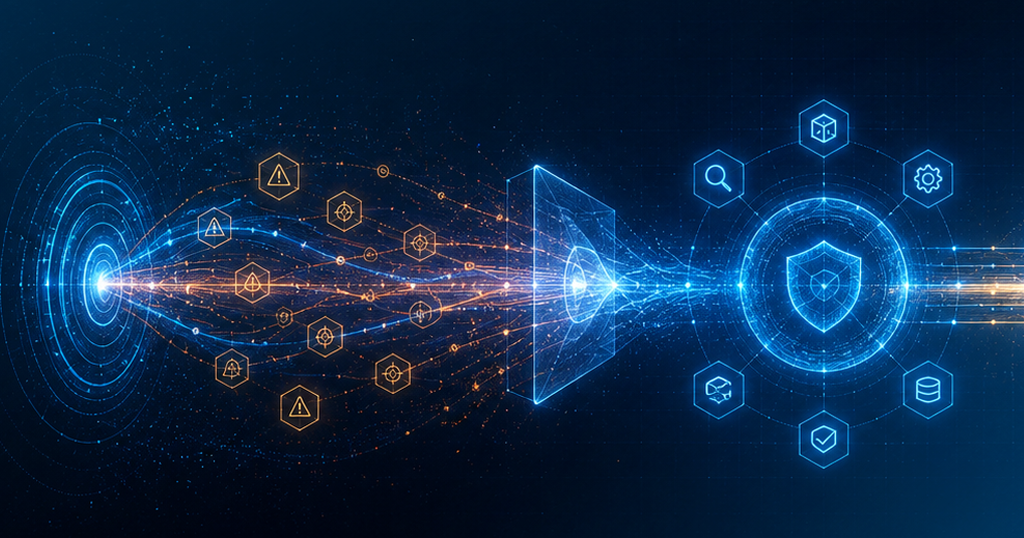
- Flag which detections fired weakly or not at all, and rank them by risk
- Draft a first version of the fix, ready for a human to check
That last point matters. A 2026 Wavestone writeup on CTI-powered purple teams found that even in a highly automated pipeline, one step still needs a person: turning raw threat intelligence into a usable test case. AI speeds up everything around that step, but someone still decides what “realistic” looks like for their environment.
Closing the Loop: Detection as Code and SIEM Tuning
Running the attack is only half the job. The real value shows up when a missed detection turns into a working SIEM rule, fast.
How Does Detection-as-Code Support Purple Teaming
Detection as code treats every SIEM rule the way developers treat application code. Rules live in a repository. Changes go through review. Nothing reaches production without a test. When a purple team exercise finds a gap, the fix gets written, versioned, and tracked, not scribbled in a spreadsheet and forgotten.
This is what makes purple teaming repeatable. A rule built today can be tested again next month against a new variant of the same technique, and you will know immediately if it still holds up.
How to Integrate Attack Simulation With SIEM Tuning
The strongest programs treat this as one continuous pipeline instead of two separate jobs:
- An automated simulation runs a batch of ATT&CK techniques against the environment
- Results feed straight into a detection-as-code repository as flagged gaps
- AI drafts a rule or tuning change based on the telemetry that should have fired
- A detection engineer reviews, tests, and merges the fix
- The same technique gets retested on the next cycle to confirm it holds
From Simulated Gap to Shipped Rule
One continuous pipeline, not two separate jobs. Each step is versioned, reviewed, and retested on the next cycle.
-
Simulation Runs
An automated batch of ATT&CK techniques fires against the environment
-
Gaps Get Flagged
Results feed straight into the detection-as-code repository
-
AI Drafts the Fix
A rule or tuning change is drafted from the telemetry that should have fired
-
Engineer Reviews & Merges
A person tests the change and approves it before it ships
-
Retested Next Cycle
The same technique runs again to confirm the fix still holds
SANS instructors demoing this kind of setup call it an “always on” purple team, built by wiring together SIEM, SOAR, and simulation tools into one CI/CD-style pipeline. The goal is not a report at the end of the year. It is a rule that ships this week.
Where Human Oversight Still Belongs
None of this means the SOC hands the keys over to a machine.
How Does Human Oversight Work in Automated Attack Simulation
Automation is excellent at volume: running more tests, more often, across more of the ATT&CK matrix than a small team could manage alone. What it is not good at is judgment. Deciding which gap poses real business risk, whether a new detection will cause a flood of false positives, or whether a technique is too risky to simulate in production still needs a person who knows the environment.
Most mature programs land on a human-in-the-loop model for anything that changes production detections. The AI proposes. A person approves. That single checkpoint keeps speed from turning into risk.
AI Proposes. A Person Approves.
Automation handles volume. Judgment on high-impact changes stays with an analyst who knows the environment.
-
AI
Drafts the Fix
Correlates alerts with asset criticality and threat intel, then proposes a rule or response action
-
Checkpoint
High-impact actions pause here
-
Analyst
Approves & Ships
Reviews host isolation, account disabling, and other high-impact calls before they go live
This is exactly the model behind Secure.com’s SOC Teammate. It automates detection, triage, and investigation across your security stack, correlating alerts with asset criticality and threat intelligence to surface high-fidelity incidents, while keeping an analyst in the review seat before anything ships. You get the speed of a Digital Security Teammate that never sleeps, paired with the judgment of someone who understands your environment.
For a deeper look at how AI handles offensive testing end-to-end, Secure.com breaks down how AI actually runs a red team engagement and how to prove the results are working better than before. Check out which AI SOC metrics are actually worth tracking.
Put the Loop on Autopilot
The SOC Operations Teammate runs detection and response continuously, so your purple team loop never has to wait for a calendar invite.
-
Detects & Triages
Correlates alerts with asset criticality and threat intel
-
Investigates
Surfaces high-fidelity incidents, not alert noise
-
Waits for Approval
Human sign-off required for host isolation or account disabling
Lower breach costs. Teams that extensively use AI and automation in security operations see significantly lower breach costs — IBM Cost of a Data Breach Report.
FAQs
Is purple teaming the same as red teaming?
Do I need a big security team to automate purple teaming?
How often should an automated purple team cycle run?
Can AI replace the SOC analyst in this process?
The Bottom Line
Purple teaming used to mean a big exercise once or twice a year, followed by a report nobody had time to act on. AI changes that math. Adversary emulation runs on a schedule. Gaps turn into detection as code. SIEM rules get tuned in days, not quarters.
The teams that get the most out of this are not the ones removing people from the process. They are the ones using AI to run the loop constantly, while keeping a human in charge of the calls that actually matter.