Key takeaways
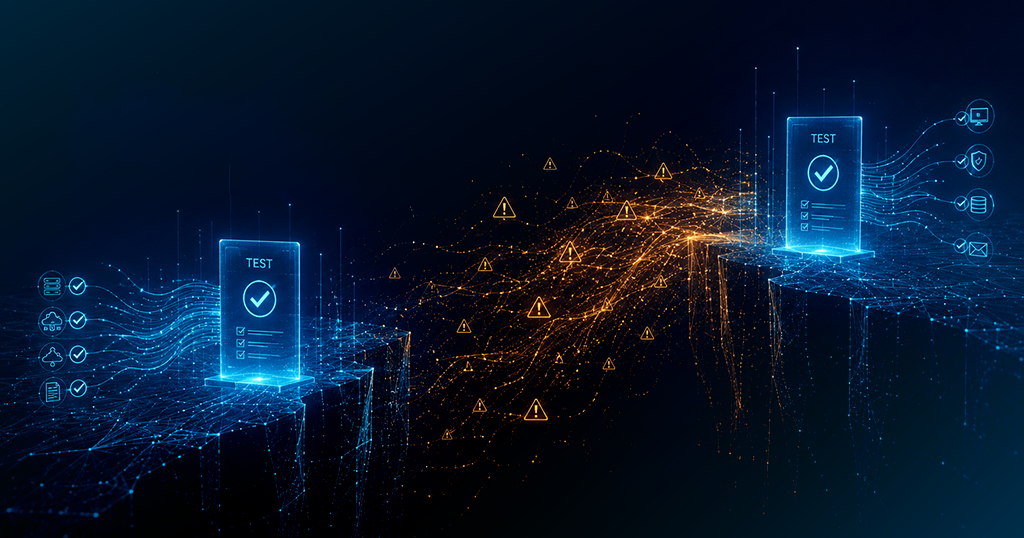
- A red team report is a snapshot of your environment on one specific day. Everything after that day is untested.
- Cloud accounts, identities, and code ship constantly, so the gap between what was tested and what’s live now grows every week.
- Attacker breakout time dropped to 29 minutes in 2025, according to CrowdStrike’s 2026 Global Threat Report, while most red team cycles still run once or twice a year.
- MITRE ATT&CK gets updated with new techniques on a regular basis, so a report built on last year’s TTP list is already missing ground.
- Autonomous red teaming and continuous adversary emulation, mapped to MITRE ATT&CK, close the gap between exercises without replacing the human red team.
A mid-market fintech company ran its annual red team exercise in January. The team found a handful of gaps, patched them, and filed the report away. Eight months later, an attacker walked in through a cloud storage bucket that didn’t exist when the exercise happened. Nobody had done anything wrong. The infrastructure had simply moved faster than the paperwork.
What a Point-in-Time Red Team Report Actually Tells You
One report, one narrow window
- Detection and response performance against the specific TTPs tested
- Gaps in coordination between tools, people, and playbooks
- Boardroom evidence that the program held up under pressure — on test day
- Anything deployed, reconfigured, or decommissioned after the engagement
- New identities, service accounts, or third-party integrations added since
- Adversary techniques that emerged after the report was written
A red team report documents one thing clearly: whether your people, processes, and technology could detect and respond to a specific simulated attack, on a specific set of systems, during a specific window of time. That’s valuable. It’s also narrow by design.
Unlike a penetration test, which systematically hunts for as many technical vulnerabilities as possible within a defined scope, a red team engagement is goal-oriented and objective-driven. Testers pick an objective, like reaching a sensitive database or a FedRAMP authorization boundary, and chain together whatever tactics get them there. The final report reads more like an intelligence briefing than a vulnerability list, and it usually takes weeks of planning and execution to produce.
That depth is the whole point. It’s also why the exercise can’t run every day. Most organizations schedule red team engagements annually, or a few times a year if the budget allows. In between, the report sits on a shelf while the real environment keeps changing underneath it.
What the Report Captures
- Detection and response performance against the specific TTPs used during the engagement
- Gaps in coordination between security tools, people, and playbooks
- Evidence for the boardroom on whether the security program holds up under pressure
What It Doesn’t Capture
- Anything deployed, reconfigured, or decommissioned after the engagement ended
- New identities, service accounts, or third-party integrations added since testing
- Adversary techniques that emerged or evolved after the report was written
Why These Reports Expire Faster Than Most Teams Expect
A report doesn’t go stale because the writing was bad. It goes stale because three things move faster than the testing cycle that produced it.
Your report was accurate — once.
A point-in-time red team engagement reflects your environment on test day. Every week after that, coverage confidence quietly erodes.
Your Infrastructure Doesn’t Sit Still
Teams running CI/CD pipelines push changes daily, sometimes hourly. New cloud resources spin up outside approved accounts. Unsanctioned SaaS tools get connected without security ever knowing. A report from six months ago describes a version of your environment that, in a lot of cases, no longer exists. The attack surface grew. The test scope didn’t.
Adversary Behavior Doesn’t Sit Still Either
MITRE ATT&CK exists because attacker behavior is documented, catalogued, and constantly expanded. New techniques get added as researchers observe them in the wild. A red team engagement built around last year’s threat intelligence tests against last year’s adversary, not the one probing your perimeter this week.
Detection Speed Has Compressed the Whole Timeline
CrowdStrike’s 2026 Global Threat Report puts the average attacker breakout time, the window between initial access and lateral movement, at 29 minutes in 2025. That’s the time your SOC has to notice and respond before an attacker is already moving through the network. When the underlying test that validated your detection capability is a year old, the confidence gap between “we tested this” and “this still holds” gets wider by the week.
The Real Cost of Trusting a Stale Report
Stale findings aren’t just an inconvenience. They carry a measurable financial and operational cost.
IBM’s 2025 Cost of a Data Breach Report puts the global average breach cost at $4.44 million, with breaches that take longer than 200 days to contain running notably higher than that average. Detection speed is directly tied to cost, and detection speed is exactly what a red team exercise is supposed to validate. If the validation is stale, the confidence built on it is stale too.
There’s also an audit angle worth naming here. Compliance frameworks like SOC 2 and ISO 27001 expect evidence that controls are effective now, not evidence that they were effective on the day of last year’s exercise. A report sitting in a shared drive doesn’t answer “are we still protected today,” and that’s usually the question a regulator, a board member, or a new CISO actually wants answered.
A few patterns tend to show up together when a report has quietly gone out of date:
- New cloud accounts or regions were added after the last engagement
- The identity and access footprint has grown (new hires, new vendors, new service accounts)
- Detection rules haven’t been retested against newer MITRE ATT&CK techniques
- Nobody can say, with confidence, what changed in the environment since the report was signed off
From Point-in-Time Testing to Continuous Validation
The fix isn’t running red team exercises more often and hoping the budget stretches. Most security teams can’t staff a red team that operates around the clock, and a good red team engagement takes real planning to do well. That’s where autonomous red teaming and continuous adversary emulation come in.
Autonomous red teaming platforms run simulated attack behavior on an ongoing basis, mapped to MITRE ATT&CK, without needing a human operator to schedule and execute every scenario. Adversary emulation narrows that further by replicating the specific tactics of a named threat actor relevant to your industry, so testing stays grounded in what’s actually likely to hit you rather than a generic kill chain.
This doesn’t replace the human red team. Manual engagements still bring creativity, business context, and judgment calls that automation can’t fully reproduce. What continuous testing does is fill the space between engagements, catching the drift that happens when new assets, new identities, and new attacker techniques show up in the months a scheduled exercise can’t cover.
The combination looks something like this in practice:
- Scheduled human-led red team engagements for depth, strategy, and board-level assurance
- Continuous, automated adversary emulation between engagements to catch what changed
- Detection findings routed straight into a feedback loop so gaps get closed, not just documented
Close the gap between red team exercises
While your last report sits on a shelf, your Cloud Security Teammate keeps watching. It discovers assets as they appear and hardens configuration continuously — so the next engagement tests an environment that’s actually been kept current.
FAQs
How often should a company run red team exercises?
What’s the real difference between a red team report and a penetration test report?
Can automated or AI-driven red teaming replace human red teamers?
How do I know if my last red team report is still valid?
The Bottom Line
A red team report was never meant to be a permanent record. It’s a snapshot, accurate for exactly as long as your environment stays still, and your environment doesn’t stay still. Treating that report as a one-time deliverable instead of the start of an ongoing process is how gaps quietly reopen between exercises. Pairing scheduled human-led engagements with continuous, autonomous adversary emulation, and routing what you learn straight into your SOC’s daily workflow, is what keeps the findings true past the day they were written.