Quick Verdict
- Saudi Arabia has three main frameworks: NCA ECC-2:2024 for government and critical infrastructure, SAMA for finance, and PDPL for personal data.
- The PDPL is fully enforced as of September 2024, and fines can hit SAR 5 million per breach, doubling for repeat offenders.
- Most audit failures come from missing evidence, not missing controls. You may be secure but unable to prove it.
- Gathering evidence by hand across dozens of controls is slow, error prone, and the top reason teams scramble before an audit.
- Continuous monitoring beats last-minute prep. Automated evidence collection keeps you audit ready all year, not just the week before.
Introduction
Saudi Arabia’s data privacy regulator issued 48 enforcement decisions against organizations in just one year. That is a clear signal. The Kingdom has moved past warnings and into real penalties, with fines reaching SAR 5 million per breach.
If your business operates in Saudi Arabia, a cybersecurity audit is coming. The question is not if, but how ready you will be. This playbook walks you through it step by step.
Why Cybersecurity Audits in Saudi Arabia Are Getting Serious
Saudi Arabia is building one of the most active compliance environments in the region, tied directly to its Vision 2030 goals. Regulators are no longer just publishing rules. They are checking and fining.
The PDPL came into full force in September 2024, and SDAIA now has quasi-judicial committees with power to investigate and impose sanctions. Those 48 enforcement decisions in 2025 and 2026 prove the era of grace periods is over.
For many companies, the real challenge is overlap. A Saudi bank, for example, has to answer to both the SAMA framework and NCA ECC at the same time. Juggling separate checklists for each one is where teams get overwhelmed.
The Three Frameworks You Need to Know
NCA ECC-2:2024
The NCA Essential Cybersecurity Controls are the baseline for government bodies and any private company that runs critical national infrastructure. The 2024 update is built around four domains: governance, defense, resilience, and third-party and cloud security. It sets the minimum bar every in-scope entity must meet.
SAMA Cyber Security Framework
The Saudi Central Bank framework covers banks, insurers, and finance companies. It has been in place since 2017 and treats regular self-assessments and audits as mandatory, not optional. If you handle money in the Kingdom, this one applies to you.
PDPL (Personal Data Protection Law)
The PDPL is Saudi Arabia’s national privacy law, overseen by SDAIA. It governs how any organization collects, stores, and shares personal data. It applies whether your business sits inside or outside the Kingdom, as long as you process the data of people in Saudi Arabia.
Your Step by Step Audit Preparation Playbook
Step 1: Map Which Frameworks Apply to You
Start by figuring out which rules you fall under. A fintech might face all three. A government contractor might focus on NCA ECC. Getting this wrong wastes months on the wrong controls, so pin it down first.
Step 2: Run a Gap Analysis
Compare what you do now against what each framework requires. This shows the holes between your current setup and the audit standard. Rank the gaps by risk so you fix the dangerous ones first, not the easy ones.
Step 3: Fix Your Policies and Controls
Close the gaps you found. Update your security policies, tighten access controls, turn on multi-factor authentication, and lock down vendor agreements. Each framework expects clear, written documentation, so make sure your policies actually exist on paper.
Step 4: Collect Your Evidence
This is where most teams stumble. An auditor does not take your word for it. They want proof: logs, screenshots, config records, and access reviews for every control. Pulling all this by hand, days before the audit, is a recipe for burnout and mistakes.
Step 5: Do a Practice Run
Run an internal review or hire an outside firm for a mock audit before the real one. This catches weak spots while you still have time to fix them. It also gets your team used to answering an auditor’s questions calmly.
The Real Reason Audits Fail
Most people think audits fail because a company is not secure. That is rarely the case. Teams usually have the right controls in place. The problem is proof.
Picture this. Your access reviews happen, but nobody saved the records. Your patching is current, but you cannot show the history. You are secure in practice, but you cannot prove it on paper. To an auditor, no evidence means no compliance.
That gap between doing the work and proving the work is the single biggest audit killer. And it gets worse when you track everything in spreadsheets that go stale the moment someone changes a setting.
How Secure.com Helps You Stay Audit Ready
Getting ready for a cybersecurity audit in Saudi Arabia means managing many controls and mountains of evidence across NCA, SAMA, and PDPL at once. The Secure.com Compliance Teammate takes that load off your team.
It works like this:
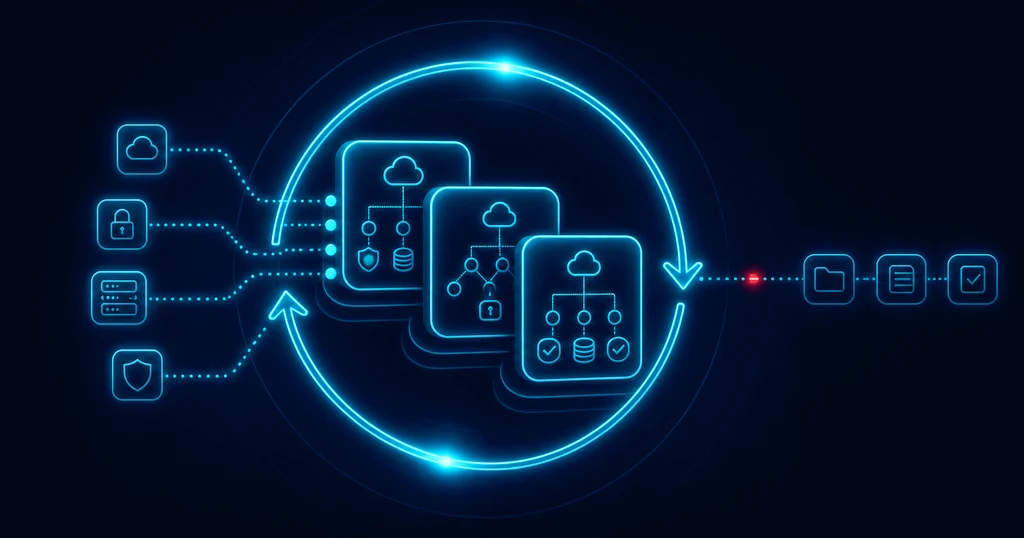
- Maps your controls across multiple frameworks in one place, so you skip the duplicate checklists.
- Collects audit evidence automatically, pulling logs and records as the work happens, not the night before.
- Monitors your controls continuously and flags gaps the moment they appear, giving you a live view of your posture.
- Links compliance gaps to real risk, so you fix the high-stakes issues first.
- Generates audit-ready reports on demand, turning weeks of prep into a few clicks.
FAQs
Who needs to follow NCA ECC in Saudi Arabia?
NCA ECC applies to government bodies and any private company that owns, operates, or hosts critical national infrastructure. The NCA also encourages all other organizations in the Kingdom to adopt the controls as best practice, even if not strictly required.
Does the PDPL apply to companies based outside Saudi Arabia?
Yes. The PDPL applies to any organization that processes the personal data of people inside Saudi Arabia, whether the company is based in the Kingdom or abroad. If you handle Saudi resident data, you are in scope.
What happens if I fail a cybersecurity audit in KSA?
It depends on the framework and the violation. Under the PDPL, fines can reach SAR 5 million per breach and double for repeat offenders. SDAIA can also order you to stop processing data, which can halt core operations.
How often do I need a cybersecurity audit?
It varies by framework and your risk level. SAMA treats regular self-assessments and audits as mandatory for financial entities. Many organizations move to continuous monitoring so they stay ready year round instead of prepping for one date.
Can I prepare for NCA, SAMA, and PDPL at the same time?
Yes, and you should. Many controls overlap across the three. Mapping them into one unified system cuts duplicate work and surfaces gaps faster than keeping a separate checklist for each framework.