Key takeaways
- CTEM stands for Continuous Threat Exposure Management, a five stage framework created by Gartner in 2022 to help teams find, rank, and fix the exposures that actually matter.
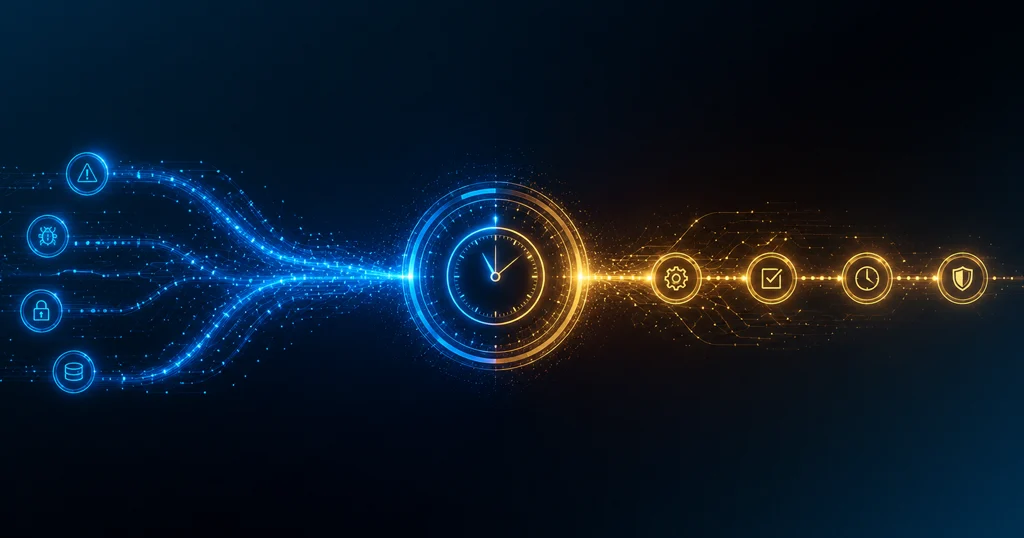
- It is not a tool you buy. It is a repeatable cycle: scoping, discovery, prioritization, validation, and mobilization.
- Gartner predicts organizations that prioritize security investments through CTEM will be three times less likely to suffer a breach by 2026.
- Lean security teams and regulated enterprises adopt CTEM for different reasons: one needs focus, the other needs proof.
- A working CTEM program depends on knowing which assets are your crown jewels and which findings connect into real attack paths.
Gartner made a bold call back in 2022: companies that build their security spending around Continuous Threat Exposure Management would be three times less likely to get breached by 2026. That’s this year. And most teams still haven’t caught up. Traditional vulnerability management just wasn’t built to keep pace with how fast cloud, identity, and misconfiguration risk multiplies.
So what is CTEM, really, and why does it matter enough for CISOs to restructure how they think about risk?
What Is CTEM (And Why Gartner Built It)
CTEM stands for Continuous Threat Exposure Management. It’s a cybersecurity framework for continuously identifying, assessing, and remediating security weaknesses across an organization’s digital assets. Gartner coined the term in 2022, and the reasoning behind it is pretty simple once you see it. Traditional vulnerability management started to break down as attack surfaces grew fast because of cloud adoption and remote work. Annual pen tests and quarterly scans just couldn’t keep pace with how fast new exposures showed up.
Here’s what CTEM is actually solving for:
- Security teams drowning in vulnerability lists that never shrink
- Findings that never get chained together, so nobody sees the real attack path to a crown jewel asset
- A communication gap, where business leaders talk dollars and downtime while security talks CVSS scores
A word on framing, since this trips people up constantly: CTEM is not a tool you buy off a shelf. It’s a programmatic approach, not a single product. Think of it as an operating rhythm your security team runs on repeat, the same way finance runs a monthly close.
What is exposure management in cybersecurity, then, versus CTEM specifically? Exposure management is the general, ongoing practice of finding and reducing risk across everything you own, not just patching CVEs but catching misconfigurations, weak identities, and forgotten cloud assets too. CTEM is Gartner’s specific five stage way of running that practice on a schedule.
What counts as a threat exposure? Basically anything that gives an attacker a way in or a way to move deeper once they’re inside:
- Unpatched software
- Misconfigured cloud storage or network settings
- Leaked or weak credentials
- Excessive access permissions nobody remembers granting
Proactive exposure management is that same idea with the emphasis flipped. Instead of waiting for an alert to tell you something already broke, you’re constantly asking what could break next, and whether it would actually matter if it did.
The Five Stages of CTEM
The cycle tightens over time. Scoping gets more precise, discovery more accurate, prioritization more defensible, validation more efficient, and mobilization more predictable. Here’s what each stage actually involves.
1. Scoping This is where you decide what matters. Scoping means identifying critical assets and lining up security goals with business objectives, so resources go toward protecting what matters most. This is also where crown jewel analysis happens:
- Map out the systems that would hurt the most if compromised, like customer data stores or payment processing
- Rank those crown jewel assets before you touch a single scanner
- Keep the first scope narrow on purpose, so the program proves itself instead of drowning in noise
2. Discovery This stage is about building continuous visibility into your assets and exposures within the scope you just set. It goes beyond CVE scanning, tracking misconfigurations, identity weaknesses, and third party integration risks too. The output shouldn’t just be a list of findings. It should be a register you can actually trust.
3. Prioritization Not every exposure deserves attention right now. This stage is about deciding which exposures to address first based on business risk, not just severity scores. A medium severity flaw sitting a few hops from your crown jewel database, connected by a real attack path, can matter more than a critical flaw on an isolated test server nobody uses.
4. Validation This is where you find out if an exposure is actually exploitable. Teams launch simulated or emulated attacks on the exposures they’ve found, testing whether existing defenses hold up and whether an attacker could use that attack path to move laterally toward critical assets. It’s the difference between “this looks bad on paper” and “this is genuinely a path someone could take.” We covered why annual red teaming can’t keep up with this anymore, and validation is exactly why continuous testing has replaced it.
5. Mobilization The last stage turns findings into action. It’s about taking corrective measures based on the business implications of what validation uncovered, usually handled manually within the local team context. More teams are now automating pieces of remediation mobilization with guardrails built in, which we broke down in how governed autonomy works in offensive security.
Run those five stages together on repeat and you have a working CTEM program. Not a one time project, but a loop that keeps tightening with every cycle.
Building a CTEM Program That Actually Runs
Trying to run all five stages across your whole environment on day one is the fastest way to kill a new program before it proves anything. Here’s a more realistic path:
- Baseline your exposure first. Get an honest read on where you stand today before scoping anything formally. You can’t measure progress against a moving, unmeasured target.
- Scope your first cycle small. Pick one crown jewel asset group, maybe your customer database or production environment, and run the full five stage cycle against just that slice.
- Set a cadence. Scoping and discovery usually run continuously in the background, but treat a full review cycle as a recurring event, often every 30 to 90 days depending on how fast the environment changes.
- Align cycles with change management. New deployments, mergers, and infrastructure changes should trigger a fresh scoping pass on their own, rather than waiting for the next scheduled review.
- Expand scope gradually. Once the first tight cycle proves out, widen coverage one deliberate asset group at a time.
CTEM isn’t a solo sport either. Security usually leads it, but IT operations, application owners, and often compliance or legal all need a seat at the table, since mobilization only works if the people who actually own the systems are the ones fixing them.
For lean security teams
- You don’t need headcount for every stage
- Start with the crown jewel assets that matter most
- Automate discovery and prioritization wherever you can
- Lean on managed or MSSP services to cover validation and mobilization work you don’t have staff for
- A three person team can run a real CTEM program, as long as it stays scoped tightly instead of chasing full coverage too soon
For regulated enterprises
- Fold compliance mapping into scoping from day one, so exposures tied to regulated data automatically rank higher during prioritization
- Assign a named risk owner, usually the CISO, to formally sign off on any exposure the team decides to accept rather than fix
- Log validation results as evidence, not just an internal note, since that record often doubles as proof of due diligence for SOC 2 or ISO 27001
- Build the documentation habit into mobilization from the start. It’s much harder to reconstruct six months later during an audit
Why CTEM Adoption Is Speeding Up
CTEM has moved fast from a niche Gartner term to something CISOs get asked about directly in the boardroom. A few things are driving that:
- The breach math is compelling. Gartner’s three times less likely to breach prediction is a hard number boards understand, and it’s pushing budget toward CTEM faster than most frameworks get funded.
- The market is maturing quickly. Gartner published its first ever Magic Quadrant for Exposure Assessment Platforms in November 2025, evaluating 20 vendors in the category. Gartner doesn’t build a Magic Quadrant around a trend that isn’t already being bought and deployed at scale.
- Most programs are still early. Programs tend to sit on a rough maturity curve: ad hoc, repeatable, integrated, and optimized, moving from manual and inconsistent toward continuous and automated. Most organizations today sit somewhere between ad hoc and repeatable, which is exactly why tooling to support the later stages is growing so fast.
Here’s where the real friction shows up though. Most teams can run scoping and discovery just fine on their own. It’s prioritization and mobilization where things stall, because that requires pulling scattered findings, from vulnerabilities to IAM gaps to misconfigurations, into one ranked list tied to actual business impact.
That’s the exact gap Secure.com’s Risk & Governance Teammate was built to close:
- Consolidates vulnerabilities, misconfigurations, IAM gaps, and AppSec findings into a Unified Risk Register, applying composite scoring (CVSS + KEV exploitability + CIA criticality + compliance mapping) to generate a ranked ‘fix-first’ queue
- Visualizes attack paths showing how attackers could chain weaknesses from exposed entry points to crown-jewel assets, calculating blast radius and highlighting chokepoints where one fix breaks multiple attack paths
- Automatically assigns owners using service and asset mapping, tracks remediation SLAs and aging risk across teams, and escalates overdue risks with full context – ensuring mobilization doesn’t stall after the report gets sent
For lean teams especially, that’s the difference between a CTEM program that lives on a slide deck and one that actually runs every quarter.
FAQs
Is CTEM a tool or a program?
Which teams are involved in a CTEM program?
How often should CTEM cycles run?
What is the CTEM maturity model?
Conclusion
CTEM isn’t complicated once you strip away the acronym soup. It’s five stages, run on repeat, built to answer one question: what actually puts this business at risk right now. Start small, pick your crown jewels, and build the cycle out from there. If your team is stretched thin or you’re staring down a pile of disconnected findings with no clear next step, that’s usually the sign it’s time to bring in something like a Risk & Governance Teammate to hold the whole loop together.