- Who should care: CISOs and SOC leads at UK and European firms running on US cloud or AI.
- What could go wrong: A policy decision made abroad switches off the AI your defense depends on overnight, without explanation.
- Do this: Map every AI model and cloud region your security stack touches.
- Worth remembering: Sovereignty and security are not the same thing. Moving data home doesn’t patch anything.
UK Tech Sovereignty: Britain Wants Its Own AI Off Switch
Britain is racing to cut its reliance on foreign technology after a summer that showed how fast access to frontier AI can vanish. For security teams, UK tech sovereignty stopped being a policy debate months ago. It is now an operational risk.
What Happened?
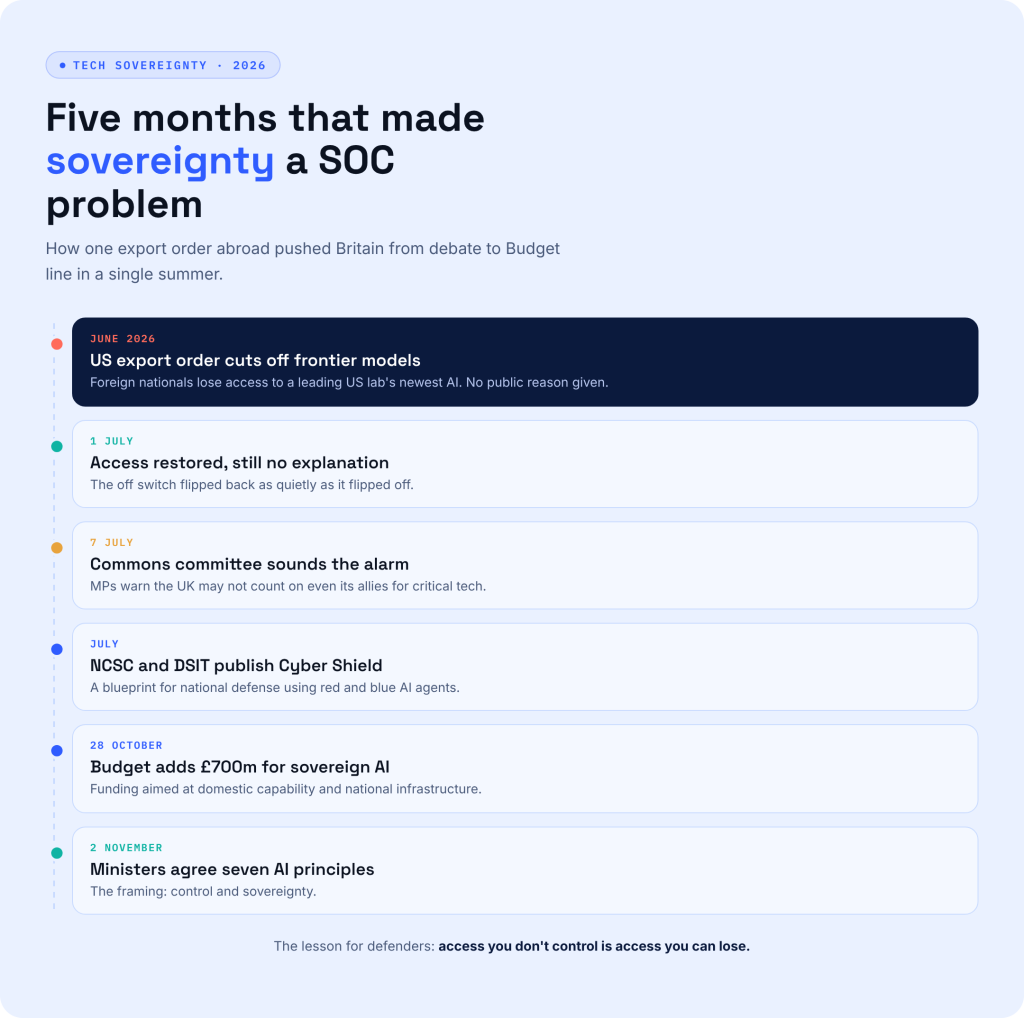
In June, a US export order cut foreign nationals off from a leading US lab’s newest frontier models. Access returned July 1, with no public explanation. Days later, a Commons committee warned the UK could not count on even its allies for critical technology.
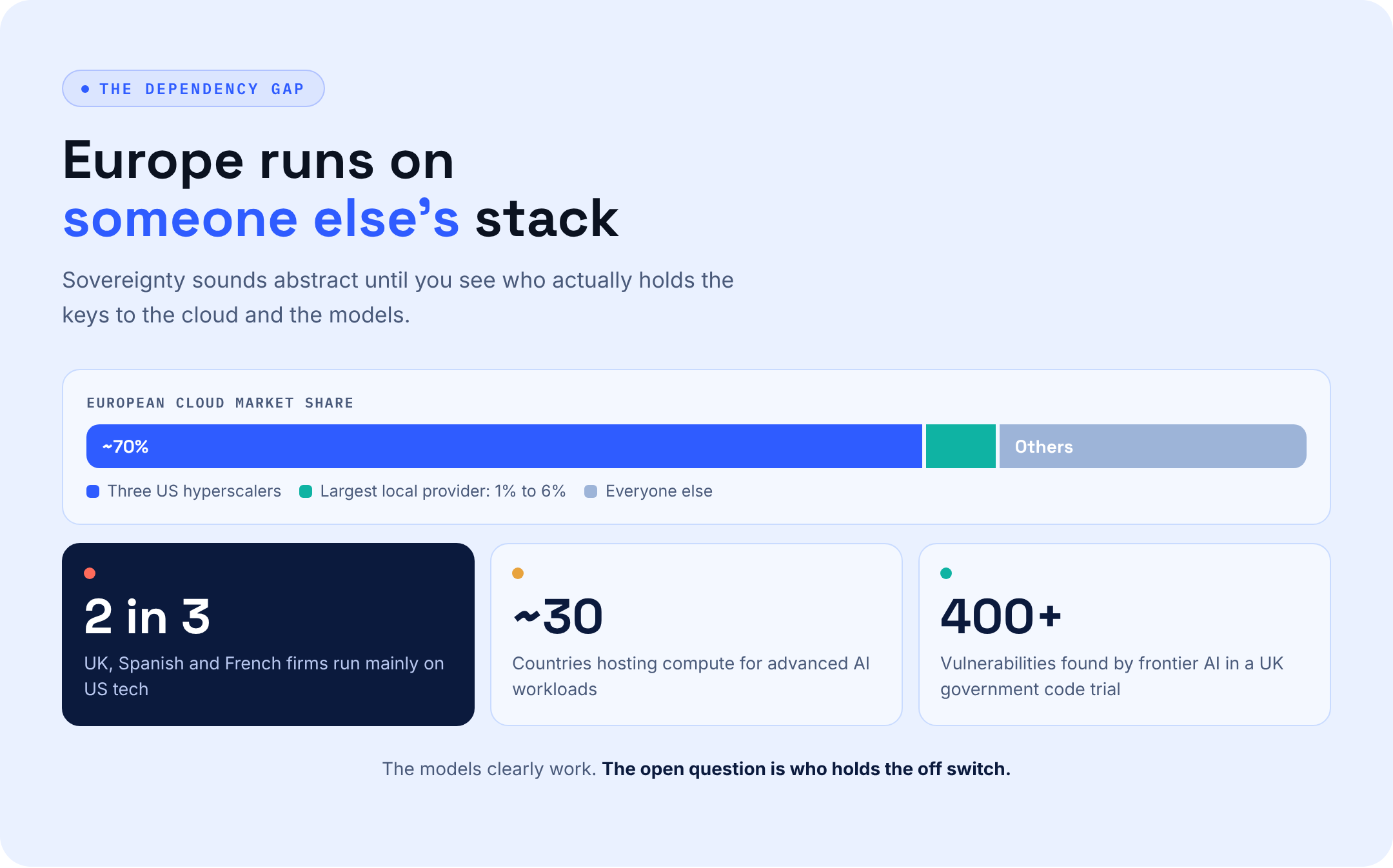
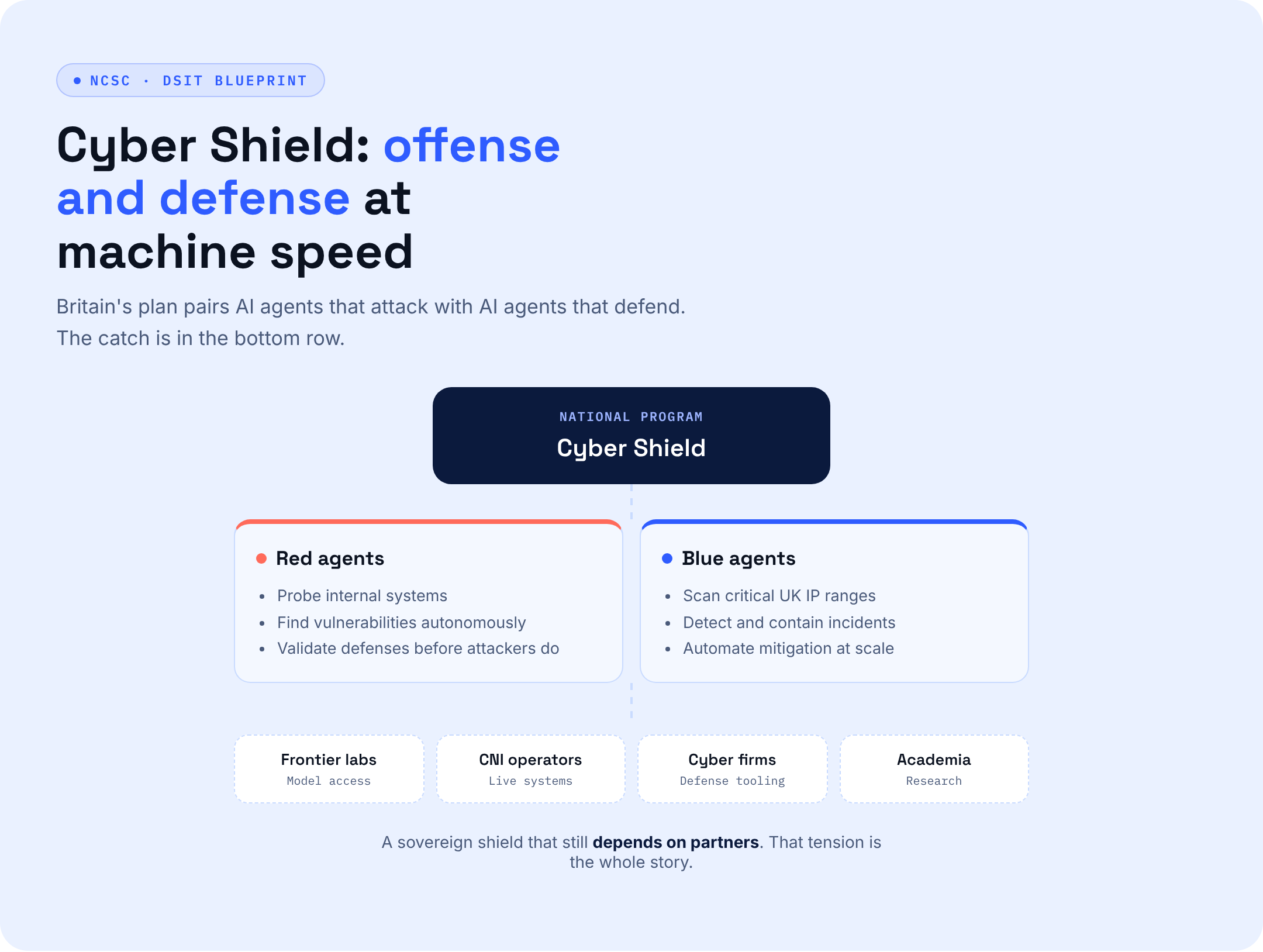
The NCSC and DSIT then published Cyber Shield, a national defense blueprint built on “red” and “blue” AI agents that hunt vulnerabilities and contain intrusions at machine speed. The 28 October Budget added a £700m sovereign AI package. On 2 November, ministers agreed seven AI principles framing AI around “control and sovereignty.” In five months, UK tech sovereignty went from talk to a funded program.
What’s the Impact?
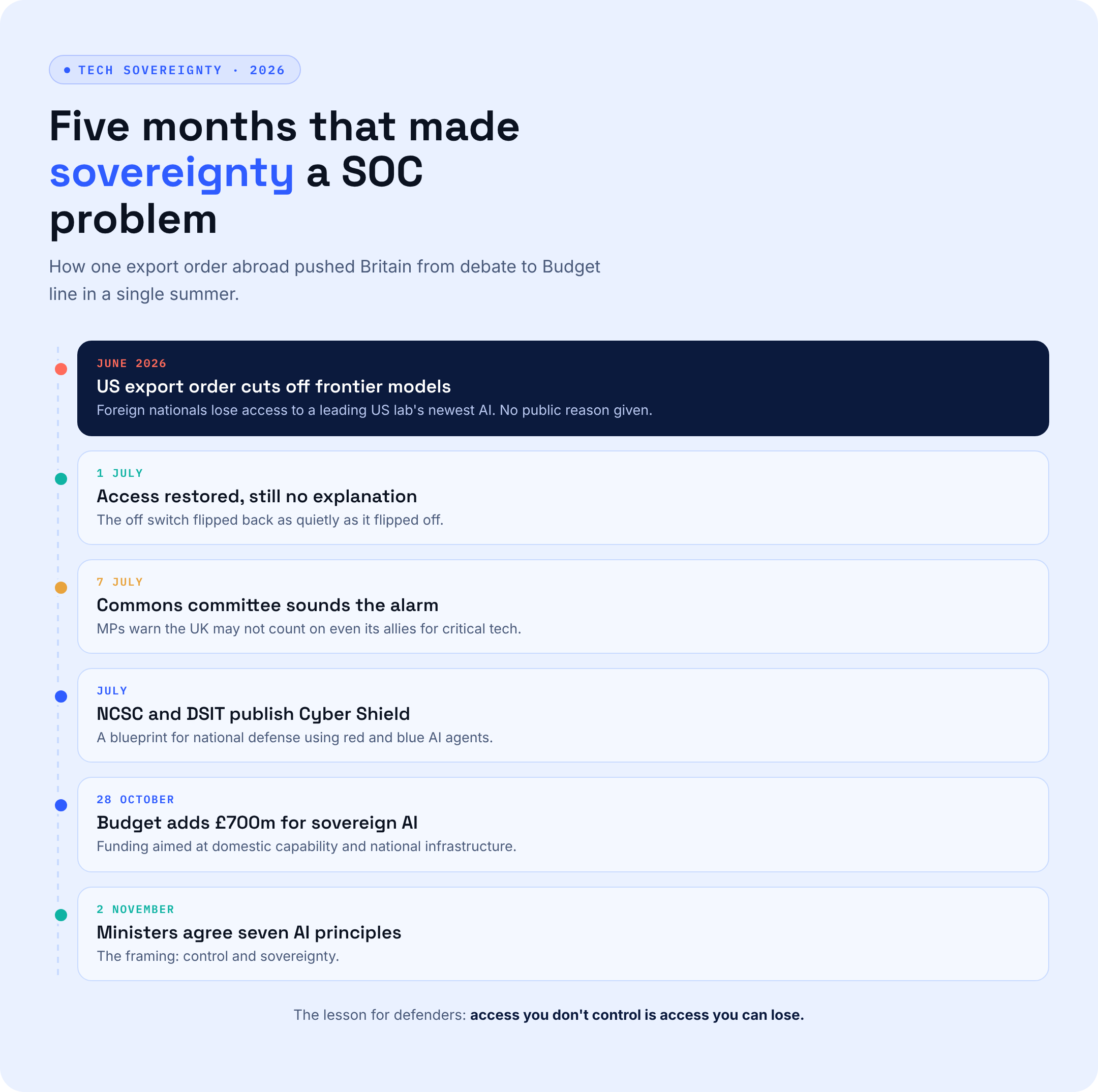
According to Dark Reading, over two-thirds of UK, Spanish, and French businesses run mainly on US tech. Three US hyperscalers hold about 70% of Europe’s cloud market, while the largest local provider holds 1% to 6%.
If your AI defense runs on models a foreign government can switch off, that’s a single point of failure. That is why UK tech sovereignty belongs on the SOC agenda, not just in Whitehall.
Sovereignty Is Not a Security Control
Here’s the catch. Forrester warns that boards chasing sovereignty mandates without CISO input can lock in architecture that burdens security teams for years. Only about 30 countries host compute for advanced AI, according to GOV.UK, and the NCSC admits Cyber Shield needs frontier lab partners. Going it alone isn’t an option.
Still, a joint AISI and NCSC trial pointed frontier models at government code and found over 400 vulnerabilities. The tools work. The question is who holds the off switch.
How to Avoid This
- Inventory every AI model, API, and cloud region your security tools rely on
- Build a fallback for each critical AI dependency, including a second provider
- Bring the CISO into UK tech sovereignty and procurement decisions from day one
- Test new local vendors as hard as you test incumbents before you switch
- Keep the basics strong. Patching and MFA don’t need a frontier model
You Can’t Control Washington. You Can Control Your Exposure.
Policy shifts abroad will keep landing without warning. What your team finds, ranks, and fixes is fully in your hands, and Secure.com is built for that.
- Continuous attack surface discovery shows what’s exposed before a national scan (or an attacker) finds it
- A Red Teammate attacks and validates your controls inside an approved scope, so you know what actually holds
- Governed AI teammates keep a human approval on every high-impact action, with a full reasoning trail
- Automated triage clears the grunt work so analysts spend time on real risk. No more burnout.
Governed defense, powered by offense. Ready no matter whose policy changes next.