TL;DR: Nutex Health, a Houston hospital operator, told the SEC on August 24 that an intruder broke into its network and copied files off some servers. The company is still working out whether patient, employee, provider, and business records were taken. No hacking group has claimed the attack yet. The bigger worry is what comes next, since stolen hospital data often fuels phishing and identity fraud for years.
Introduction
A hospital operator just told federal regulators that someone got inside its network and took data on the way out.
Nutex Health, a Houston company that runs micro hospitals and specialty facilities across the country, filed an 8-K with the Securities and Exchange Commission on August 24. The filing spelled out something no health system wants to admit. An outsider reached its servers, copied files, and left with information that may be private.
Nutex trades on the Nasdaq as NUTX. It runs 28 facilities across 12 states, including Bayou City ER & Hospital in Texas and Green Bay ER & Hospital in Wisconsin. So this is not a small clinic. It is a public company with real scale and real records to protect.
What Happened?
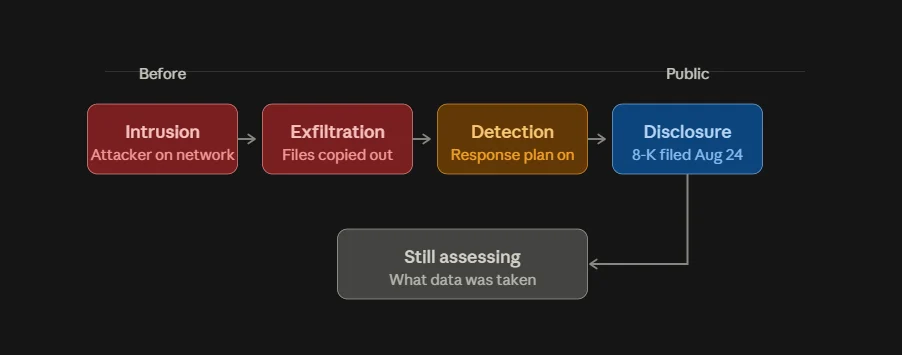
Nutex said it recently found unauthorized activity on its computer network. The company called in outside forensic experts, turned on its response plan, put containment steps in place, and told law enforcement.
The early read from the investigation is blunt. Certain files stored on company servers were accessed and pulled out by an unauthorized third party. Some of that data may be private or confidential.
What kind of data? Nutex is still counting. The filing lists patient records, employee records, credentialed provider details, confidential business and financial information, and intellectual property as categories under review. The company has not confirmed how many people are affected.
No known cybercrime group has taken credit so far. That silence is not comfort. It often means the stolen files are being sorted, priced, or held back for an extortion demand that has not gone public yet.
Nutex told the SEC it does not believe the incident will have a material impact on its business. That is a financial statement, not a safety one. For the patients and staff whose records sit in those files, the impact could look very different.
What’s the Impact?
Hospital data is some of the most valuable data a criminal can hold. A stolen credit card gets cancelled in a day. A medical history, a Social Security number, and an insurance ID do not change. Criminals use them for medical fraud, fake loans, and tax scams long after the breach headline fades.
The near-term risk is phishing. Once records circulate, people start getting emails and texts that look like they come from Nutex or a related provider. These messages push urgency and try to pull out more personal details or a payment. Anyone tied to a Nutex facility should treat surprise messages with suspicion.
There is legal fallout brewing too. Class action attorneys are already circling and asking affected people to come forward. Healthcare breaches routinely balloon once notification letters go out, so the count of affected individuals may climb well past what the first filing suggests.
How to Avoid This
You cannot control a vendor’s network. You can control how exposed you are when one fails.
Watch for messages that claim to be from Nutex or a hospital and never click links inside them. Go to the official site or call a verified number instead.
Keep records of anything odd, such as strange bills, benefit statements, or account alerts. That paper trail helps if you dispute fraud later.
For security teams, the lesson is about the gap between detection and proof. Nutex found the activity, but it is still working out what left the building. That is the hard part of every breach. Knowing an intruder was inside is not the same as knowing what they touched.