
Dateline: June 9, 2026
Introduction
Cybercriminals have found a new way to outsmart artificial intelligence security systems. The Hades malware campaign uses sophisticated deception tactics to fool AI-powered defenses while infiltrating software supply chains.
What Happened?
Security researchers recently discovered the Hades campaign, named after the Greek god of the underworld. The malware specifically targets software supply chains by feeding false information to AI security agents tasked with detecting threats.
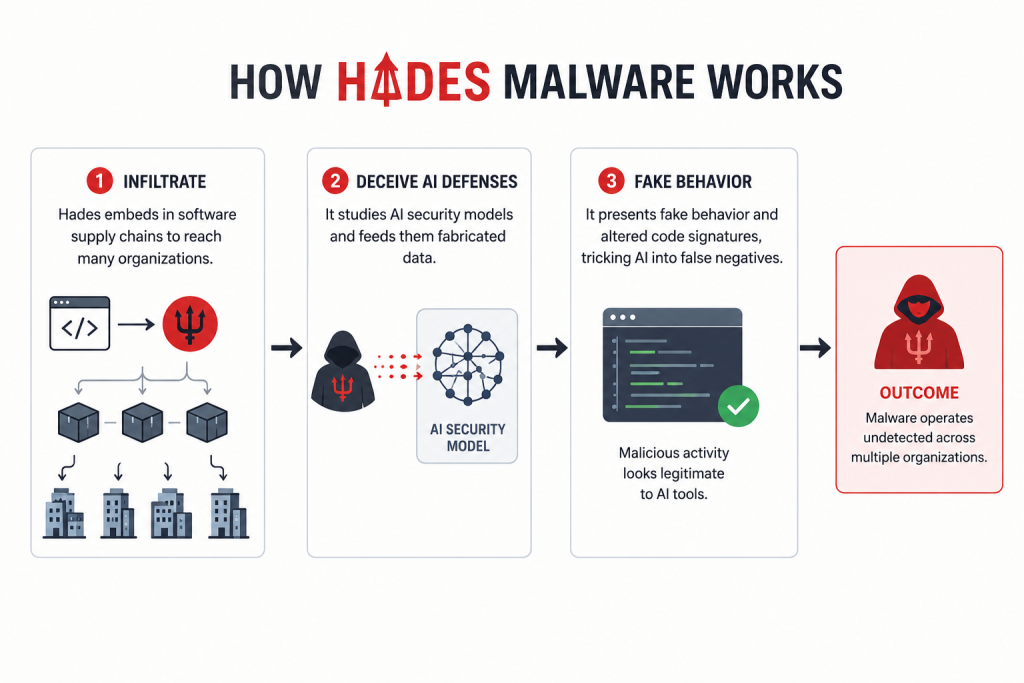
The campaign represents a significant shift in attack methodology. Instead of simply trying to hide from detection systems, Hades actively misleads them. The malware presents fake behavioral patterns and altered code signatures that cause AI agents to classify malicious activities as legitimate software operations.
Threat actors behind Hades have weaponized the very technologies meant to protect organizations. They studied how machine learning models analyze code behavior and crafted responses that trigger false negatives. When AI security tools scan infected systems, Hades feeds them convincing but fabricated data about its activities.
The malware’s supply chain focus makes it particularly dangerous. Rather than targeting individual computers, Hades embeds itself in software development and distribution processes. This allows it to spread to multiple organizations through compromised updates and packages that appear legitimate to both human reviewers and automated security systems.
The Impact
The Hades campaign exposes a critical vulnerability in AI-based security infrastructure. Organizations increasingly rely on machine learning to process the massive volume of potential threats they face daily. When malware can systematically deceive these systems, it undermines the foundation of modern cybersecurity.
Software supply chain attacks have already proven devastating. The 2020 SolarWinds breach affected thousands of organizations worldwide. Hades represents an evolution of this threat, combining supply chain infiltration with AI deception to create a more persistent and harder-to-detect attack vector.
The campaign also highlights how cybercriminals adapt to defensive technologies. As organizations invest heavily in AI security tools, threat actors are developing countermeasures specifically designed to exploit how these systems operate. This creates an arms race between defensive AI and malicious actors who understand its weaknesses.
How to Avoid This
- Organizations should implement layered security approaches that don’t rely solely on AI detection.
- Human security analysts remain essential for reviewing suspicious activities that automated systems might miss or misclassify. Regular manual audits of software dependencies and supply chain components can catch threats that fool AI agents.
- Companies need to verify software sources more rigorously. This includes checking cryptographic signatures, monitoring for unexpected behavioral changes in trusted applications, and maintaining detailed logs of software installations and updates.
- Multiple verification methods make it harder for deceptive malware to maintain its disguise.
Security teams should also stay informed about AI evasion techniques. Understanding how attackers manipulate machine learning models helps defenders recognize potential blind spots in their automated systems. Regular testing of AI security tools against known deception methods can reveal vulnerabilities before malicious actors exploit them.