
FAQs
What are some confessions that involve password reuse or weak credentials?
How do confessions address the risks of sharing personal information online?
How can organizations use these security confessions to train their employees more effectively?
Are there any confessions about mistakes made by IT professionals or security experts?
How do the confessions address the challenges of remote work and security?
TL;DR
After reading 100 SOC confessions, the story is clear: analysts are drowning in endless alerts, overloaded with tools, and often left without growth or recognition. Burnout is tied to false positives, tool chaos, and poor metrics that prize ticket counts over real security outcomes. Yet brilliance shines through in shadow automation, ingenuity, and resilience. The path forward is smarter tuning, Digital Security Teammates or automated workflows and leadership that values outcomes over dashboards.
Introduction
After analyzing 100 real security confessions from Reddit, industry forums, anonymous SOC diaries, and late-night Substack posts, it becomes clear that the modern SOC is equal parts battlefield and burnout factory. These aren’t just rants. They’re survival logs from analysts trying to keep up with the blinking, buzzing chaos of alerts, tools, dashboards, and expectations that rarely match reality.
Across all these confessions, the same themes surfaced again and again: Relentless alert fatigue, tool overload, career stagnation, metrics that reward the wrong behavior, and moments of quiet brilliance where analysts automate their way out of chaos.
This blog distills those stories into six core patterns that reveal what’s failing, what’s working, and what leaders must pay attention to if they want healthier, more resilient security teams.
Key Takeaways
- Alert fatigue is crushing analysts: Nonstop false positives and overwhelming workloads drive burnout, health issues, and disengagement.
- Tool sprawl creates chaos: Too many dashboards and poor integration waste time and obscure real threats.
- Analyst ingenuity is underrated: Shadow automation and scripting demonstrate human brilliance, but create compliance risks and security blind spots when left unsanctioned.
- Career stagnation adds to burnout: Lack of recognition and growth paths leave analysts feeling invisible and stuck.
- Metrics obsession misleads leadership: SOCs measure alerts closed instead of risk reduced, fueling “security theater.”
1. What surprising lessons did the 100 security confessions reveal about everyday security risks?
Confession: “The job of an SOC analyst is destroying my life. We’re short-staffed, working double overnights. My mental and physical health can’t take it anymore.” – Reddit
If you’ve ever felt like your job was literally sucking the soul out of you, this confession probably stings with recognition. And it’s not an exaggeration.
Studies show SOCs deal with over 11,000 alerts per day on average, and with 67% going uninvestigated or unresolved due to resource constraints. That’s like trying to drink from a firehose – while the building burns down around you.
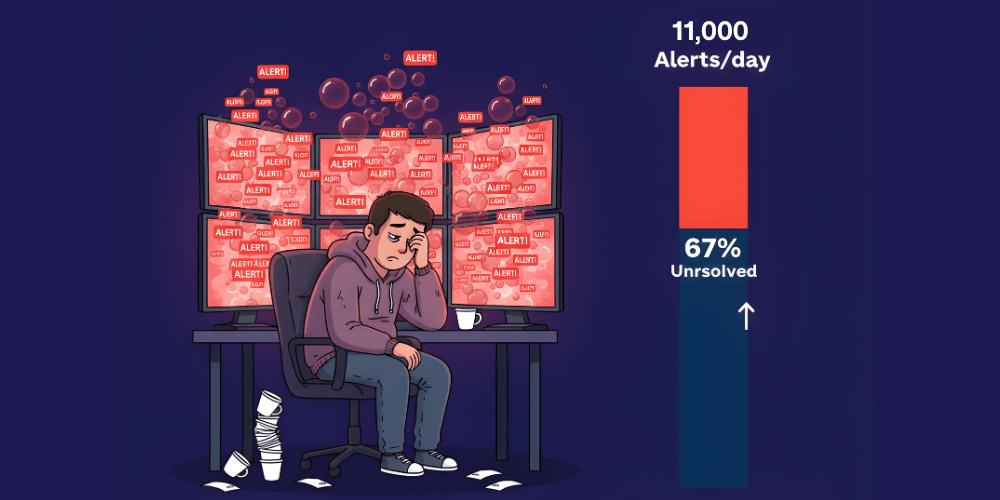
The result? Alert fatigue. Analysts get bombarded with so many false positives that their ability to spot the real threats plummets.
No wonder 70% of SOC teams admit they’re emotionally overwhelmed. One report even ties 31–34% of analyst burnout directly to nonstop alerts.
Two patterns keep showing up:
- The Dark Bargain: sacrificing sleep, weekends, and personal life for ‘the mission
- The Imposter Tax → doubting your skills after drowning in false alarms.
Lesson:
Burnout is not a badge of honor. SOCs need smarter tuning through SIEM optimization, better staffing, and leaders who value long-term focus over short-term heroics.
2. Are there any recurring themes or patterns in the security confessions that I should watch out for?
Confession: “I spend more time copying and pasting between dashboards than actually responding to threats.” – Radiant
Tool sprawl is the SOC’s silent killer. 71% of teams use 10+ tools, and nearly half juggle 20 or more. Each comes with its own alerts, metrics, and dashboards. Integration? That’s a fairytale.
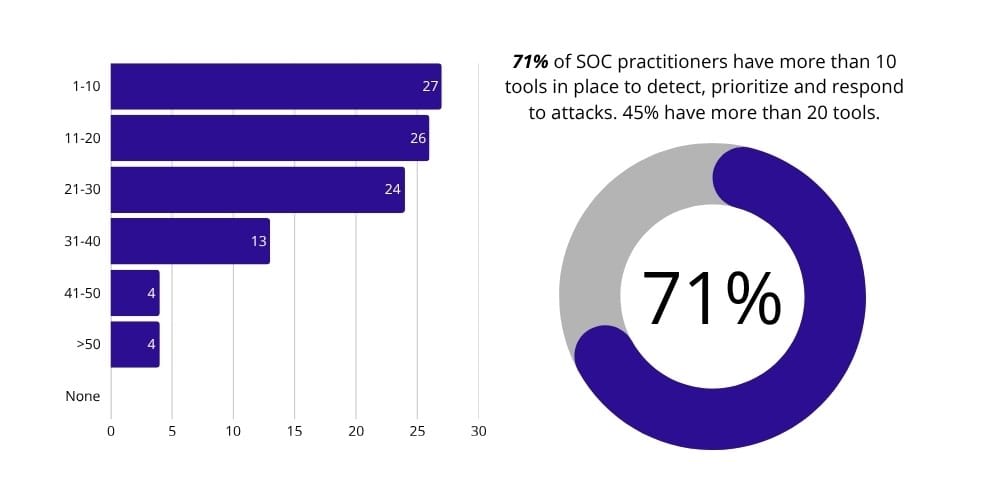
The patterns here are painfully clear:
- Paralysis by Measurement → drowning in “MPIs” (many performance indicators), leaving no clarity.
- Coordination Debt → analysts wasting hours stitching together incidents that tools should connect automatically.
- Untamed Visibility → shiny products purchased but never fully deployed, creating false confidence for leadership.
No wonder analysts vent: “When everything is measured, nothing is clear.”
Lesson:
Every tool must earn its keep. SOCs should integrate systems through SOAR frameworks that actually reduce noise and connect workflows, not multiply dashboards.
3. How do the confessions highlight the importance of strong passwords and authentication?
Confession: “Got caught running scripts again. First Python, then PowerShell. Now I’m sneaking batch files just to survive.” – Reddit
When tools fail, humans hack the system. Analysts quietly build their own scripts, automating tasks leadership forgot to fix. It’s ingenious, and risky.
Patterns here:
- Shadow Automation → unofficial scripts save hours but operate in the shadows.
- Double-Edged Sword → those same scripts mimic hacker behavior, triggering false alarms.
- Process Friction Indicator → if analysts have to bypass policies, the policies are broken.
SOC analysts are turning into accidental engineers just to keep them alive. But shadow automation also creates compliance risks and detection blind spots.
Lesson:
Don’t punish it, formalize it. Enable analysts to innovate safely through governance, reviews, and version control, keeping human-in-the-loop to guide safe automation practices.
4. What are some examples of overlooked security vulnerabilities mentioned in the confessions?
Confession: “I feel like I’m constantly stuck with low-level tasks. It’s monotonous and I’m losing interest.” – Reddit
This is the quieter pain point: career stagnation. Analysts don’t just burn out from alerts; they burn out from feeling invisible.
Patterns:
- Career-Path Dilution → analysts stuck in Tier 1 loops, never moving up.
- Psychological Safety Gap → no space to admit stress without fear of judgment.
- SOC as a Cost Center → treated as an expensive necessity, not a value creator.
The result is imposter syndrome, high turnover, and silent disengagement. One confession captured it best: “We’re the backbone of security but the least recognized.”
Lesson:
Leaders must create visible ladders (SOC → Detection Engineering → Threat Hunting). Recognition and rotation matter as much as tooling, and tracking MTTR can help measure actual improvement instead of vanity metrics.
5. What practical steps can I take today based on the lessons from these security confessions?
Confession: “We’re measured on how many alerts we close, not how much risk we reduce. It’s all a security theater.” – Quora
If there’s one thing SOC analysts agree on, it’s this: The system loves numbers more than it loves outcomes. Leadership obsesses over dashboards full of “alerts closed,” while analysts roll their eyes because they know the real threats are often buried under noise.
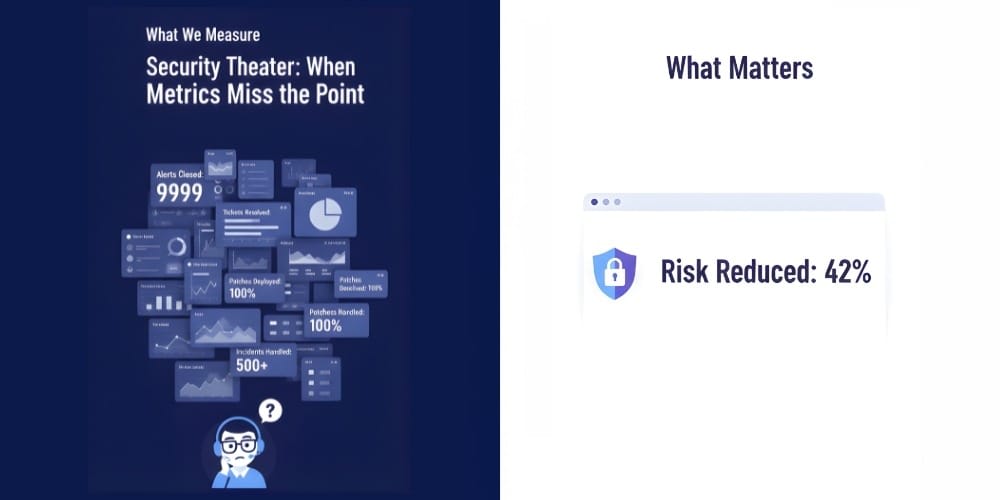
The Data Behind the Drama:
- Analysts admit they’re missing genuine attacks because signal-to-noise is so poor.
- Metrics dysfunction is rampant: KPIs multiply into MPIs, measuring everything but actual security outcomes.
- Confessions highlight a constant organizational gap: Rigid policies and tools on one side, fast-moving attackers on the other.
Patterns:
- Signal-to-Noise Ratio → drowning in irrelevant alerts means true positives slip through.
- Automation Paradox → tools and AI promise relief, but misused, they add more chaos.
- Metrics Dysfunction → chasing ticket counts instead of business risk reduction.
- Policy vs. Velocity → top-down mandates cripple the ability to act in real time.
Practical Lesson:
SOCs must stop obsessing about numbers. The only metric that matters is “Can we reduce the risk?” Shift from volume-driven dashboards to outcome-driven reporting. Tie SOC works directly to business security goals instead of playing “alert whack-a-mole.”
6. Are there any confessions related to social engineering or phishing attacks?
Confession: Like, if a routine malware scan finds something malicious but it never executed is that an incident? What about if it attempts to execute but EDR stops it immediately? What about phishing? If someone clicks a link but it’s like a Google form asking for contact information and they don’t enter anything, is that an incident? – Reddit
Confessions reveal a surprising amount of hope too. Many analysts see the SOC as a stepping stone, if they’re given rotations, mentorship, and room to grow. Without that, even the most brilliant analysts burn out under pressure.
The Data Behind the Drama:
- Burnout correlates directly with nonstop triage and lack of mobility.
- Analysts who get downtime, cross-team exposure, and recognition show higher retention.
- SOCs that prioritize small, incremental improvements outperform those glorifying all-nighters and manual heroics.
Patterns emerging from the confessions:
- Incremental Change Beats Heroics → sustainable improvement outperforms emergency marathons.
- From MPIs to Outcomes → fewer vanity metrics, more actionable insights.
- Sanctioned Automation → structured spaces like a Blue Team Automation Lab harness analyst creativity safely.
- SOC as a Springboard → analysts thrive where upward mobility and clear ladders exist.
Practical Lesson:
A healthy SOC is built on culture, not dashboards. When leaders reduce friction, encourage safe innovation, and invest in growth, analysts stop burning out—and start leveling up into the engineers, hunters, and architects every security program desperately needs.
FAQS.
How Do these Confessions Address the Human Element in Cybersecurity Failures?
A hundred confessions later, the SOC feels like both a burnout factory and a brilliance incubator. Analysts confess to exhaustion, but also to hacking their way through chaos with humor, grit, and ingenuity.
The lesson? Security resilience doesn’t come from more dashboards. It comes from leaders reducing friction, recognizing effort, and building cultures where analysts don’t have to break rules to survive.