Secure: Threat Intelligence Weekly Roundup (November 17-21, 2025)
From a 'self-DDoS' at Cloudflare to hijacked ASUS routers lying in wait for 2122, this week proved that in cybersecurity, your biggest threat might just be yourself.
From a 'self-DDoS' at Cloudflare to hijacked ASUS routers lying in wait for 2122, this week proved that in cybersecurity, your biggest threat might just be yourself.

This week was defined by cybersecurity infrastructure and its ironic fragility. While the world feared a massive DDoS attack during Cloudflare's global outage, it was discovered to be a self-inflicted configuration error.
Simultaneously, major vendors faced their own security debts: Oracle was briefly listed on a ransomware leak site for a vulnerability in its own software, and Fortinet appliances came under active assault from a dual zero-day chain. Nation-state actors also made their move, hijacking 50,000 end-of-life routers to build a long-term espionage network.
On November 18, 2025, internet infrastructure services provider Cloudflare experienced its most serious outage since 2019. This disruption impacted thousands of websites globally for approximately six hours.
While the timing and severity initially raised fears of a massive DDoS attack, concerns that undoubtedly were amplified by recent "Aisuru" botnet campaigns, the incident was ultimately traced back to an internal configuration error rather than malicious external activity.
How it happened?
Cloudflare’s failure chain was caused by a seemingly minor permission change applied to a ClickHouse database cluster. The alteration inadvertently caused their system to output duplicate rows into a "feature file" in use by the company's Bot Management module. When this file unexpectedly doubled in size, it hit a hard limit within Cloudflare's traffic distribution software, triggering a cascading failure that crippled core routing systems across the network.
Diagnosing the issue proved difficult because Cloudflare's external status page also briefly went offline, leading teams to initially suspect a coordinated multi-vector attack. Engineers eventually identified the corrupted file at 14:30 UTC. They were able to halt its propagation, achieving full service restoration by 17:06 UTC.
On November 18 Cloudflare experienced a service outage, triggered by an issue with a Bot Management feature, impacting multiple Cloudflare services. Here's a detailed breakdown of what happened. https://t.co/7WArlr5ghI
— Cloudflare (@Cloudflare) November 18, 2025
Google released emergency updates on November 18 for a critical "type confusion" vulnerability in the V8 JavaScript engine. This incident is the seventh time Chrome suffered a zero-day exploit in 2025.
Attackers are actively chaining two new vulnerabilities (CVE-2025-64446 and CVE-2025-58034) to compromise FortiWeb web application firewalls.
Attack Chain:
In a moment of "peak irony," Oracle Corporation briefly appeared on the Cl0p ransomware gang's leak site on November 20. The tech giant fell victim to the same E-Business Suite (EBS) zero-day campaign it had been warning its own customers about.
The listing was quickly removed, suggesting Oracle likely initiated contact/negotiations.
Operation WrtHug has been discovered and it involves a sophisticated campaign compromising over 50,000 end-of-life ASUS routers.
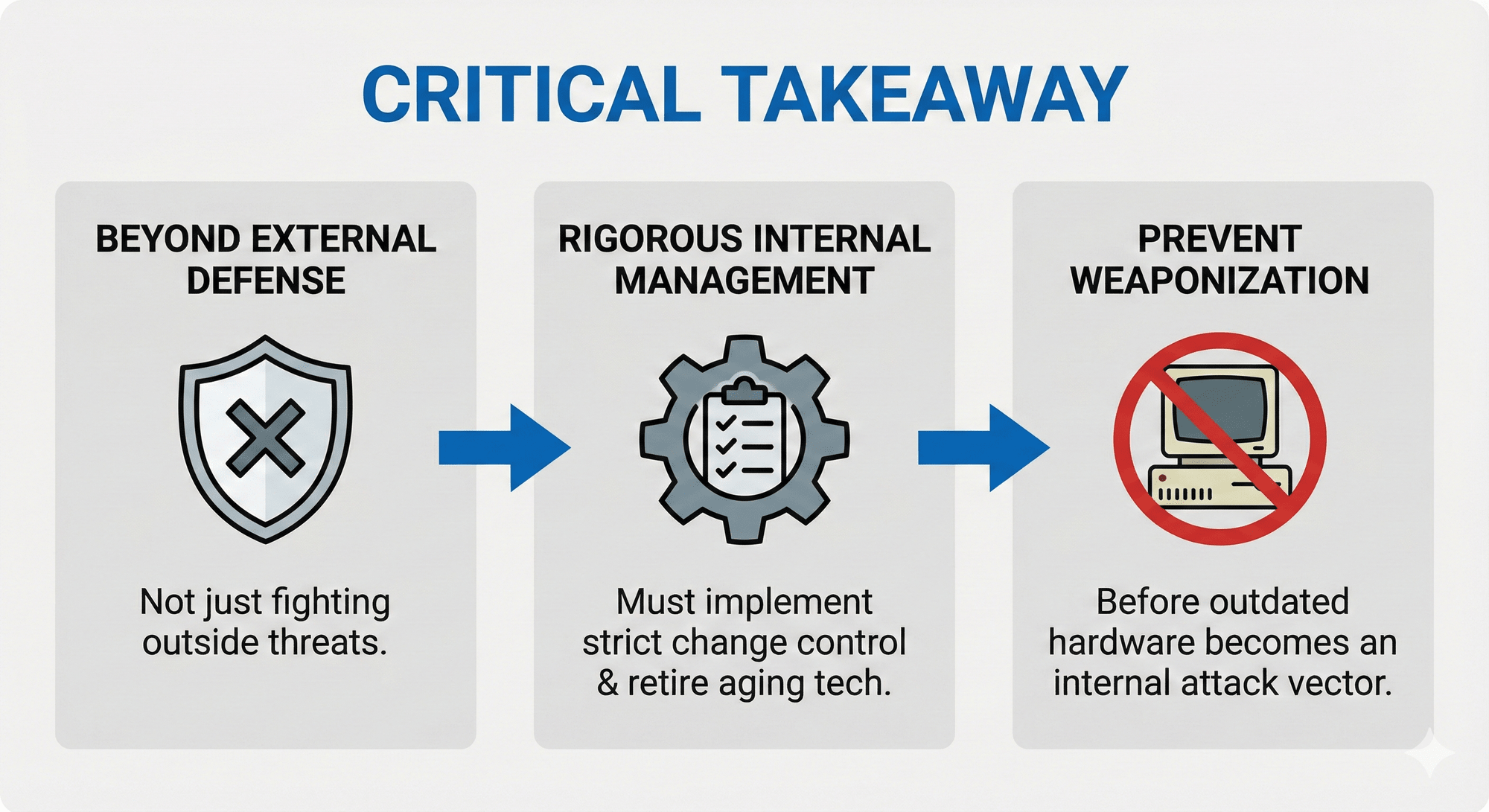
November 17-21, 2025 served as a harsh lesson in "physician, heal thyself.". The world noted how security vendors like Fortinet and tech giants like Oracle and Cloudflare stumble, and how this results in downstream effects that are immediate and global.
The Cloudflare outage demonstrated that a single configuration file can do as much damage as a botnet. Meanwhile, Operation WrtHug reveals that while we worry about zero-days, adversaries are quietly colonizing the "ghost gear" (EoL devices) that we've forgotten about.
Stay informed. Stay secure.

Security posture assessment evaluates your organization's overall cybersecurity strength, identifying vulnerabilities and providing a roadmap to enhance your defense against evolving threats.

A major source code leak exposes how routine age-verification selfies for popular apps are feeding a massive government surveillance and reporting machine.
A severe vulnerability in popular Grandstream desk phones gives attackers root access to listen to calls and pivot into corporate networks—highlighting a major blind spot for small businesses.